Begin by separating two names
At Eleusis, Triptolemus is easily confused with Demophon, the infant cared for by Demeter. Their roles are different. The goddess attempts to make Demophon immortal; Triptolemus becomes a traveler carrying grain to other people. This is not one continuous scene in which a baby escapes the fire and immediately drives away. Our starting point is the messenger: once the earth grows crops again, how does food travel beyond a household, a city, or a border? A flying vehicle makes the journey possible, but the traveler must still pass other people’s doors. Whether those doors open can determine whom a gift eventually reaches.
The hymn names him without telling the whole flight
The Homeric Hymn to Demeter first places Triptolemus among the respected local figures of Eleusis. Near its conclusion, Demeter restores growth and shows her sacred rites to the community’s leaders; he is among those instructed. Yet the hymn does not unfold a complete journey sowing the world from a dragon chariot. Recognizing his name is not the same as finding every familiar later episode. The poem concentrates on a renewed relationship between goddess and community, and on ritual knowledge that must not be publicly disclosed. We can compare that instruction with the distribution of agriculture without claiming that the hymn already supplies the same map of worldwide travel.
The Library sends grain into the sky
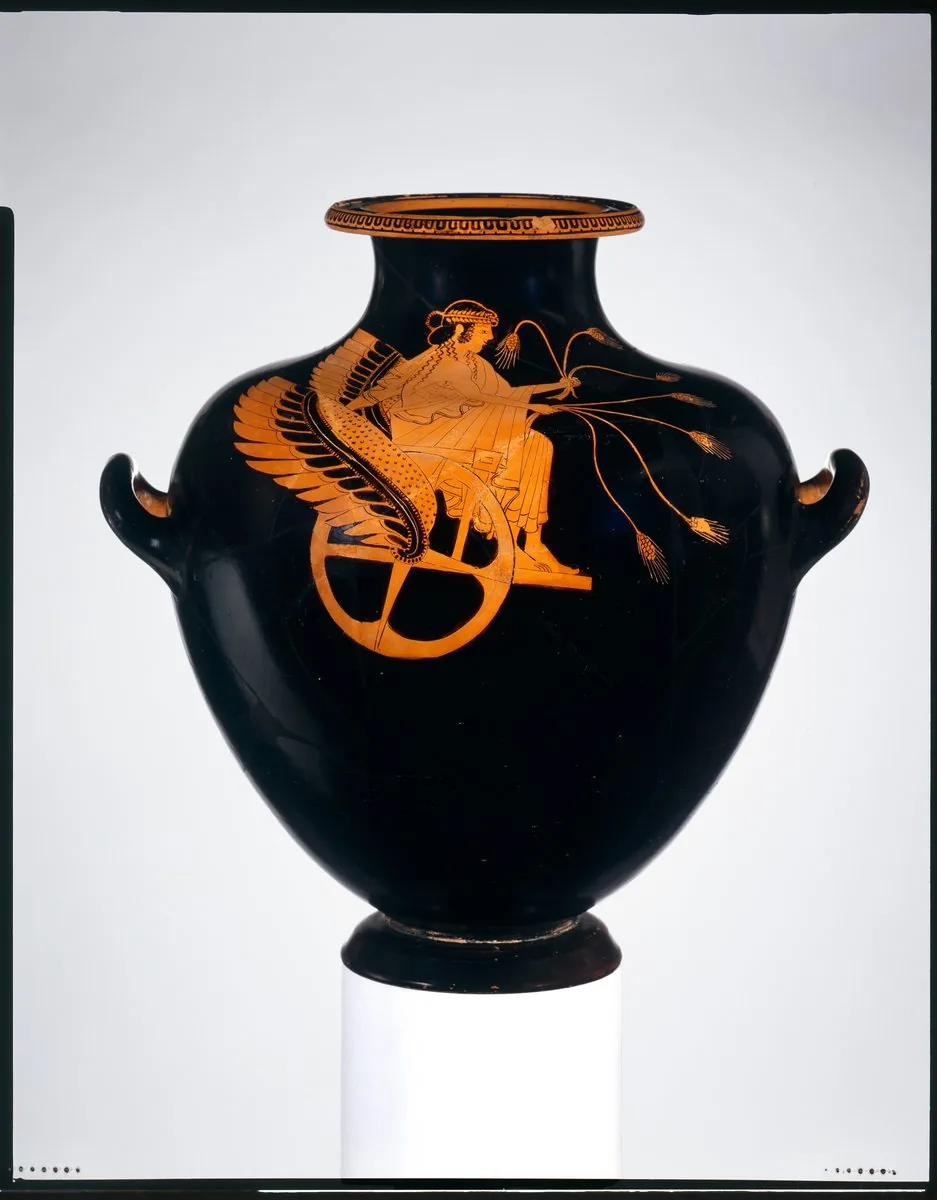
Pseudo-Apollodorus offers a different, brief arrangement in Library 1.5.2. Triptolemus is Metanira’s elder child; Demeter equips him with a chariot drawn by winged serpents and gives him wheat, which he scatters over the inhabited earth from the air. The compiler immediately adds other accounts of his parentage, attributed to Panyasis and Pherecydes. These competing genealogies warn against giving the local figure one universally accepted birth certificate. Flight also changes the purpose of heroic travel. He does not bring distant wealth home for himself. He carries an entrusted means of living outward. Marvelous transport serves something that can yield repeated harvests, rather than a treasure to be locked away.
What a palace wants to keep is the credit
In Book 5 of Ovid’s Metamorphoses, Calliope’s song supplies another trial. After Ceres provides seed, Triptolemus crosses Europe and Asia and reaches Lyncus, king in Scythia. He explains that his gift will feed the country. The king wants to appear the originator of these benefits himself: he welcomes the stranger, then attacks him with a sword while he sleeps. Ceres changes the king into a lynx and sends the young traveler onward with her sacred serpents. This attack is not already present in the Library’s short notice, nor a compulsory stop agreed by every ancient account. Ovid locates danger within distribution: someone receiving a gift may try to erase its bearer.
Look beyond the wings to the cultivated ground
Attic vase painters often seat Triptolemus in a winged vehicle; grain and chariot make the agricultural messenger recognizable. A red-figure water jar dated about 490 BCE at the Metropolitan Museum depicts him bringing wheat to humankind. Such an image need not illustrate Lyncus attacking his guest. Art can pause at departure while a text follows the problems a gift encounters. Seed is also not prepared food that permanently removes human labor: cultivation, time, and another sowing remain necessary. Read this way, divine assistance makes work sustainable rather than abolishing it. The lightness of the chariot connects distant fields; the palace’s betrayal reveals that a shared means of living still needs its route protected.