Why young people are sent to Crete
Minos’ pressure on Athens is connected with the death of his son Androgeus. The Bibliotheca’s epitome says Athens must send young men and women to the Minotaur; Theseus joins the departing group, determined to end that fate. Authors disagree on the tribute’s interval and selection, so a familiar number should not be treated as a system confirmed by every text. The labyrinth is Daedalus’ complex building for the creature born of Pasiphae and the bull. Those entering it bear the consequences of royal conflict, giving the story’s horror both monstrous and political origins.
The thread depends on the helpers’ knowledge
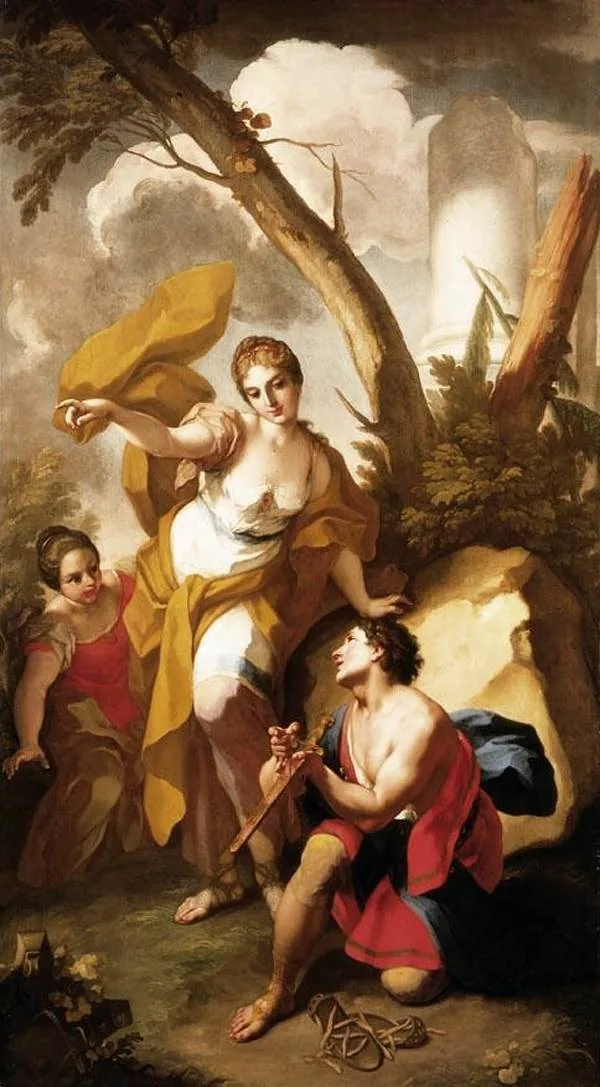
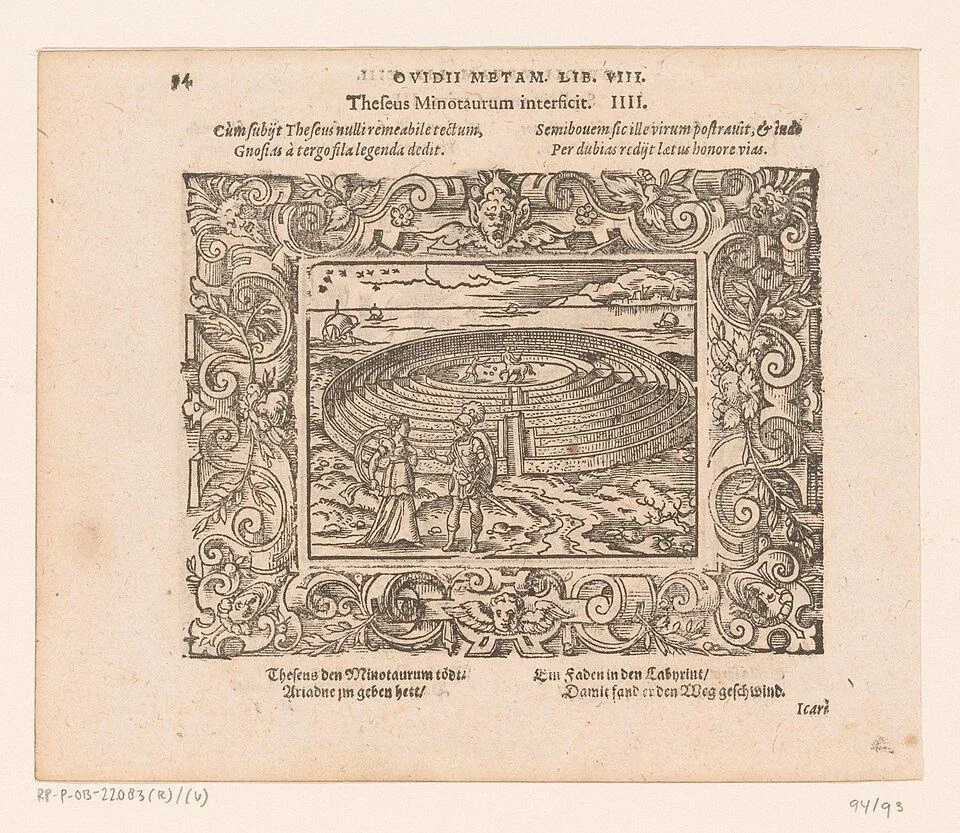
Ariadne falls in love with Theseus and requires him to take her away and marry her. She then obtains the method of escape from Daedalus. Theseus fixes the thread at the entrance, unwinds it as he proceeds, kills the Minotaur, and follows it back. The Bibliotheca describes killing it with his fists, whereas later images often give him a sword. This distinction requires separating textual versions from artistic conventions. The thread does not kill the monster, but makes it possible to bring victory outside. Without a return route, defeating the opponent at the center might still mean remaining inside forever. The helpers’ knowledge is thus as irreplaceable as the hero’s physical strength.
How later ages give the labyrinth a shape
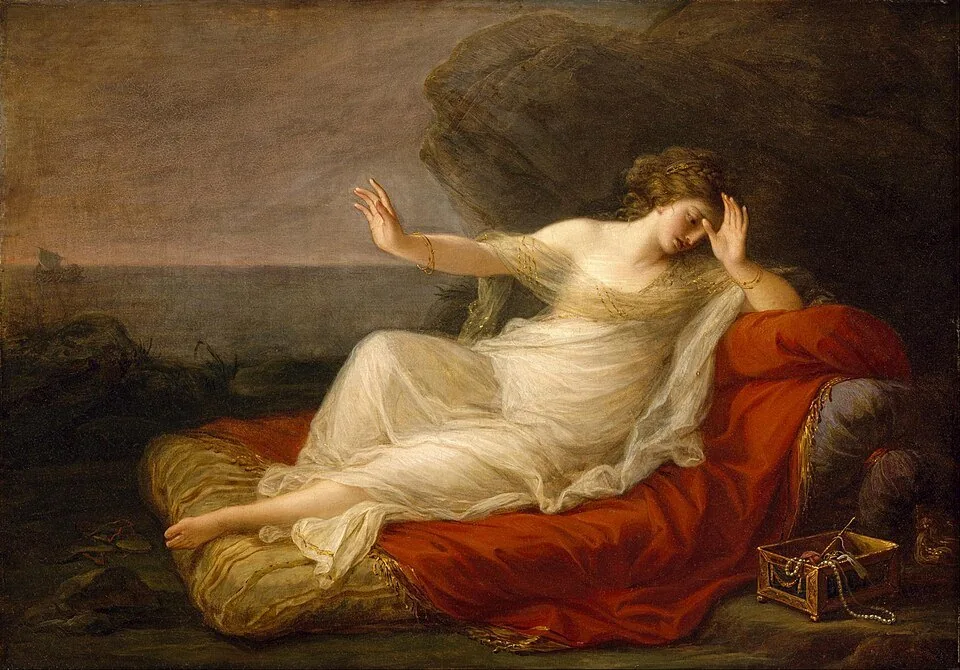
Plutarch’s Life of Theseus collects different local traditions and more rationalizing explanations of monster and labyrinth, showing that ancient writers did not accept only one tidy version. Later art often makes the labyrinth a concentric pattern seen from above: viewers readily see its entrance and center, but those inside lack that panoramic view. The thread can therefore be read as a response to limited vision, though this interpretation must not replace the concrete circumstances of tribute, betrothal, and royal responsibility. Killing the creature changes the young people’s fate, yet Ariadne’s later island experience and the disaster caused by the returning ship’s sails bring new problems after liberation. Leaving the labyrinth ends this action, rather than every debt in the hero’s life.