Objects left for a future child
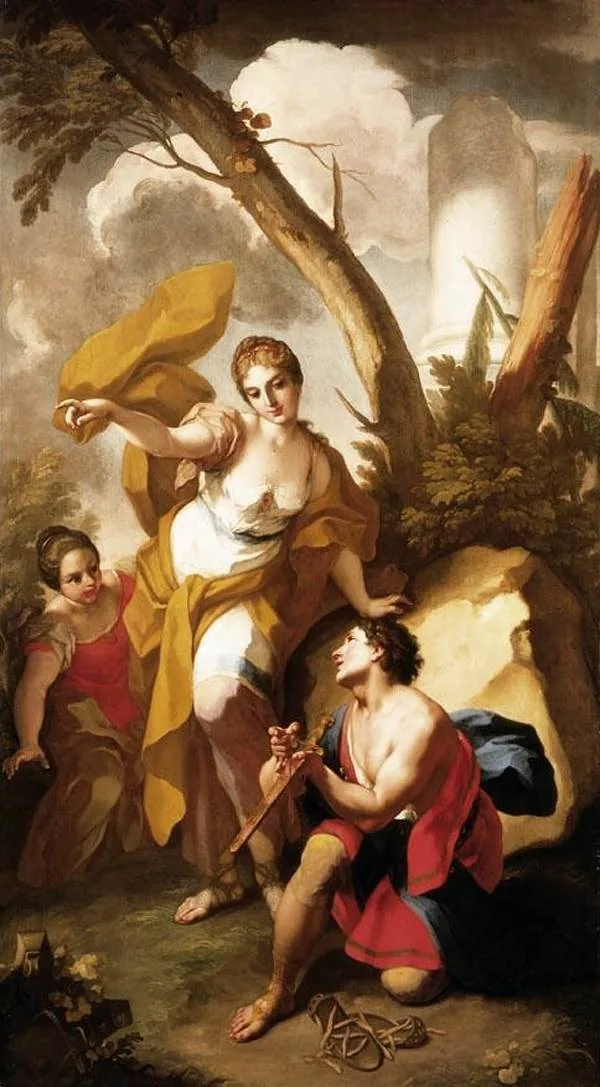
Apollodorus and Plutarch both connect Theseus’ departure from Troezen with objects left by Aegeus: a sword and sandals concealed beneath a heavy stone. Aegeus tells Aethra that a son strong enough to recover them should bring them to him. The arrangement reaches across years, but it depends on a person remaining with the child. Aethra holds the knowledge that makes the hidden objects meaningful. Without her account, the stone is simply a stone and the weapon an unexplained possession. The beginning of the hero’s journey therefore includes keeping and eventually communicating a family history, not only displaying exceptional physical strength.
Strength does not interpret its own achievement
When Theseus grows up, lifting the stone demonstrates that he can meet the condition set for him. Yet the action is not a self-explanatory proof of everything about his identity. Aethra tells him about his birth and directs him to the tokens. In Plutarch, bodily force appears alongside intelligence and courage before this disclosure. The scene brings those capacities into relation rather than letting one replace the others. A sword can later help identify its bearer to another person, but the mother’s words first connect the object with a name, a place, and an obligation. Recognition requires interpretation as well as possession.
A human father and a divine tradition
Apollodorus also includes Poseidon’s connection with Aethra on the same night as Aegeus. Plutarch discusses the tradition of divine parentage and the special importance of Poseidon at Troezen. These strands should not be forced into a modern biological demonstration. The sword and sandals arrange Theseus’ approach to Aegeus in Athens; they do not settle every religious or genealogical account by themselves. Myth can preserve different ways of explaining a hero’s origin. Keeping the distinction helps readers avoid an easy but misleading equation in which a physical test proves a single unambiguous parentage and makes all other traditions disappear.
The safer journey Aethra recommends
Plutarch makes Aethra and Pittheus urge Theseus to travel by sea, because the land route is dangerous. He chooses the road instead, drawn towards the example of Heracles and the possibility of confronting its violent inhabitants. Aethra’s advice is therefore not merely a ceremonial farewell. It proposes a real alternative to the path that heroic retellings tend to celebrate. The story lets us distinguish receiving a destination from choosing how to reach it. Theseus accepts the journey towards his father while refusing the safer method recommended by the people who have raised him. Their concern remains part of the departure even when it does not determine his decision.
A beginning before the famous adventures
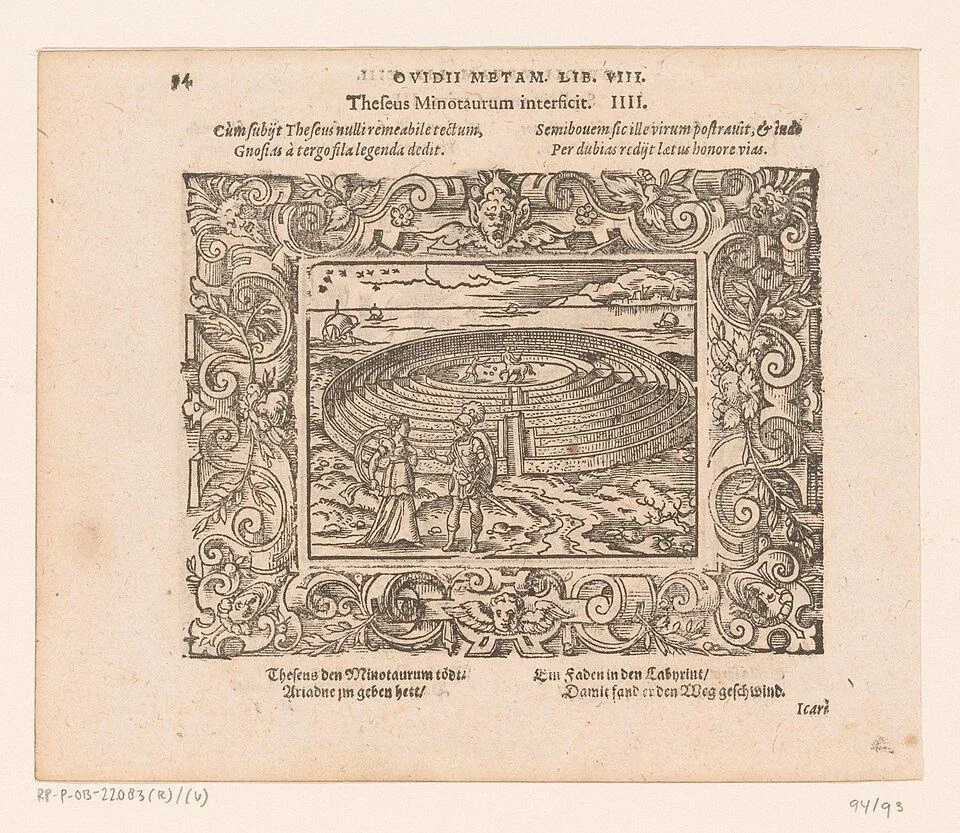
Apollodorus moves quickly from the recovered objects to the road’s encounters, while Plutarch gives more room to upbringing, naming, and deliberation. Reading them together restores the work that precedes a public heroic identity. The tokens link generations, but Aethra decides when to make their meaning available. Compare this with the site’s stories of Theseus in the labyrinth and of recognition elsewhere in Greek myth. Before someone can be welcomed as a returning or newly discovered son, another person must know what to look for and what to say. The adventure begins with that shared knowledge as much as with the stone moving aside.