Land and sea routes are blocked
Book VIII of Ovid’s Metamorphoses presents Daedalus weary of exile and wishing to leave Crete, knowing that Minos controls land and sea. He turns to the sky, arranges feathers of graduated lengths, and joins them with thread and wax to imitate birds’ wings. Icarus plays with feathers and wax, unaware that these light materials will soon determine his life. The making is both concrete and unsettling: it shows a craftsman observing nature, while bringing a child close to a technology he does not fully understand. A father’s ingenuity can open a blocked route, but cannot automatically give its user the same experience.
The joy of flight changes the course
Daedalus teaches his son to keep an intermediate altitude: too low, and seawater will wet the wings; too high, and the sun’s heat will damage the wax. He flies ahead, looking back like a parent bird tending its young. Delighted by flight, Icarus climbs higher. The wax melts, feathers scatter, and he falls into the sea. The Bibliotheca’s epitome also describes the winged escape, more briefly. Ovid prolongs the moment of loss through bystanders, the route, and the father’s cries. Icarus has not lacked guidance; excitement about a new ability changes his actions, while his grasp of danger fails to match the heights his body can reach.
Escape leaves a father’s grief
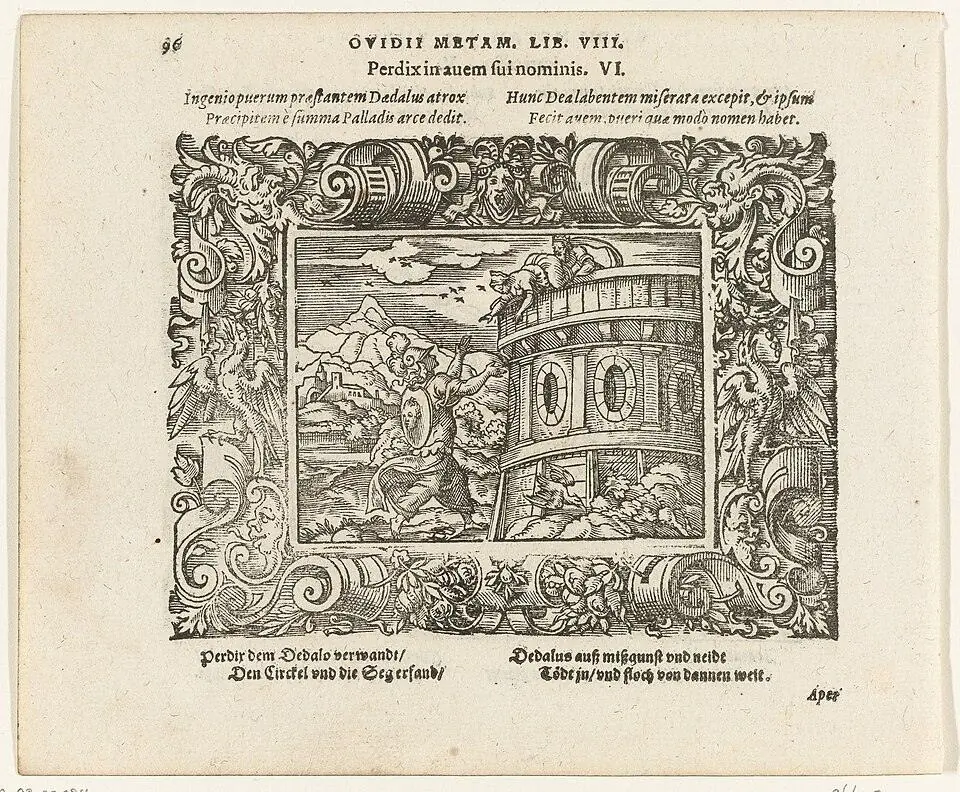
Daedalus finds his son’s body and buries him, and the sea and island receive names associated with Icarus. The man who gains freedom also loses the person he hoped to take away, so the ending cannot be replaced with a simple warning against pride. Nearby, Ovid tells how Daedalus harmed his young apprentice out of jealousy, placing exceptional craftsmanship beside a dangerous character. This does not make Icarus’ death a straightforward deserved punishment. Painters may choose a quiet moment of fitting the wings, depict the fall, or place a tiny drowning figure at the edge of a vast landscape. These perspectives emphasize preparation, catastrophe, or a world continuing around it. The father and son’s cries remind us that beyond failed technology lies an uncompleted plan to return home together.