An omitted rite brings disaster
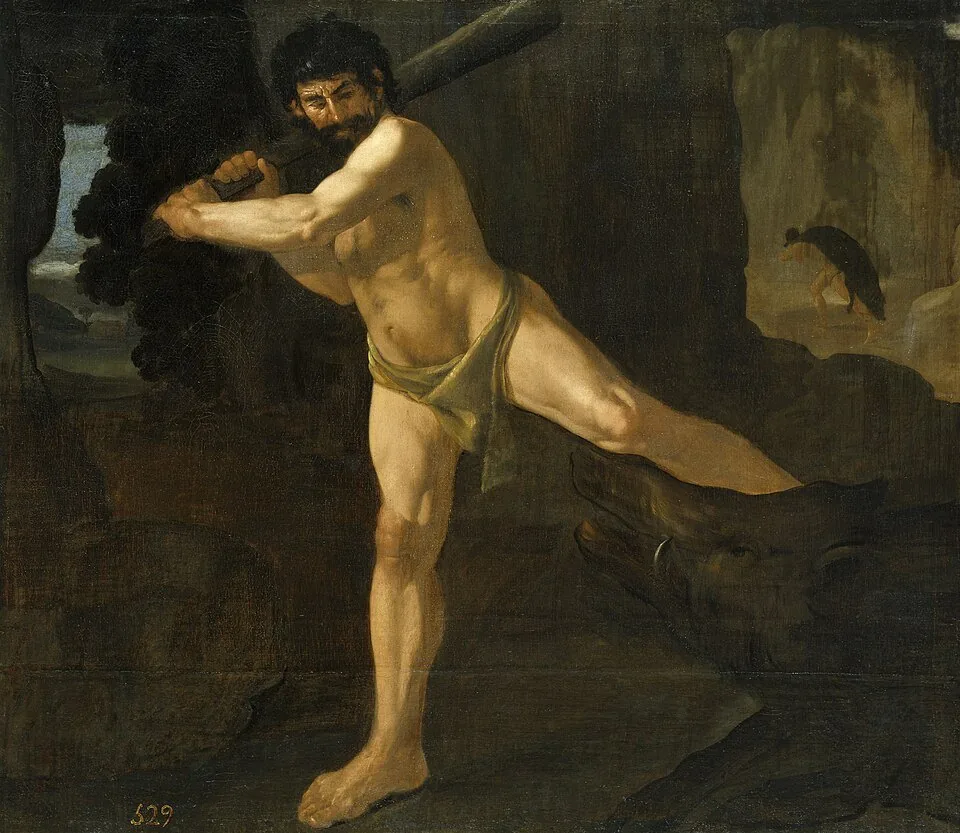
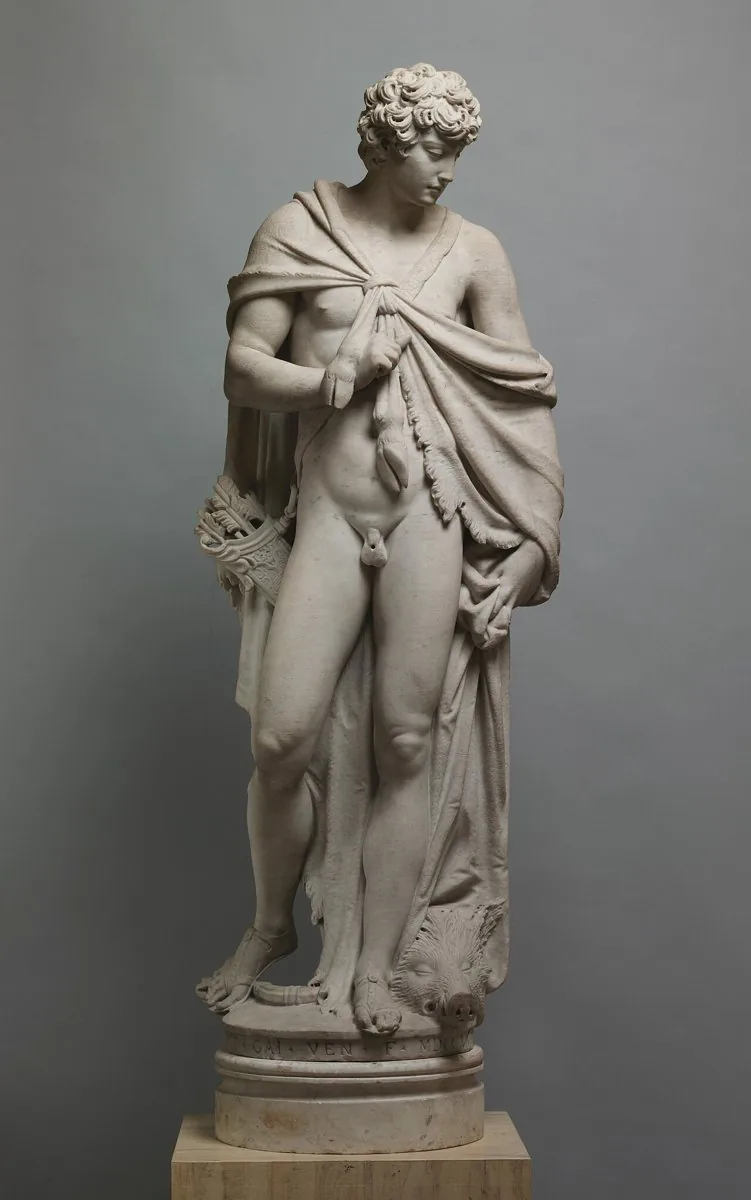
Oeneus, king of Calydon, sacrifices to the gods but omits Artemis. She sends a huge boar to ravage the fields. Meleager assembles heroes to hunt it, including Atalanta. The Bibliotheca preserves their list and the background to the shared expedition, while Book VIII of Ovid develops the participants’ spear throws, injuries, and failures. The boar does not live only in remote wilderness: damage to crops and livestock gives the hunt a public purpose. Yet a shared goal does not guarantee equality. In some narratives, Atalanta’s presence as a woman already provokes the male hunters’ resentment.
The first wound and the final blow
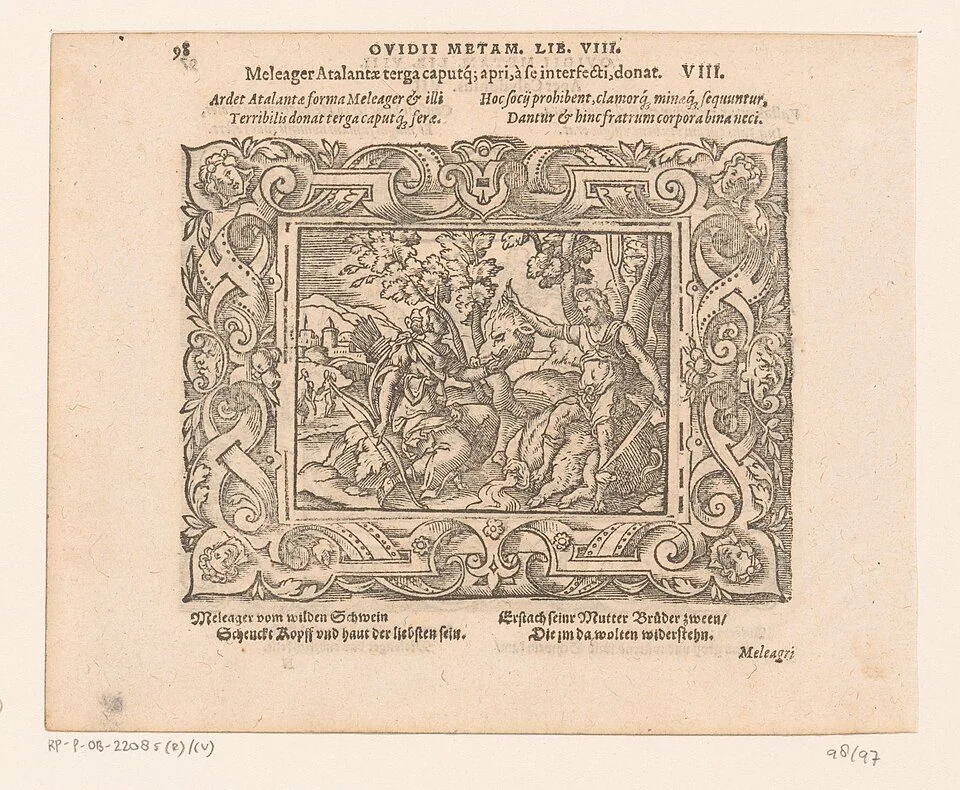
Ovid has Atalanta first wound the boar with an arrow. Meleager kills it and gives her the head and hide, recognizing her first successful strike. His maternal uncles reject the honor awarded to a woman and seize the trophies; enraged, he kills them. The Bibliotheca also connects the gift with conflict among relatives, but arranges the actions differently. Once the hunt succeeds, the dispute shifts from eliminating a danger to deciding who deserves recognition. The trophy is more than leather: it provides tangible proof of public honor. Denying Atalanta her share also denies that her contribution can stand alongside men’s.
A mother turns from family love to revenge
In the version involving a log, the Fates bind Meleager’s lifespan to a burning piece of wood at his birth. His mother Althaea quickly removes and preserves it. Learning that her son has killed her brothers, she struggles between being a mother and a sister, then throws the log into the fire, bringing his death. The Bibliotheca also preserves an account in which he dies in war. These cannot be narrated as the same death occurring twice in sequence. The log brings a distant hunt’s consequences to the domestic hearth, placing the hero’s life within an apparently ordinary object. Artists may choose the hunt, gift of the hide, or mother burning the log, each showing a different conflict. If we see only the successful killing, the disputes over recognition, gender, and loyalty to kin have scarcely begun.