An army almost goes home
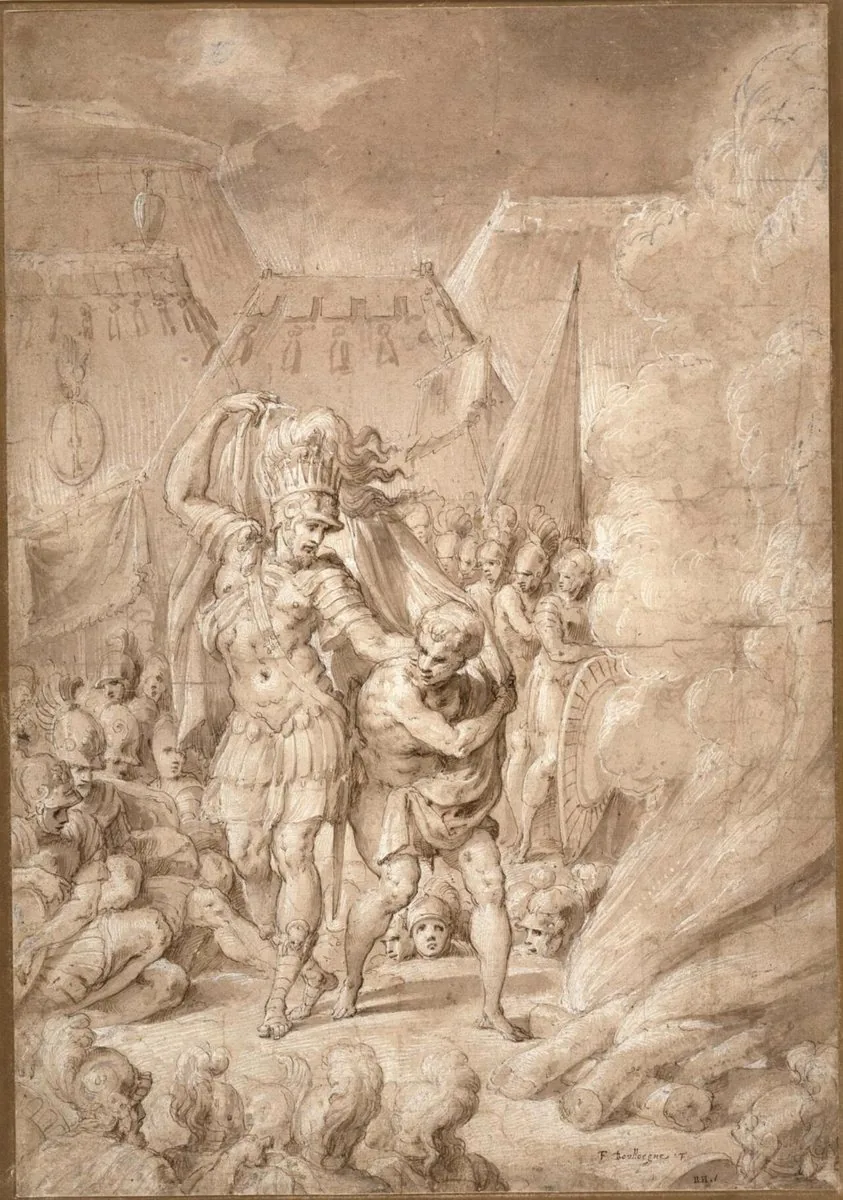
In Book 2 of the Iliad, Agamemnon tests the army by proposing departure, expecting the other leaders to restrain the men. Instead, exhausted warriors rush toward their ships. Odysseus intervenes with the king's sceptre, speaking differently to commanders and ordinary soldiers as he restores the gathering. Thersites speaks within this unstable situation, not in a peaceful meeting where everyone has already agreed to remain. The question of going home is practical before it becomes a question about an unruly voice. People have endured years of absence, and the king's own experiment has brought their desire for departure into public view.
A complaint with recognizable content
Thersites attacks Agamemnon's appetite for prizes and the suffering imposed on the army. He also recalls the seizure of Achilles' prize. These concerns are recognizable elsewhere in the poem, even though Thersites delivers them with insults and urges the men to leave. A reader need not approve every word to notice that the content is more specific than meaningless noise. The speech asks who receives the best rewards and who supplies the labour that makes them possible. It also uses abusive gendered language against the soldiers. Criticism of a leader and contempt for other people can occupy the same speech.
The narrator has already taken a position
Before the complaint, the narrator describes Thersites through hostile judgments about his speech and body. That description shapes how the audience encounters him. It should not become a modern explanation that an unusual body makes an argument false. Nor should we invent a democratic programme that the poem never attributes to him. His exact social background is not supplied in the detailed genealogical form familiar from many champions. What is clear is his exposed position in this gathering. The episode invites attention to the distance between hearing an objection and deciding, before its content is weighed, what kind of person may utter it.
A sceptre becomes an instrument of force
Odysseus rebukes Thersites and strikes him with the sceptre. Thersites sits in pain and tears; the surrounding men laugh and praise the intervention. Authority is restored through a bodily punishment as well as through argument. The same object that permits a recognized speaker to address the army can therefore silence another speaker. We can keep the scene's violence visible without repeating its humiliating detail for entertainment. The laughter is part of the action, not an instruction that every later reader must join it. A gathering can become orderly while leaving the unequal distribution of its permissions sharply exposed.
Another objection receives another answer
Book 4 provides a useful comparison. When Agamemnon accuses Odysseus of hanging back from battle, Odysseus answers angrily, and the king withdraws the charge with conciliatory words. The two situations are not identical: the participants, accusations, and military circumstances differ. Nevertheless, placing them together shows that sharp speech does not always produce punishment. Standing within the hierarchy helps determine what response becomes possible. Thersites' scene is thus more than a lesson about avoiding insults. It asks readers to watch who can protest, who can answer, and how a community recognizes or denies a person's right to remain publicly audible over time.