Advice for slower horses
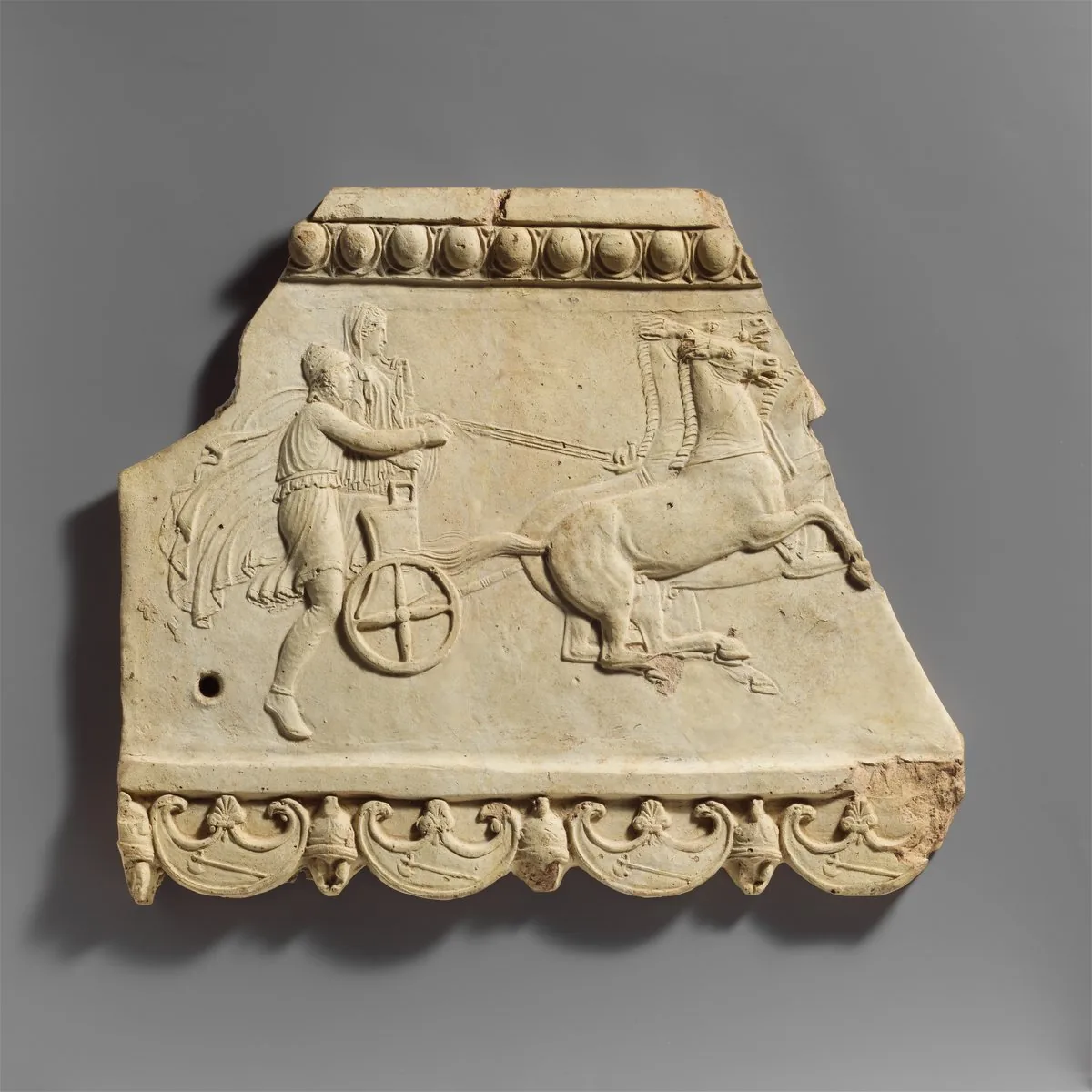
Before the chariot race in Book 23, Nestor advises his son Antilochus. The games honour the dead Patroclus, but the competitors still want prizes and recognition. Nestor knows that his son's horses are slower than those of some rivals. He therefore describes the advantage of judgment over sheer power, comparing the driver with other skilled workers. His instruction attends closely to the turning point, the reins, and the placement of each horse. It is practical knowledge transmitted between generations, not a spell that guarantees victory. The father offers attention to conditions that strength alone cannot erase, including the danger of breaking the chariot.
An opening that creates danger
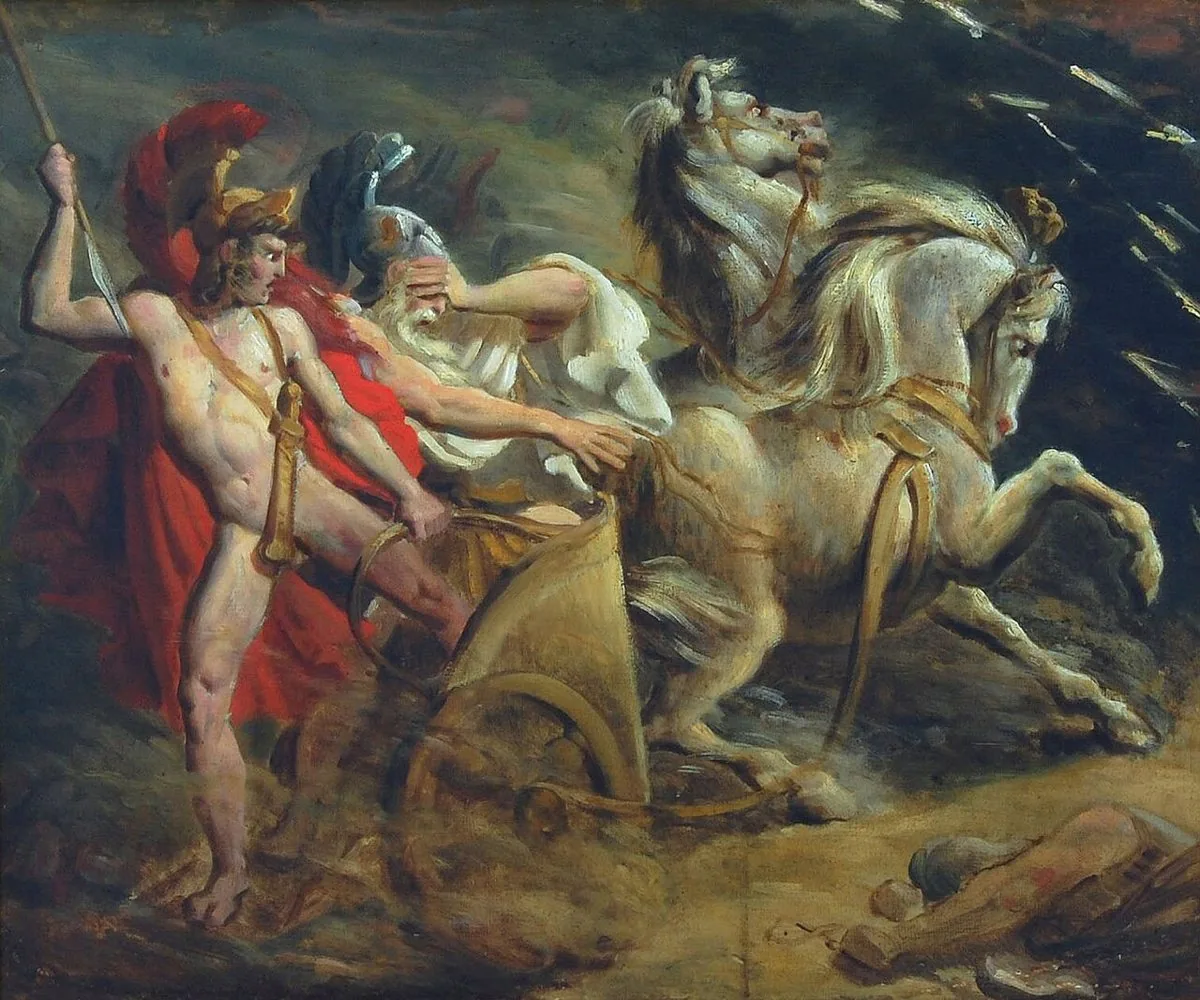
During the race, Antilochus presses Menelaus at a narrow section of the road. Menelaus warns him that the chariots may collide and asks him to wait for wider ground. Antilochus continues. Menelaus eases back rather than risk wrecking both teams, and Antilochus takes the advantage. The passage does not simply demonstrate that cleverness deserves whatever it can obtain. One driver's gain depends on another driver's decision to prevent a shared disaster. The finish therefore preserves a question that speed cannot answer: what kind of conduct has produced the visible order of arrival, and who has carried the risk created by it?
The prize is not settled by arrival
Antilochus comes second behind Diomedes. When Achilles proposes giving the second prize to the unfortunate Eumelus, Antilochus objects to losing what he has won. Achilles provides Eumelus with a separate gift instead. This exchange already shows that distributing rewards involves judgment as well as observation. Then Menelaus raises his own complaint about the dangerous passing manoeuvre. Different claims must remain distinct: sympathy for a damaged competitor is not the same issue as responsibility for forcing another driver aside. The poem allows these discussions to follow the race rather than presenting the finishing order as a complete account of justice.
An offered oath leads to an admission
Menelaus asks Antilochus to swear that he did not deliberately obstruct him through deception. Antilochus does not take that oath. He acknowledges youthful rashness and offers to yield the mare that forms his prize, preferring to preserve Menelaus' goodwill. Menelaus softens and returns it, while explaining why he accepts the apology. The outcome depends on an admission and a response, not on denying that the dangerous action happened. Neither man must disappear from the community for the dispute to end. A valuable object can pass into an offered act of repair and then be given back without making the earlier complaint meaningless.
Judgment beyond winning
Book 4 places Nestor among his troops, instructing charioteers not to rush ahead individually or fall behind. He recognizes that age has limited his own strength while leaving counsel useful. Read beside the race, this scene keeps technical skill within relationships of coordination and responsibility. The same culture that admires a clever turn also asks what a driver owes others sharing the ground. Antilochus' story therefore continues after the horses stop. Learning involves not only taking advice before an action, but also answering for its effects afterward. The reconciliation preserves a place for the younger man while requiring him to recognize what his pursuit of success has cost another.