Age and equipment create an emergency
During the Greek retreat in Iliad 8, Nestor is endangered when Paris wounds one of his horses. The old fighter struggles with the damaged team while the battle moves around him. His experience has not vanished, but experience alone cannot repair the immediate physical problem. Diomedes turns towards him instead of simply following the retreat. The episode begins with assistance to a particular person, before it becomes an encounter with Hector and a divine warning. That order matters. The shared chariot grows from an act of rescue, not from a prearranged plan for two famous warriors to perform together at the centre of the field.
Two men make one vehicle work
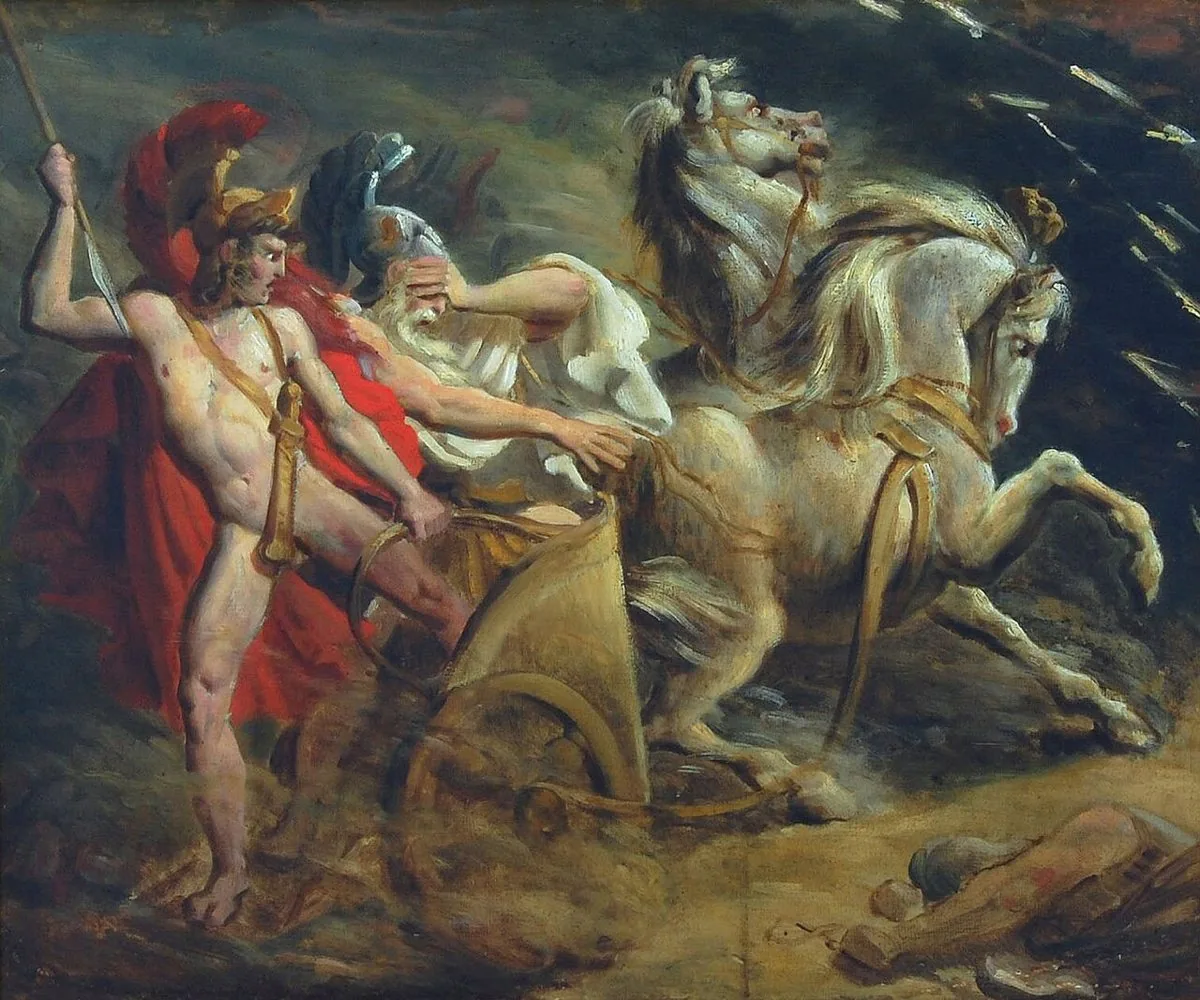
Diomedes tells Nestor to mount his chariot and entrusts the other horses to attendants. Nestor takes the reins while the younger warrior fights. Their partnership gives each a task rather than treating age as either complete incapacity or automatic mastery. The horses themselves have a history: Diomedes identifies them as the team taken from Aeneas. Equipment passes between encounters, carrying earlier achievements into a new emergency. For a moment, the combination works, and the two advance against the Trojans. The poem allows us to see the value of cooperation without implying that successful cooperation must always continue forward to remain honourable.
Thunder changes the terms
Zeus sends a thunderbolt before the horses, frightening them and signalling opposition to the advance. Nestor urges Diomedes to turn back. His argument recognizes a limit for that day rather than declaring permanent defeat. The divine favour now helping Hector might change another time; immediate resistance to it would not prove superior strength. Read this as the poem’s own account of power, not as a general instruction to treat every storm as a personal command. Within the scene, the sign changes what a reasonable next action looks like. Continuing unchanged would ignore information that was not available when the advance began.
The fear of what others will say
Diomedes understands Nestor’s warning but fears Hector will boast that he fled. Nestor answers by recalling what other people already know of his courage. Reputation is therefore part of the argument on both sides: it can demand reckless persistence, or it can provide enough security to permit withdrawal. Hector’s taunts make the pressure real, and Diomedes repeatedly considers turning again, while Zeus thunders. The retreat is not emotionally effortless. The scene separates the correct recognition of danger from the difficulty of accepting how that recognition will look to an enemy. Changing direction can require resisting an audience as well as resisting a spear.
A later journey gives the chariot another purpose
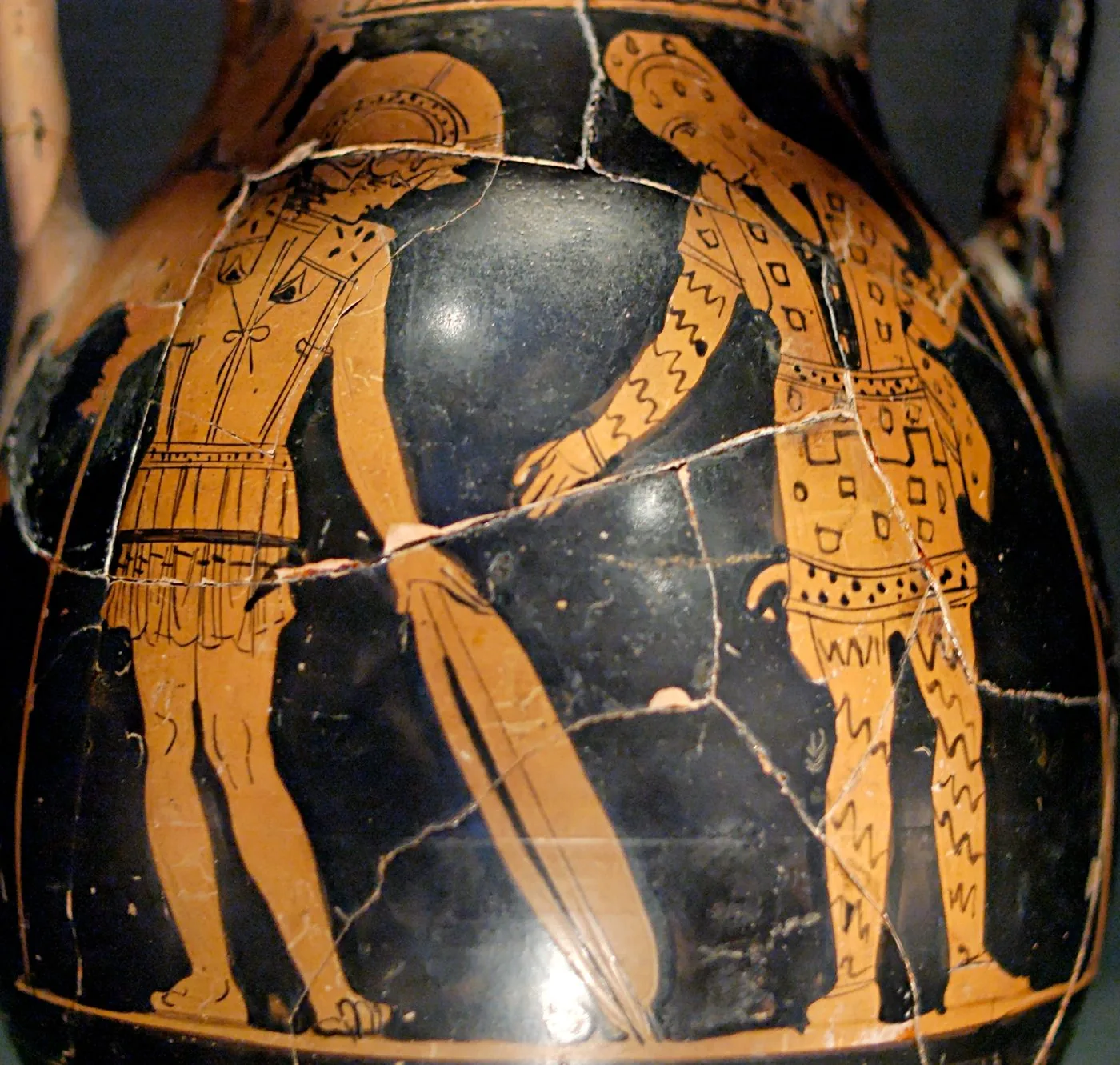
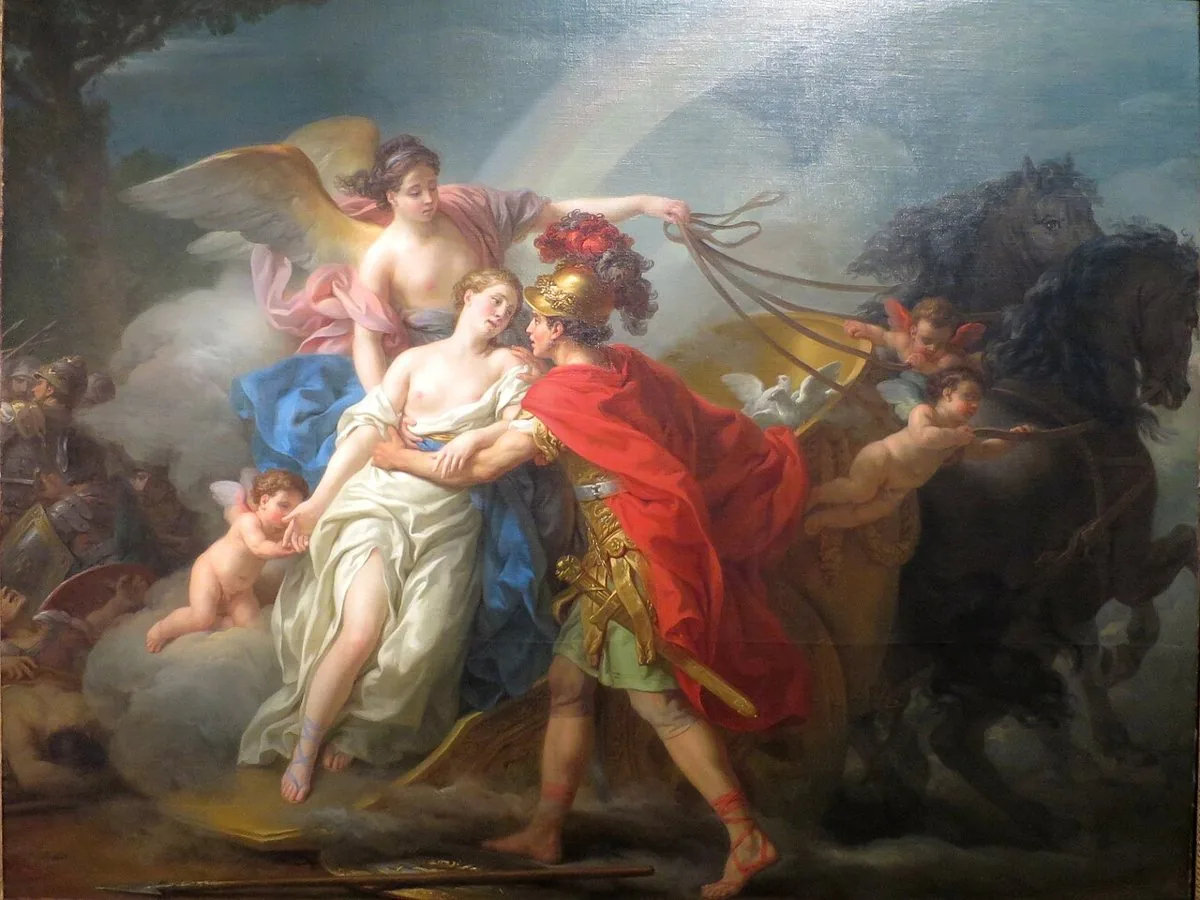
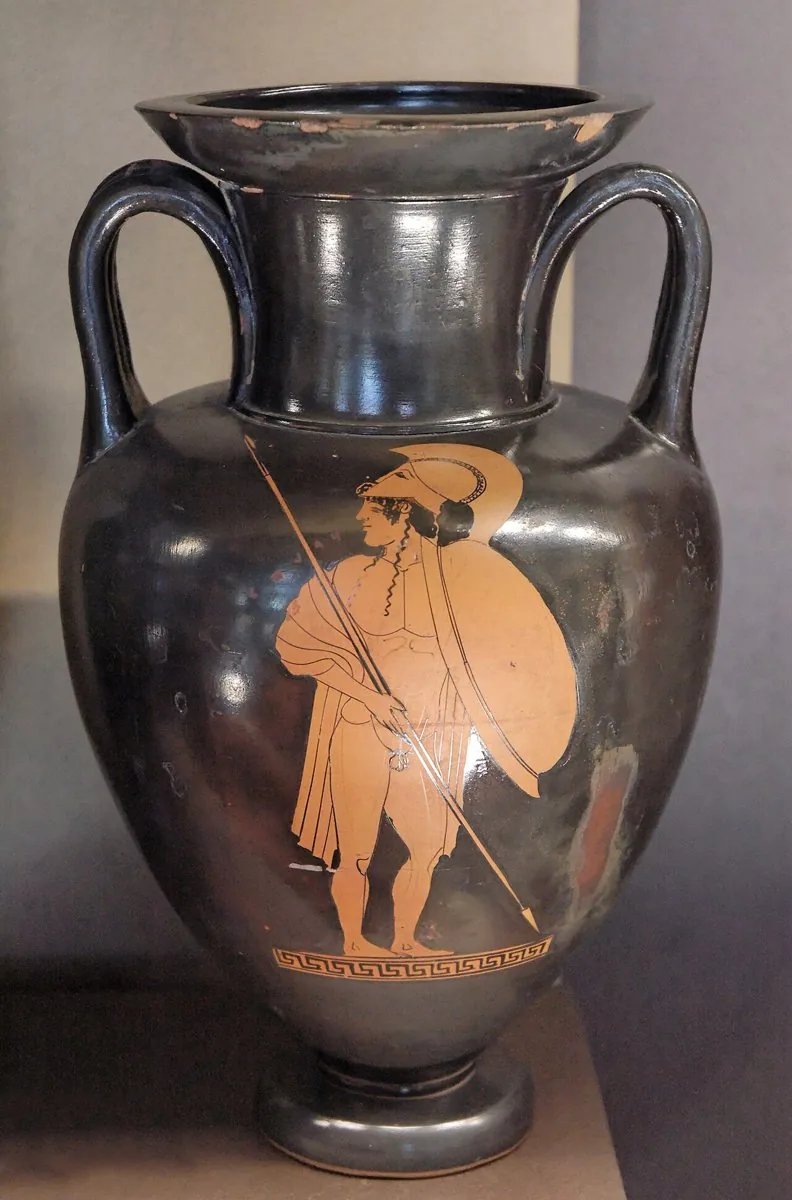
In Book 11, Nestor again drives away from danger, this time carrying the wounded healer Machaon towards the ships at Idomeneus’ urging. The second passage does not repeat the thunderbolt episode. It broadens our view of what movement away from combat can accomplish: saving someone whose skills help others. Read both scenes beside the site’s accounts of Diomedes and the Greek companions. Ary Scheffer’s painting of Nestor and Diomedes evokes the shared chariot and the danger facing its occupants. The epic’s measure of useful action includes transport, protection, and timely retreat, even when the loudest voices on the field prefer to call every backward movement a failure.