Permission before the attack
In Book 5 of the Iliad, Athena strengthens Diomedes and clears the mist from his sight so that he can distinguish gods from mortals. Her instructions include a limit: he should not fight the immortals, with Aphrodite as a stated exception. The episode therefore begins with assistance and a specific permission, rather than a hero independently discovering that divine bodies are easy targets. Diomedes' perception is itself part of a relationship with a goddess. His subsequent achievement cannot be separated from that help without changing what the poem says about the conditions of his success. Strength, perception, and permission remain connected.
A mother on the battlefield
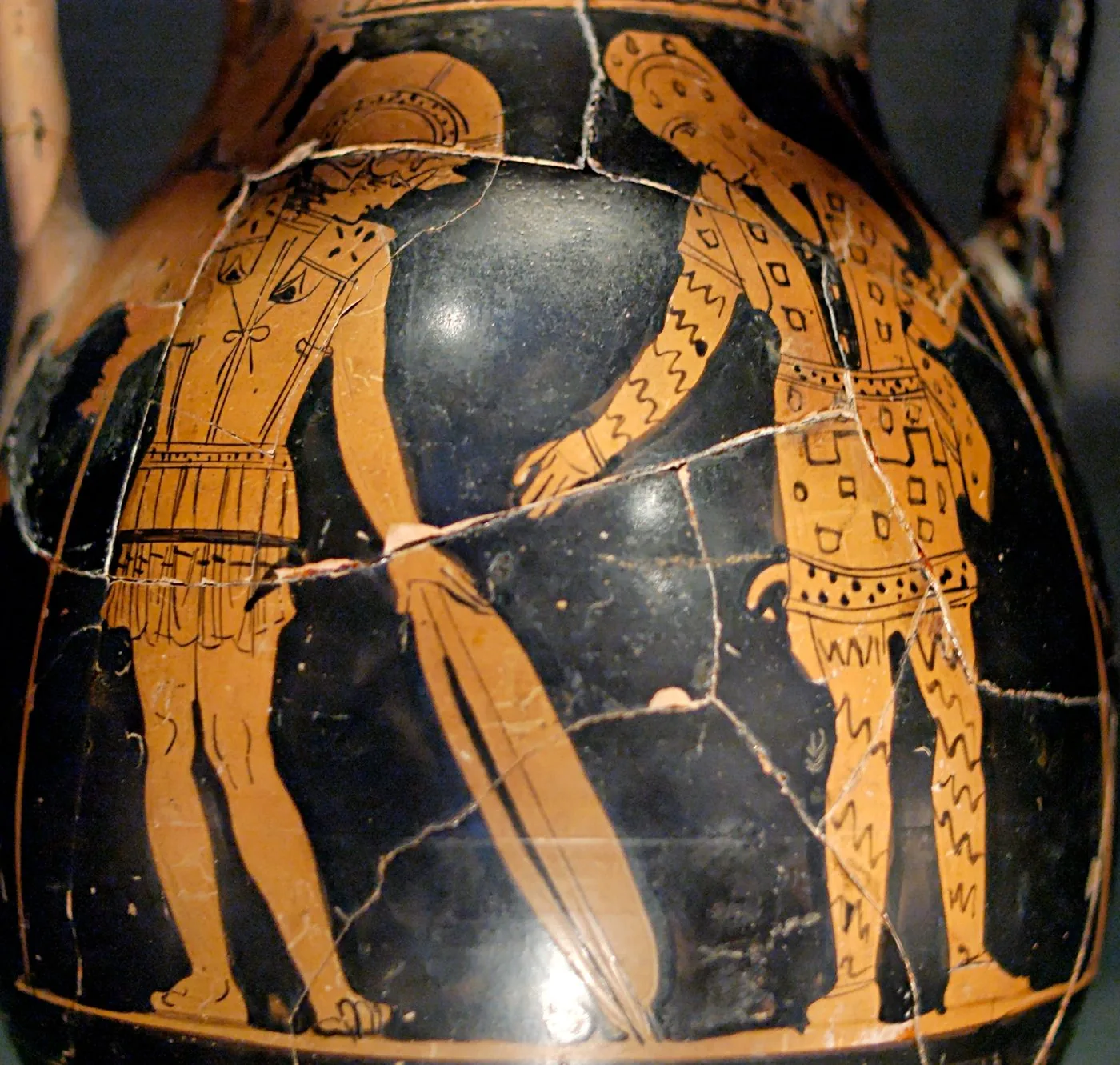
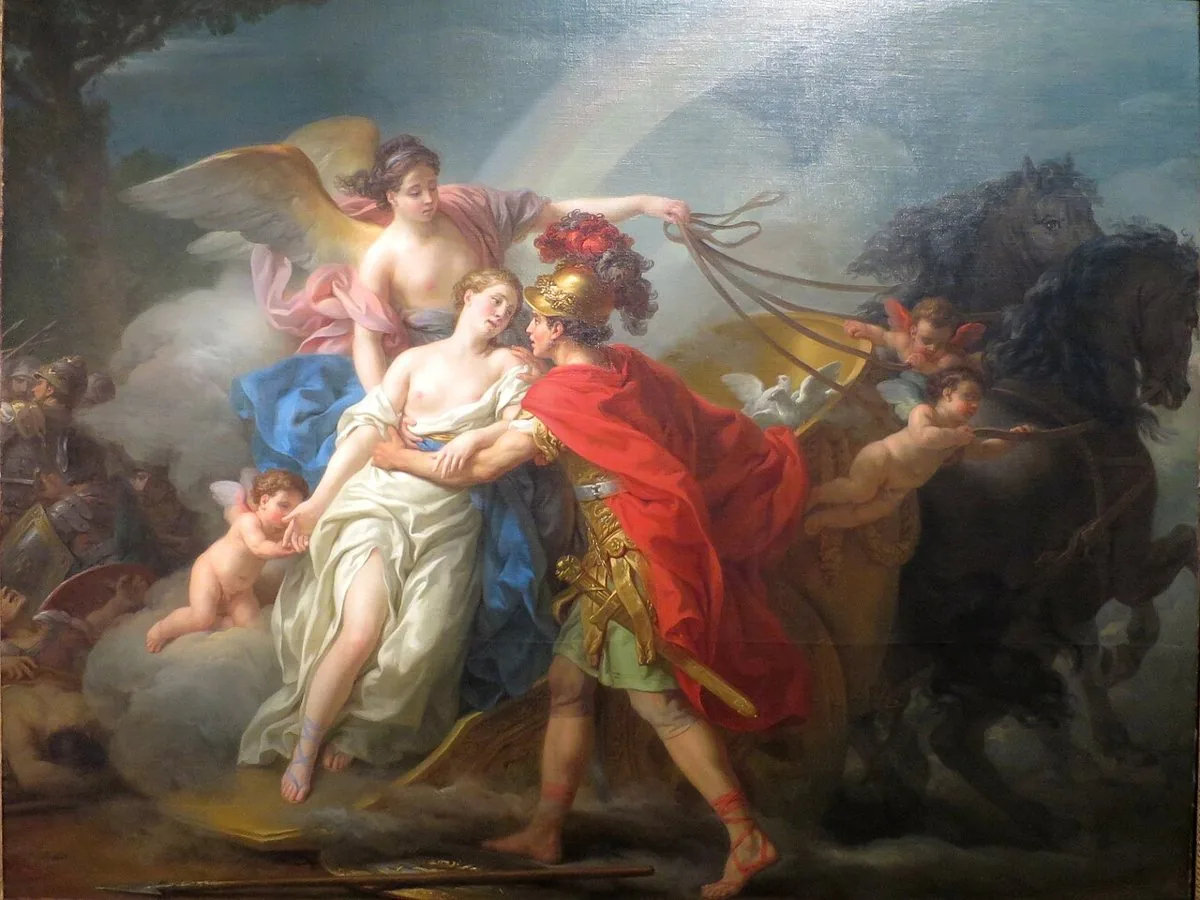
Aphrodite enters the fighting to protect her son Aeneas. She wraps her arms and garment around him, trying to shield him from weapons. Diomedes recognizes whom he is pursuing and reaches her hand with his spear. The poem identifies the divine fluid flowing from the wound as ichor, distinguishing it from human blood and connecting the gods' bodies with their different nourishment. The wound hurts, but it does not turn immortality into ordinary mortal vulnerability. Aphrodite lets go of Aeneas, and Apollo catches and conceals him. Protection passes from one divine figure to another rather than simply disappearing when the first protector is injured.
Retreat also has companions
Iris leads Aphrodite away, and Ares supplies horses for the journey to Olympus. There Dione receives her daughter and hears what happened. The return gives the injured goddess a network of assistance, not just a humiliating exit from the story. Dione recalls other occasions when immortals suffered at mortal hands, placing the event within a larger divine memory. The pain is relieved and the hand restored. Reading the scene through these movements makes care and dependence visible alongside the spear thrust. Divine life includes needing help, even when its duration and bodily conditions differ from those of the soldiers below.
The same goddess can compel Helen
Book 3 complicates the idea that Aphrodite is simply powerless because Diomedes wounds her. After rescuing Paris, she summons Helen to him. Helen recognizes the goddess despite her disguise and resists; Aphrodite answers with a threat, and Helen follows in fear. The relation between these women is not the same as the battlefield encounter with an Athena-assisted warrior. Setting and relative power matter. A goddess can be injured in one scene and exert frightening authority over a mortal in another. Neither episode cancels the other, and neither turns her into a single fixed measure of strength or weakness.
The limit remains in the poem
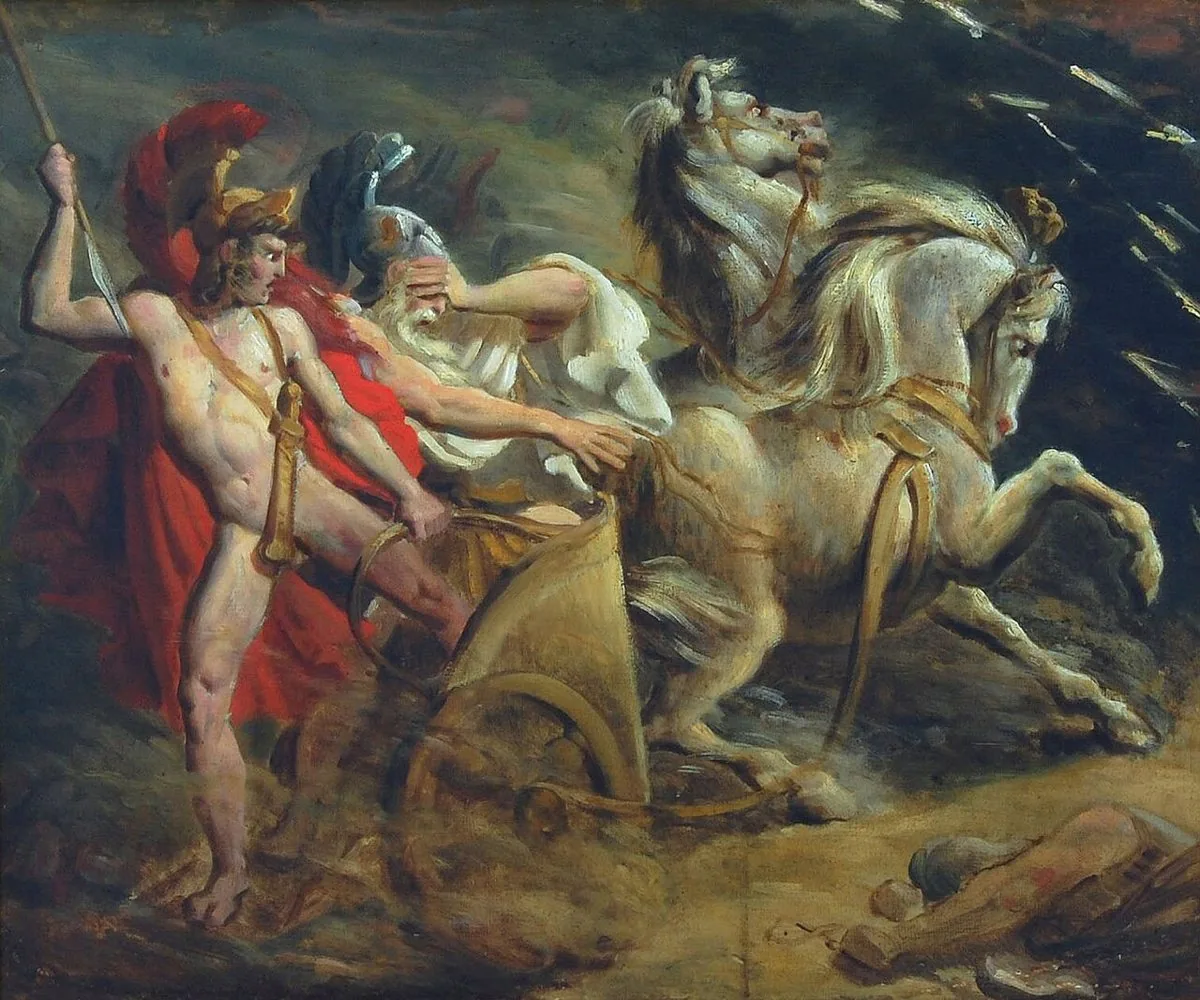
After Aphrodite withdraws, Diomedes also presses toward Aeneas while Apollo protects him. Apollo warns him to respect the difference between gods and humans, and the warrior draws back. The warning belongs beside Athena's initial instruction. This particular victory has not abolished every boundary. The episode offers a more precise way to read heroic success: ask who supplies the help, who is exposed to injury, and who can move protection elsewhere. Aphrodite's wound remains memorable because a mortal reaches a goddess, but its meaning depends on the relationships that make the moment possible and then bring it to an end.