The army arrives at the wrong place
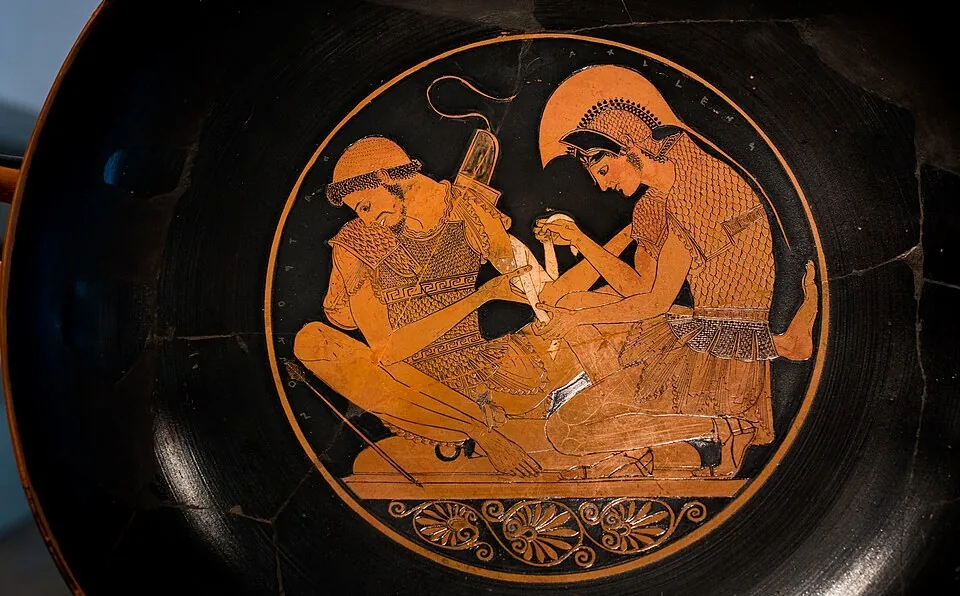
In Apollodorus’ Epitome, the Greeks reach Mysia without knowing the correct route to Troy and attack as though they have found their intended enemy. Telephus, the son of Heracles and ruler of the Mysians, defends the country. Achilles wounds him during the fighting and pursuit. This beginning matters because the later request for help does not arise between strangers without a history. The expedition has already inflicted harm through mistaken recognition. Telephus’ wound carries that encounter forward after the ships depart, while the Greeks’ navigational problem remains unresolved. Neither side possesses everything it will need to continue independently.
An oracle connects injury and remedy
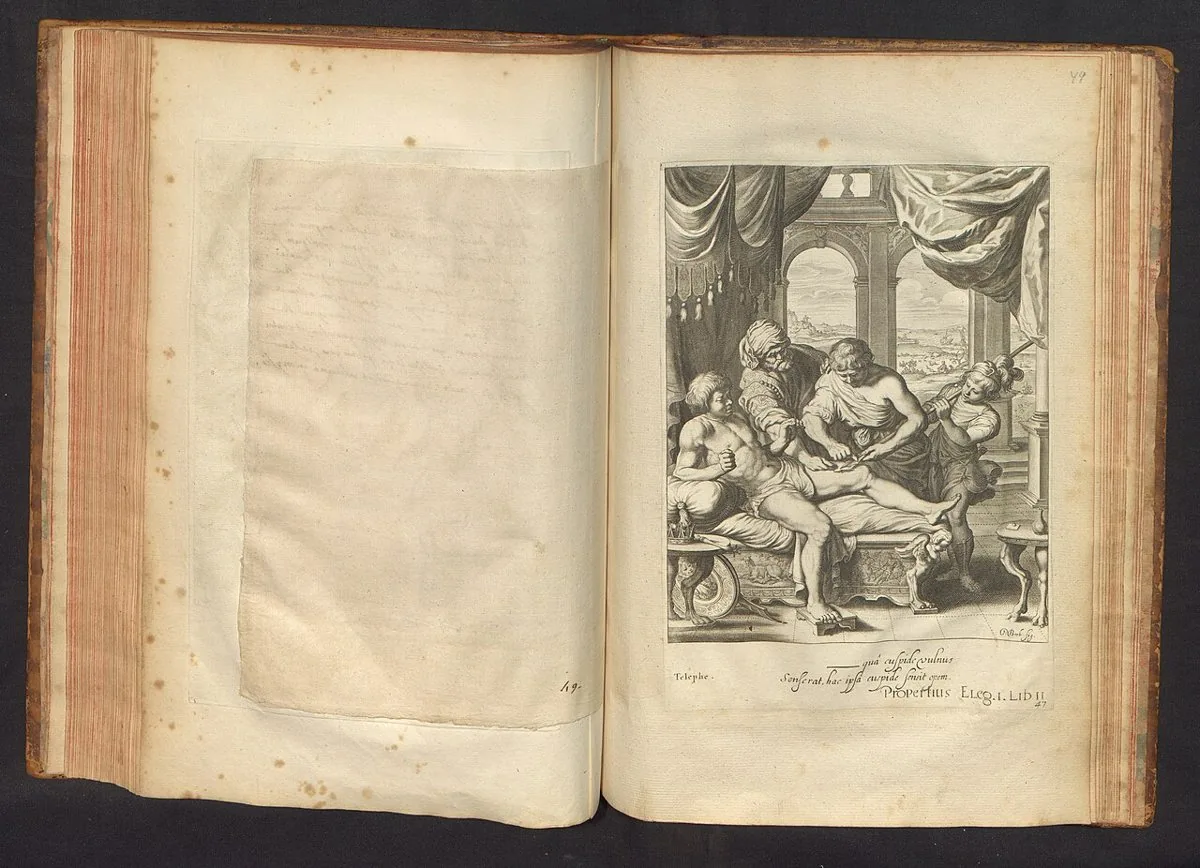
The wound does not heal, and Telephus seeks Apollo’s guidance. The answer links his recovery to the source of the injury. Apollodorus presents the demand through the figure who wounded him; Hyginus emphasizes the spear and gives Odysseus a role in interpreting the wording when Achilles says he does not know medicine. This is not an ordinary clinical account. Its logic belongs to myth: an object associated with damage becomes part of an extraordinary restoration. The distinction between the warrior and his weapon gives the oracle a problem to be understood, rather than allowing its first apparent meaning to settle the action immediately.
A return to a dangerous company
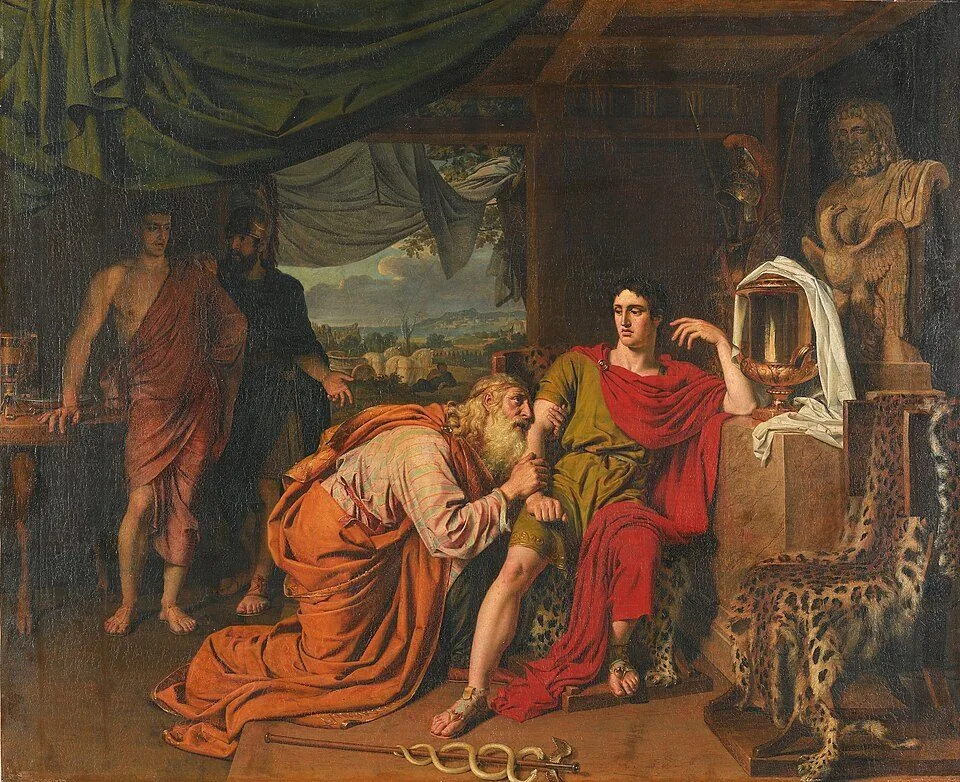
Telephus must approach the Greek leaders to seek the help that the oracle requires. In the Epitome he comes in poor clothing and offers to guide them towards Troy. Hyginus adds a much more alarming episode involving the infant Orestes and Clytemnestra’s advice. That threat belongs to Hyginus’ telling and should not be silently added to Apollodorus’ scene. The difference changes the negotiation’s atmosphere. One account foregrounds petition and an exchange of help; the other includes coercion before reconciliation. Comparing the texts prevents the resulting agreement from looking effortless or from making every participant’s actions equally acceptable.
Knowledge the attackers cannot replace
The Greeks need a guide, and Telephus knows the route they lack. His recovery and their onward journey become connected without erasing their earlier opposition. Hyginus distinguishes showing the way from agreeing to fight against Troy: Telephus will provide guidance but does not accept the same military role as the expedition’s warriors. This limit is important. Assistance does not automatically create unlimited loyalty to the people receiving it. The restored man can contribute something specific while maintaining another relationship and another position. Apollodorus likewise makes his guidance a necessary part of the fleet’s renewed attempt to reach its destination.
What the spear cannot explain alone
Both accounts associate the healing with material from Achilles’ spear, but reproducing that literary detail as a remedy would miss the story’s meaning. The weapon matters because it embodies the earlier injury and the obligation to return to its source. Recovery also requires interpretation, approach, and a negotiated future. Read Telephus beside the site’s stories of wounded companions and of the departures for Troy. The Greeks cannot move forward simply by repeating their strength, and Telephus cannot escape his pain simply by remaining apart. Their meeting creates a limited way ahead while leaving the reader able to remember who first mistook a country for a target.