Crossing the enemy camp
Book 24 of "The Iliad" writes that Priam left Troy with the ransom and entered the Greek army's camp. Hermes guided his journey, making this almost impossible crossing possible. The old man had no army to protect himself, and the strength he brought was a father's plea for his son. The two sides in war, usually divided by walls, fronts and weapons, were now connected by a risky meeting, and there was a space for conversation between the enemies.
Reminding the hero of his father
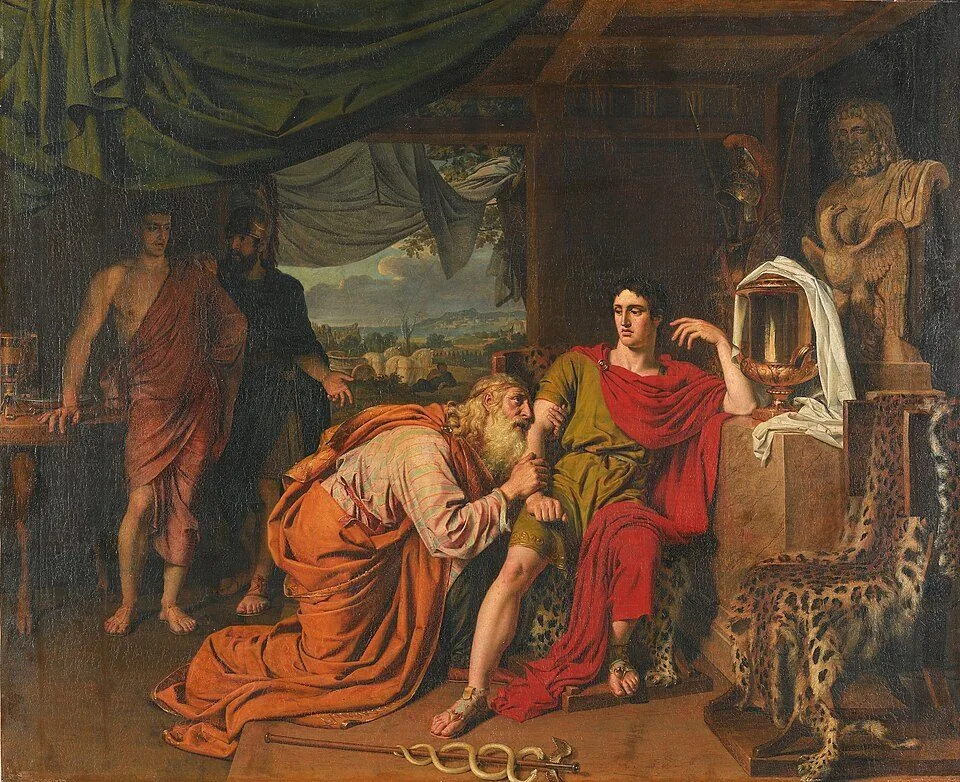
Priam asks Achilles to remember the elderly Peleus far away and return Hector's body. Such comparisons do not erase the killing, but they bring the enemy's pain into the hero's own family experience. Both sides mourned for different reasons: one lost his son, the other missed his father and companions. They did not reach a common judgment on the entire war, but in their grief, they could recognize that the other also had loved ones. The epic thus writes about sympathy as a concrete connection rather than an abstract moral imperative.
The importance of remains and funerals
Hector’s body had been dragged, but the gods had spared it the damage that would have caused ordinary corpses. Returning the body means that the family can complete the funeral and re-identify the deceased by name, relatives and the memory of the city. Achilles agreed to allow time for the funeral rites, and this brief truce served a definite purpose. It cannot resurrect the dead, nor can it end the war, but it prevents revenge from extending infinitely to corpses and mourners, allowing human dignity to regain a new boundary.
Where the epic chooses to end
The Iliad ends with Hector's funeral, not the entry of the Trojan Horse or the destruction of Troy. This ending leaves us in collective mourning and explains the central weight of Priam's visit. Later painters often contrasted the low body of the old man with the tall figure of the hero, showing that power does not entirely belong to the person holding the weapon. When reading, you can ask: When a war epic decides to end with a burial, does it ask us to remember whether there are also interpersonal responsibilities besides victory and defeat?