The young man has already returned once
In Book 21, Achilles encounters Lycaon, a son of Priam, escaping from the river. This is not the Arcadian king of the same name who becomes a wolf in another tradition. Achilles had previously captured this young Trojan in an orchard at night and sold him across the sea. A guest-friend later secured his release, allowing him to return home. That earlier journey matters because Lycaon knows that captivity has once ended without death. His hope is based on experience rather than an abstract confidence that every warrior will show mercy. The poem supplies a past before the desperate present.
A body makes a request
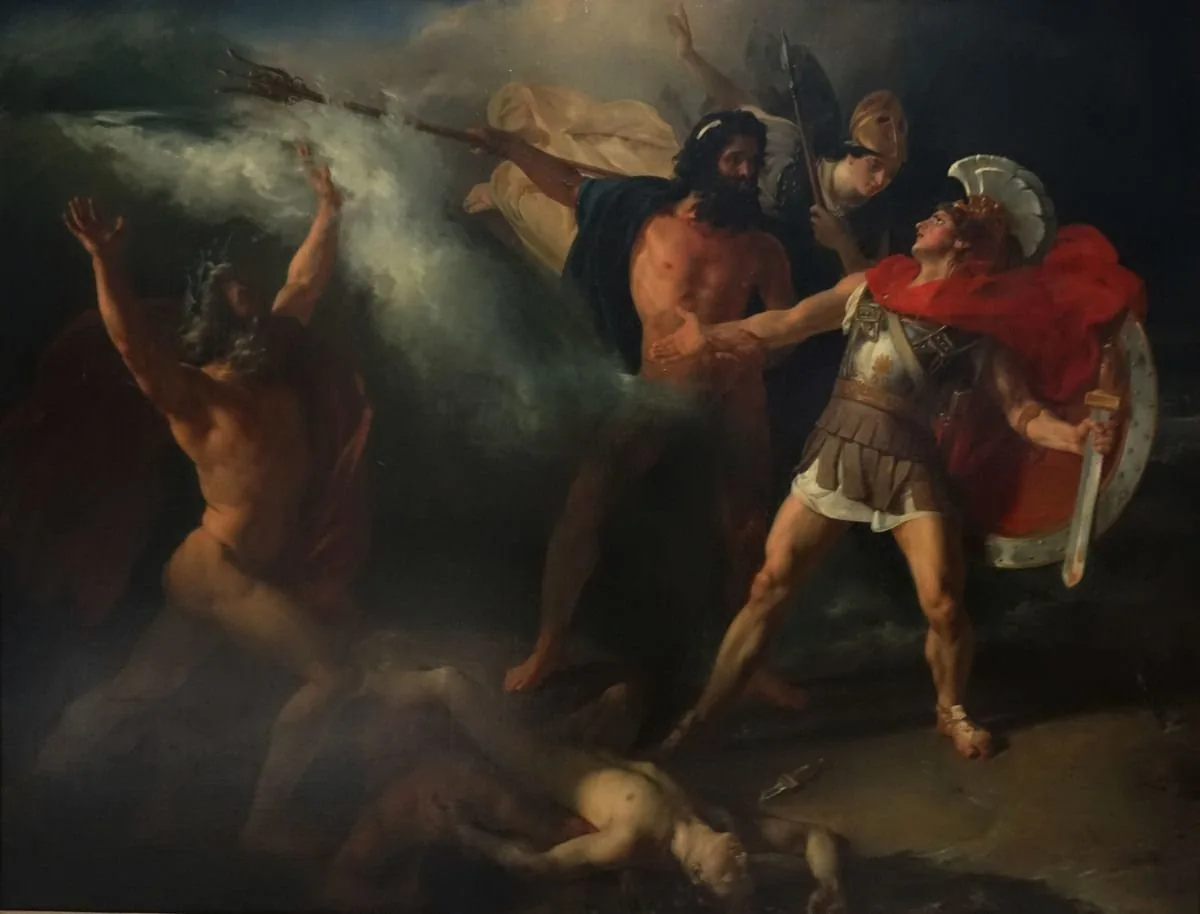
Lycaon is exhausted and unarmed when Achilles sees him. He approaches and grasps the warrior's knees, avoiding the first thrust, while also holding the spear. His plea is not delivered from a position of equal control. The gesture tries to establish a recognized relation of supplication in the middle of combat. It cannot by itself force the stronger person to accept that relation. Keeping the bodily situation visible helps distinguish this meeting from a formal duel. The scene concerns whether someone who holds another person's life will allow a request to interrupt the immediate use of that power.
The meal becomes an argument
Lycaon recalls eating in Achilles' shelter after the earlier capture. He also describes the price of his enslavement and release, his mother Laothoe, and the short interval since his return. Finally, he stresses that he does not share Hector's mother, seeking distance from the man who killed Patroclus. These details offer several paths toward survival: remembered food, ransom, family, and a distinction within the enemy household. They do not all mean the same thing. His speech searches for a connection Achilles might acknowledge, making the captive more than one interchangeable member of a hostile population. He asks for another future, not merely for an explanation of his past.
Achilles changes the meaning of mortality
Achilles refuses the appeal. He says that before Patroclus' death he was willing to spare captives for sale, but now he will not spare the Trojans he catches, especially Priam's sons. He also invokes his own eventual death, despite his divine mother. Shared mortality does not produce compassion in this answer; it becomes a reason Lycaon should accept dying too. Achilles kills him. A retelling can state that result without repeating the graphic detail. His awareness that he will die is therefore not automatically wisdom or mercy. What matters is how he uses that knowledge in relation to the vulnerable person before him.
Another supplication remains possible later
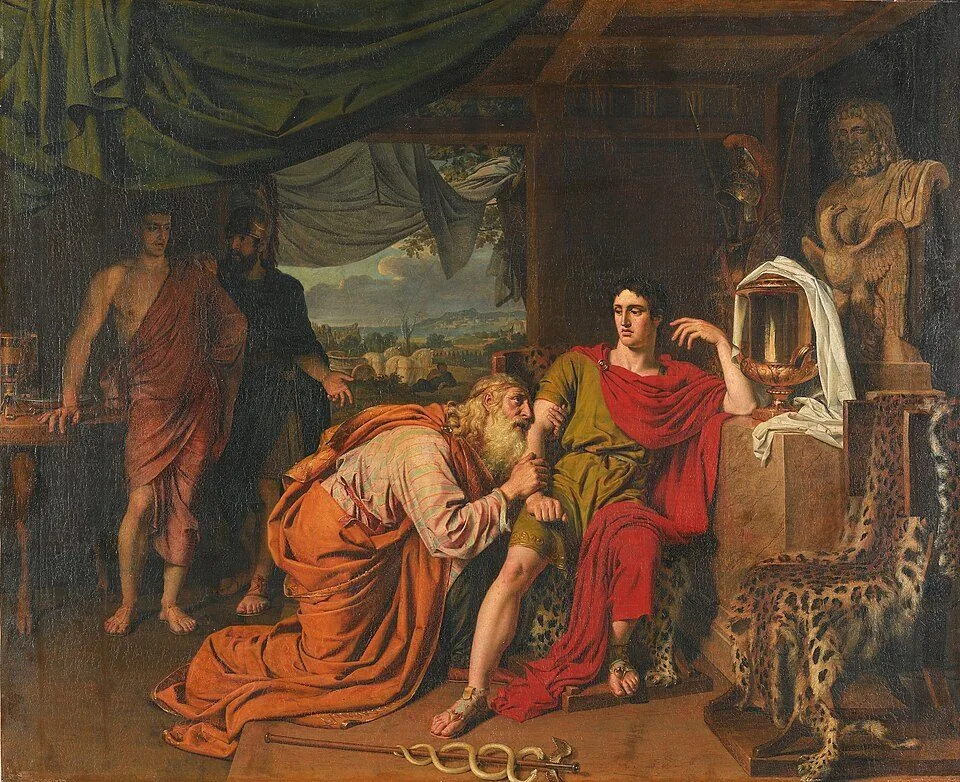
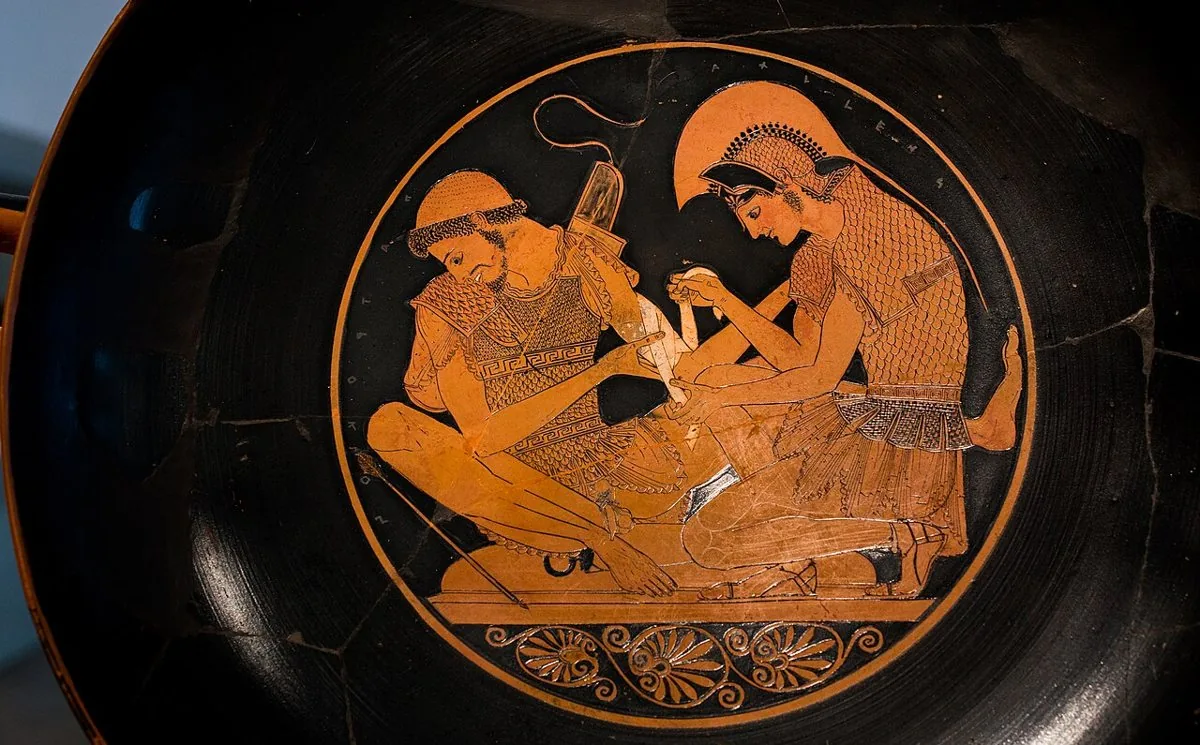
In Book 24, Priam grasps Achilles' knees and recalls the warrior's father. Their mourning eventually opens a different response and the return of Hector's body. Priam seeks a dead son's remains, not his own release as a battlefield captive, so the situations must not be collapsed. Yet the comparison prevents us from treating Achilles' refusal as an unchanging law of the entire poem. The image here shows Achilles tending Patroclus in an earlier artistic scene, not killing Lycaon. That remembered bond helps frame the grief surrounding the encounter. Neither the later compassion nor the earlier care gives Lycaon back the life denied to him.