The channel receives more than a warrior’s victories
In Iliad 21, Achilles returns to battle and drives fleeing Trojans into the river Scamander, also called Xanthus. Blood and bodies enter the current, and the river has already grown angry at the slaughter. He then speaks from the depths in human shape. If the warrior must kill, he should at least drive his victims out of the stream and do it on land: the dead have blocked his passage to the sea. This precise request does not promise an immediate end to war. Achilles agrees, yet declares he will continue killing until he has confined the enemy within Troy and confronted Hector. What accumulates as victory for the fighter becomes an obstruction for the river. Another being now describes what this action makes him bear.
Water carries out the dead and conceals the living
When Achilles leaps into midstream again, Scamander raises a wave. He throws corpses ashore and hides living Trojans in deep water and eddies, then beats against the warrior’s shield. The current is more than a weapon equally dangerous in every direction: the poem explicitly gives the river an intention to preserve the pursued. Achilles cannot stand. He grabs a large elm, but the tree comes up by its roots, tearing the bank apart. Its fallen branches obstruct the flow and help him scramble out. There is no secure stepping stone in this sequence. Grasping an object cannot guarantee that it remains attached to the earth. Finely made armor cannot supply the ground a body needs.
The fastest runner can still be overtaken
Achilles flees across the plain, with the wave continually catching him. The poem compares the river to water led through a gardener’s channel. A worker clears obstacles with a tool; water rolls over pebbles and soon outstrips its guide. This ordinary irrigation scene makes the speed of pursuit perceptible. Whenever the hero tries to resist, water strikes his shoulders and eats away the soil beneath his feet. He appeals to Zeus, fearing death like a herdsboy swept away while crossing a storm torrent. Even death in combat against another hero seems preferable. Fear reveals a distance between reputation and bodily need. Speed, splendid armor and experience of victory cannot make a body independent of a place to stand.
Help expands, carrying danger to other lives
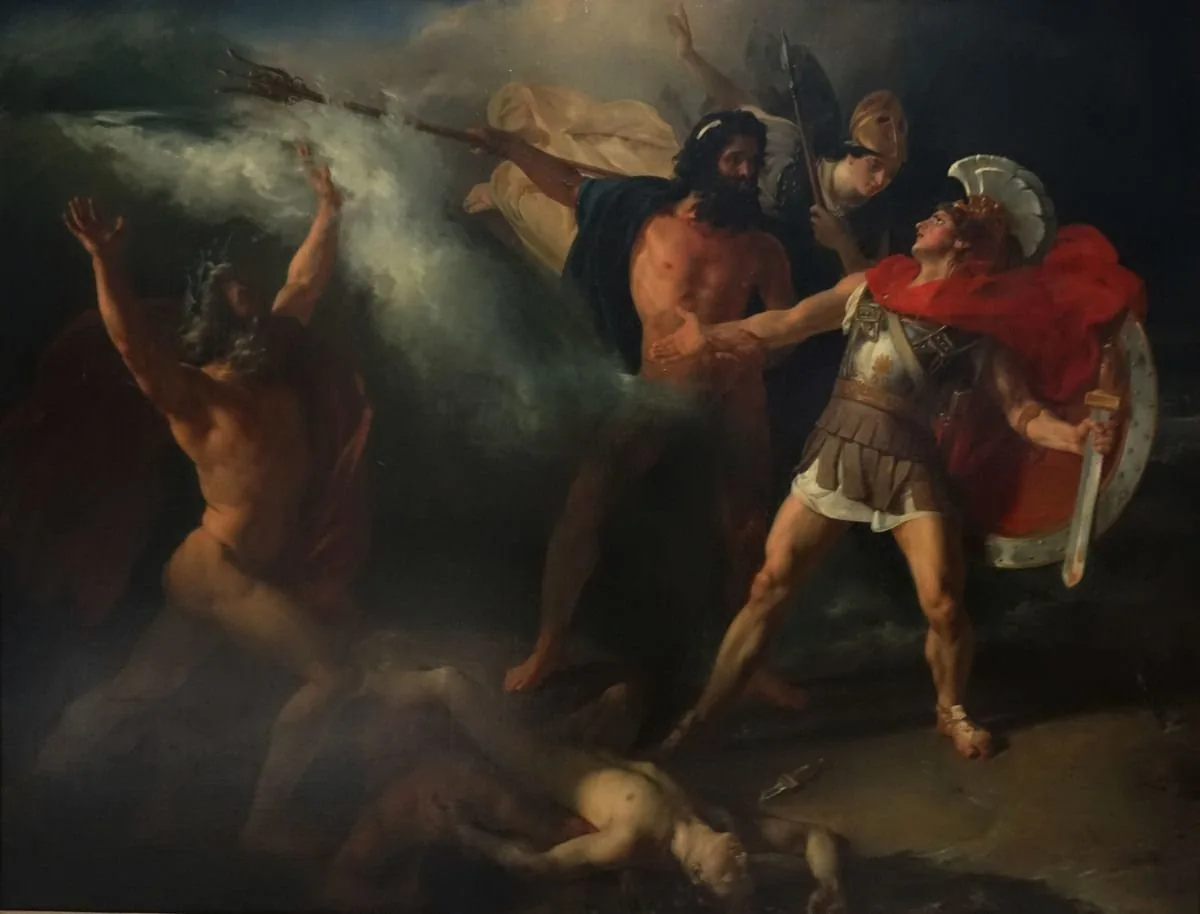
Poseidon and Athena first reassure Achilles that his fate is not to die in this river; Athena gives him strength. Scamander keeps pursuing him and calls on the other river, Simois, for help. Hera then orders her son Hephaestus to intervene with fire. Flames burn the corpses on the plain before attacking elms, willows, tamarisks and plants beside the stream. Fish and eels suffer too. The water boils and can no longer flow normally. Such details keep the cost of rescue visible. Assistance that releases one warrior from a river changes conditions for many lives that were not his adversaries. We can attend to this widening damage without turning an ancient poem into an environmental policy already written in modern terms.
A return to the channel does not repair everything
Scamander appeals to Hera and promises not to protect the Trojans again, even when their city burns. She orders her son to withdraw his flames, saying an immortal should not suffer so for mortals. The river returns to his channel. Commands and concessions end this struggle; Achilles does not defeat his opponent with a sword. Gregory Nagy’s reading notes that bellowing like a bull does not make the river an actual bull here. Flowing water remains dangerous through its own qualities. At the close, we can remember the hero’s survival together with the injuries beside the stream. Weapons have not accomplished his entire escape, and the restored current has not returned every life drawn into the war.