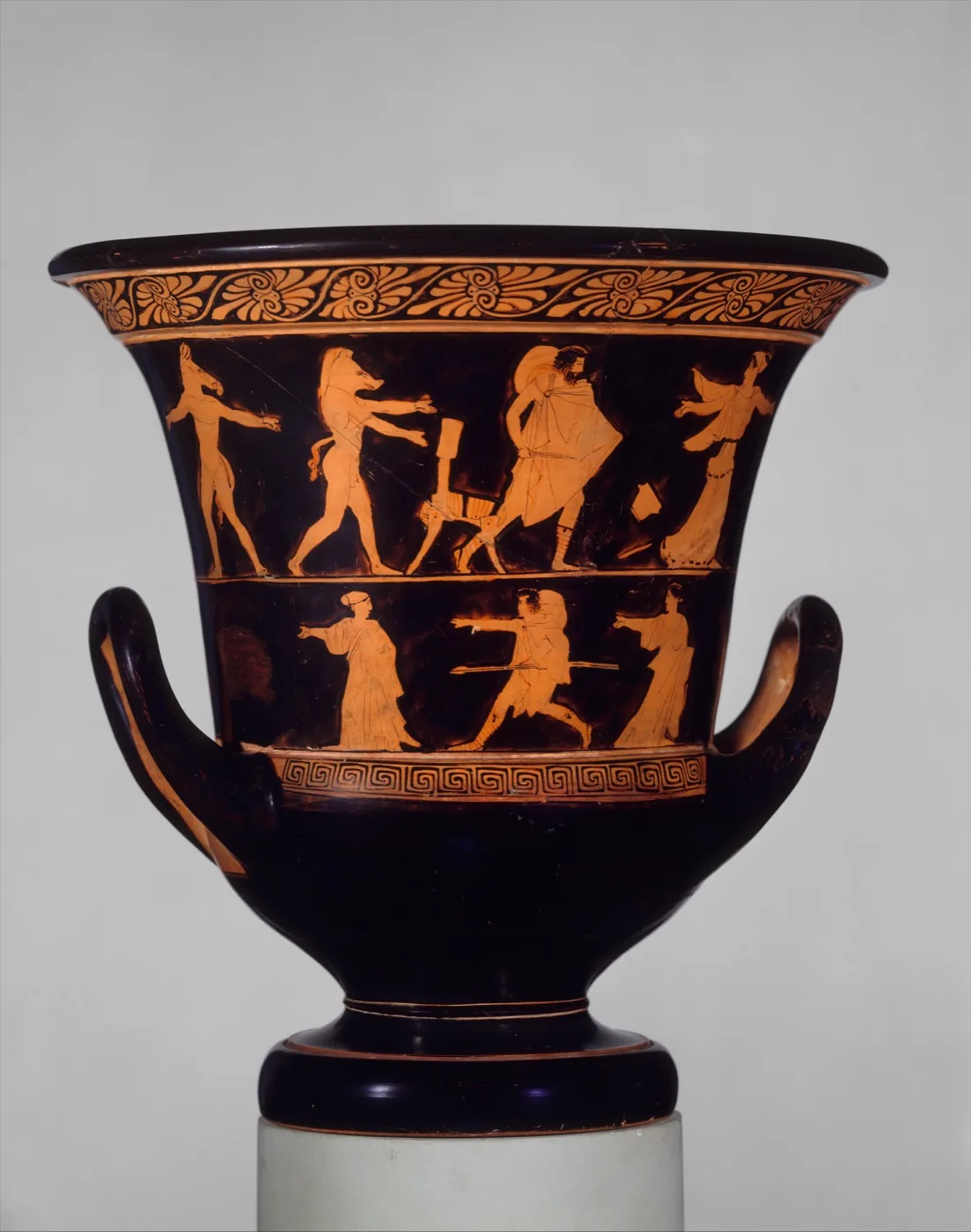
A prophetic family does not remove a fugitive's need
In Odyssey Fifteen, Theoclymenus approaches Telemachus as someone fleeing danger after killing a man of his own kin. The poem places him within a family of seers, but lineage has not provided transport or immunity from pursuit. He asks to be taken aboard. This first appearance matters because his later prophetic voice belongs to a person who has needed concrete assistance. Knowing signs does not place him outside ordinary dependencies. Telemachus accepts him onto the ship and offers hospitality according to his resources. Before a warning is spoken in the palace, the narrative has already shown a crossing made possible by another person's decision to admit a stranger.
An omen travels with arrangements for a bed
Near Ithaca, Theoclymenus interprets a hawk carrying a dove as a favourable sign for Telemachus' royal house. Yet the conversation also concerns where the visitor should stay. Telemachus entrusts him to Piraeus, who promises to look after him. The poem lets prediction and accommodation occupy the same sequence. A reading of birds does not replace the need to identify a host or make a guest's arrival manageable. Remembering Piraeus here also prepares us to understand the later departure from the palace: the seer will have somewhere to go. His capacity to leave a hostile audience depends partly on a welcome arranged before that audience appears.
The feast becomes a scene of approaching loss
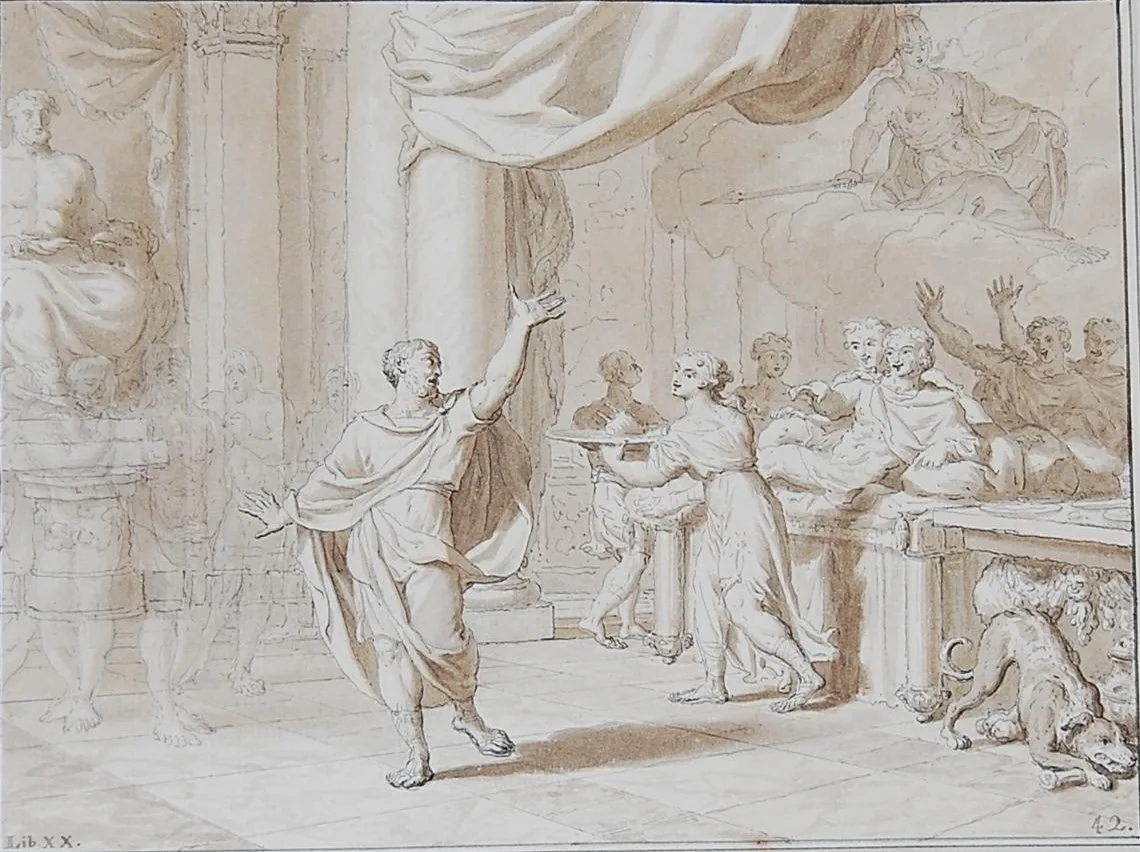
In Book Twenty, Athena disturbs the suitors' minds and their laughter becomes estranged from ordinary enjoyment. Theoclymenus describes darkness, tears, blood on the hall and the movement of shades toward the underworld. The warning gives the gathering another visible meaning, drawing death into a scene still organized around eating. It is a poetic vision within the narrative. We need not turn the darkened sun into a securely dated historical eclipse or diagnose the speaker through a modern medical label. The poem's immediate concern is the distance between what the seer describes and what the men enjoying the feast are willing to recognize about themselves.
Laughter refuses the message, not the exit
Eurymachus mocks the stranger and proposes having him taken outside because he finds the room dark. Theoclymenus answers by asserting his own senses, understanding and ability to walk. He does not remain to win the room's agreement. He leaves and goes to Piraeus, who receives him kindly. This movement makes the scene more than another example of an ignored prediction. A speaker can fail to persuade and still act upon what he perceives. His departure also gives practical value to the earlier hospitality. The house that welcomes him allows him to withdraw from the house whose inhabitants treat his warning as entertainment.
Two responses to vulnerability share one narrative
Read with Book Fifteen, the vision shows how a guest's treatment changes between settings. Telemachus and Piraeus respond to a traveller's need; the suitors turn a warning voice into an occasion for ridicule. The poem does not require us to make the fugitive's whole past innocent before noticing those differences. Nor does prophetic knowledge grant him control over everyone else's choices. The artwork illustrated here depicts the warning to the suitors, a later artist's interpretation of the hall. The text supplies the larger route around that moment: a request for passage, a place to stay, a difficult message and a departure that remains possible because another door is open.