Singing and the danger behind the door
Book 10 of the Odyssey describes Circe’s residence as a house where people sang, wove, and received visitors. The companions who entered it received food, but were affected by drugs and magic wands, turning into pigs while still retaining human consciousness. Fear emerges from within familiar hospitality routines rather than from an apparently off-limits place. The physical deformation makes them lose the ability to express and act, and also makes readers think about how strangers will protect themselves once the promise of hospitality is manipulated by the host.
Odysseus does not find the solution alone
Hermes tells Odysseus how to deal with it and gives him the moly herb, which resists the power of her drugs. The hero also asked Circe to swear not to harm him again, and then secured his companions' restoration to human form. This process includes divine help, physical resistance and verbal assurance, and cannot be simply summarized as a strong man defeating a witch with a sword. The oath changed the original one-way domination relationship into a negotiable relationship, and gradually transformed the encounter from a story of confinement into a negotiation about the boundaries of trust.
Have to leave after staying
Circe restored his companions and provided them with food and rest, and they all stayed on the island for a long time. What finally reminded Odysseus to continue home was his companions' request for the return journey. Comfort does not directly eliminate their purpose, but it may make time disappear unconsciously. The hero's journey therefore carries not only the danger of fighting monsters, but also the risk that temporary satisfaction will make travelers gradually forget their original direction. Being able to get help and being able to decide when to leave are two separate things.
She becomes a guide to the route
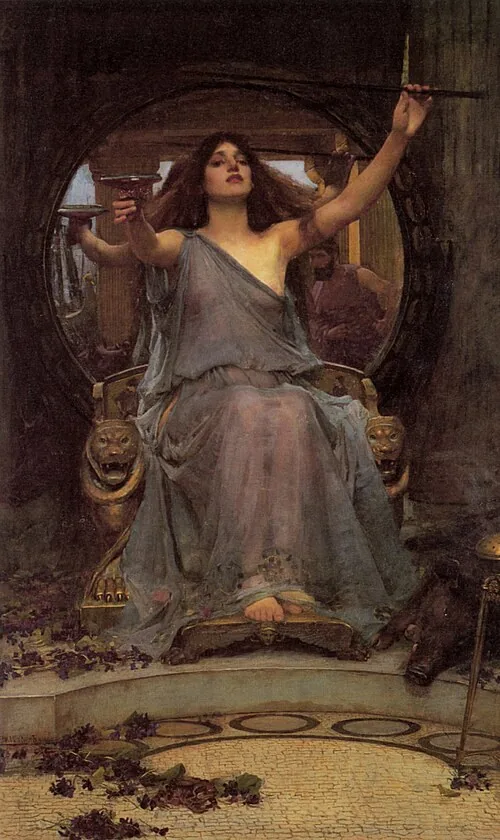
Circe instructs them to go to the realm of the dead to consult Tiresias; she also provides warnings for the later voyage. She was both a threat early on and an important source of knowledge about the journey home. Later painters often chose the moment when she handed over the cup to highlight temptation and control; but the epic poem also described recovery, hospitality and farewell. Keeping the context intact while reading avoids reducing the character to a single evil witch, and allows you to see that the knowledge the hero acquires does not always come from people who have never done him harm.