Danger is hidden in the sweet voice
The sirens in Book 12 of the Odyssey attract sailors with their songs, but the remains of those who cannot return home lie beside them. They promise to tell stories about the Trojan War and the world, and the temptation is not just about beauty or love, but also the desire to gain knowledge, to be understood, to hear their own experiences again. Odysseus experienced war and became the target of this call. The story thus puts the desire to learn at risk, allowing us to see that hearing everything does not necessarily equal having better judgment.
Limit your future self
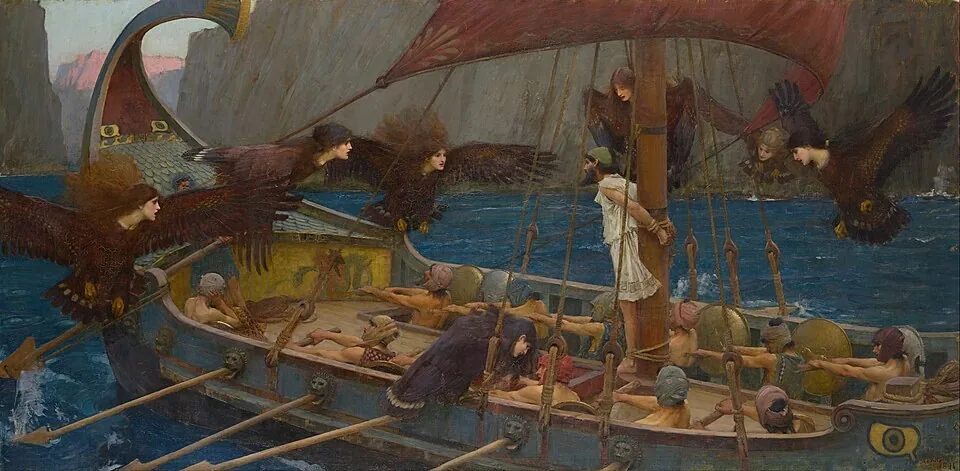
Following Circe's instructions, the companions plugged their ears with wax, while Odysseus retained his hearing, but asked everyone to tie him tightly to the mast. Even if he later gives the command to loosen the rope, the companions must tighten the rope even more. This arrangement acknowledges the reality that decisions made in calm moments can be overridden by strong feelings. The hero does not assume that his will will always be reliable, but establishes in advance a constraint enforced by his companions so that temporary orders cannot easily destroy the original goal.
Sirens are not equal to modern mermaids
Homer mainly describes sounds and their effects in this passage, without giving the image of the fish-tailed mermaid that we are familiar with today. Ancient Greek pottery and sculptures often showed bird bodies, human heads, or sirens with female upper bodies. The image of fish tails gradually became associated with them in later traditions. The accompanying pictures should indicate the age of the work and the artist's treatment, and do not regard the body form in modern paintings as the only ancient definition. A mythical character can retain its name but change its visual appearance over time.
The difference between listeners and those who act
Odysseus can hear the singing, but his companions can only continue rowing according to the previous agreement. The two experiences are different from each other, but the ship must rely on those who cannot share the song to move forward. The story relates an individual's unique experience to the group's common living conditions, and also shows that a successful experiment requires the labor of others. Later paintings often combine the entangled bodies, masts and sea surface into dramatic scenes. When watching, you can also pay attention to those who are concentrating on rowing: their quiet execution is the basis for the hero to tell the story of his adventures.