The forgotten body outside the door
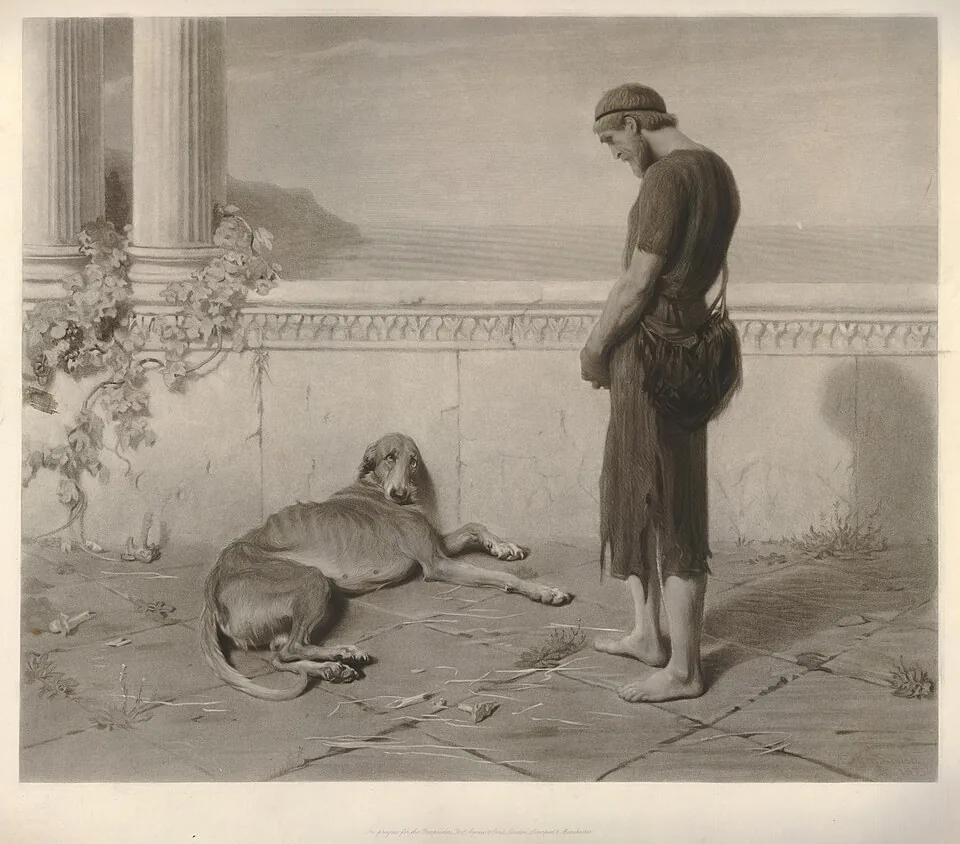
In Book 17 of "The Odyssey", Argos lies on the dunghill in front of the door, old, weak and without care. The past and present are juxtaposed in the same body as the narrative also recalls the excellent hunting dog it was. The door to a home is not necessarily meant for protection, and the household's order has deteriorated during the owner's long absence. This scene gives the time of war and wandering a concrete shape: it is not just a number that only exists in sailing stories, but also accumulates in the increasingly debilitating daily lives of those left behind.
Disguise cannot hide familiarity
In order to explore the situation at home, Odysseus must make people believe that he is just a strange beggar, but the old dog recognizes its owner through long-term familiarity. It wagged its tail and lowered its ears, but was unable to walk to him. The epic does not give the dog a speech explaining the man's identity, but conveys recognition through tiny gestures. This contrasts with the process by which human characters need to interrogate, probe and examine evidence: disguise can change appearance, but it cannot completely eliminate the memories and sensory connections left by a life together.
Tears he cannot openly answer
Odysseus secretly wiped away his tears to prevent Eumaeus who was traveling with him from discovering his true identity. At this moment his clever strategy conflicts with his emotional impulse; in order to be able to act later, he cannot immediately respond to the old dog as owner. Heroes are not without emotions, but they have to hide their emotions under plans. This limitation makes the scene particularly heavy and reminds that a victorious homecoming is often not a moment of freedom to embrace all loved ones at once, and survivors are still forced by the situation to delay the most natural reaction.
Death after meeting
Argos dies after recognizing its owner, and the poem does not say that Odysseus killed it. Death ends the long wait and prevents this reunion from developing into a new life together. Later paintings or engravings would focus the hero and the dog in a quiet scene, but the quietness of the story comes from the many unspeakable words. It reminds readers that going home can restore certain relationships, but it cannot return the time that has passed; the most faithful recognition may only occur at the moment when there is no tomorrow.