Repetitive actions written by Homer
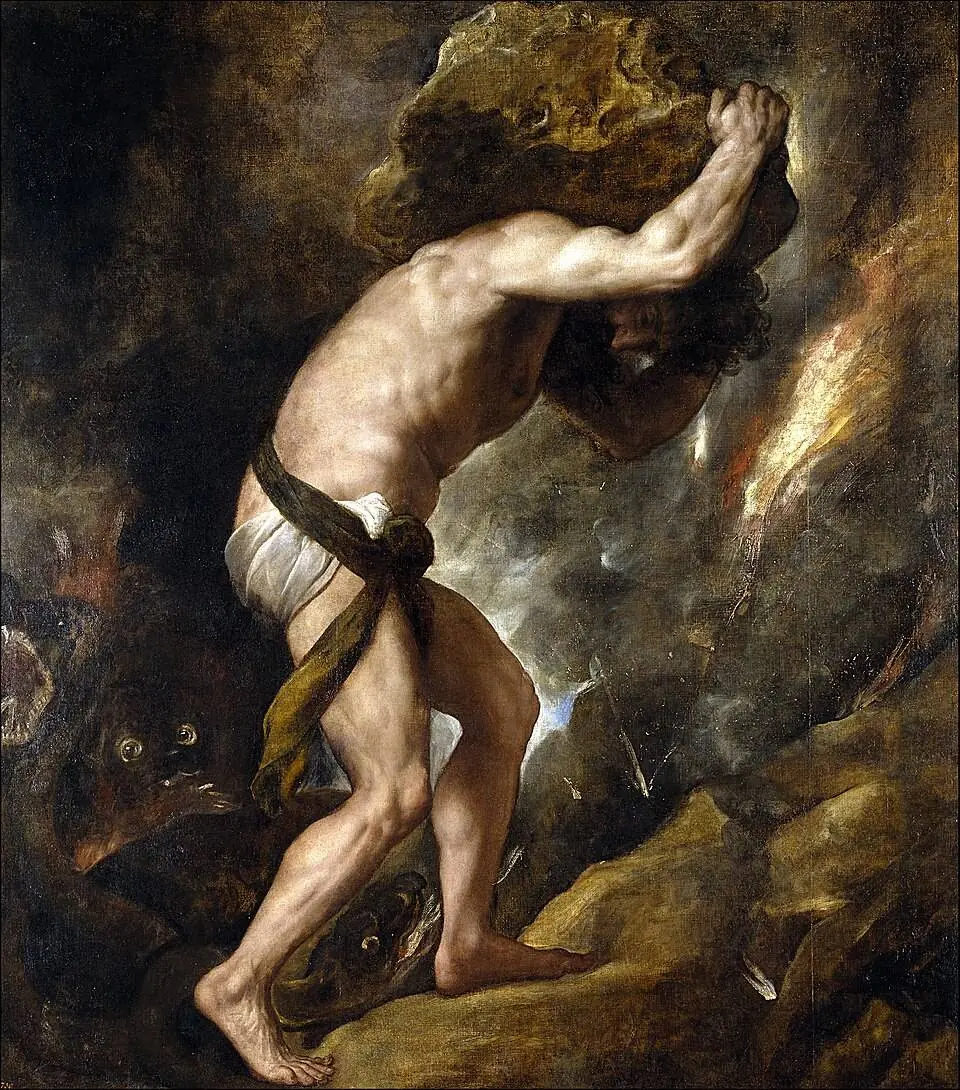
In Book 11 of "The Odyssey", Odysseus saw Sisyphus pushing the boulder with both hands and trying to send it to the top of the mountain. The stone rolled down every time it reached its top, and he pushed forward again, sweat and dust covering his body. The poem does not elaborate on the crime in this scene, but first lets the labor itself enter the reader's field of vision. The horror of punishment is not only that the stone is very heavy, but also that every effort is close to success, but it cannot reduce the next effort. Approaching the end should originally generate expectations, but repeated descents turn expectations into part of the punishment. The top of the mountain is therefore both a direction and a boundary that can never be completed.
Explanations of crime come from other traditions
Fable 60 attributed to Hyginus links the punishment to Sisyphus's revelation of Jupiter and Aegina: he told the secrets of the gods to Asopus, who was searching for his daughter. Other traditions develop stories of his dealings with the forces of death, but not every witty rumor can be claimed to have been told by Homer. First, distinguishing between "seeing punishment" and "explaining why you were punished" can preserve the process of the myth's expansion through multiple authors. Sisyphus's intelligence may win him information, time or benefits on earth, but in the underworld he faces a kind of mechanical repetition that cannot be changed through negotiation. This creates a strong contrast between ability and environment.
How to express endless time in a picture
A painting can freeze only a moment, so it usually shows muscles tensing, the body tilting, and the pushing-up posture of stones compressing the field of vision. The picture cannot directly depict countless repetitions. The audience needs to know through the story that the push in front of them will not be the last. Modern thinkers later used this image to discuss human life, which belongs to the new history of interpretation and should not be projected back onto the outlook of Homer's character. Nor can we infer from the fact that the stone will roll down again that he explicitly expressed optimism or despair in the original poem; the poem mainly provides action, sweat, and dust. Accurately retaining these physical details leaves room for different readers to think about: when labor can accumulate results, when it is erased by a rule, and how waiting for the end will change people's feelings about the current moment.