A departure requires a community's work
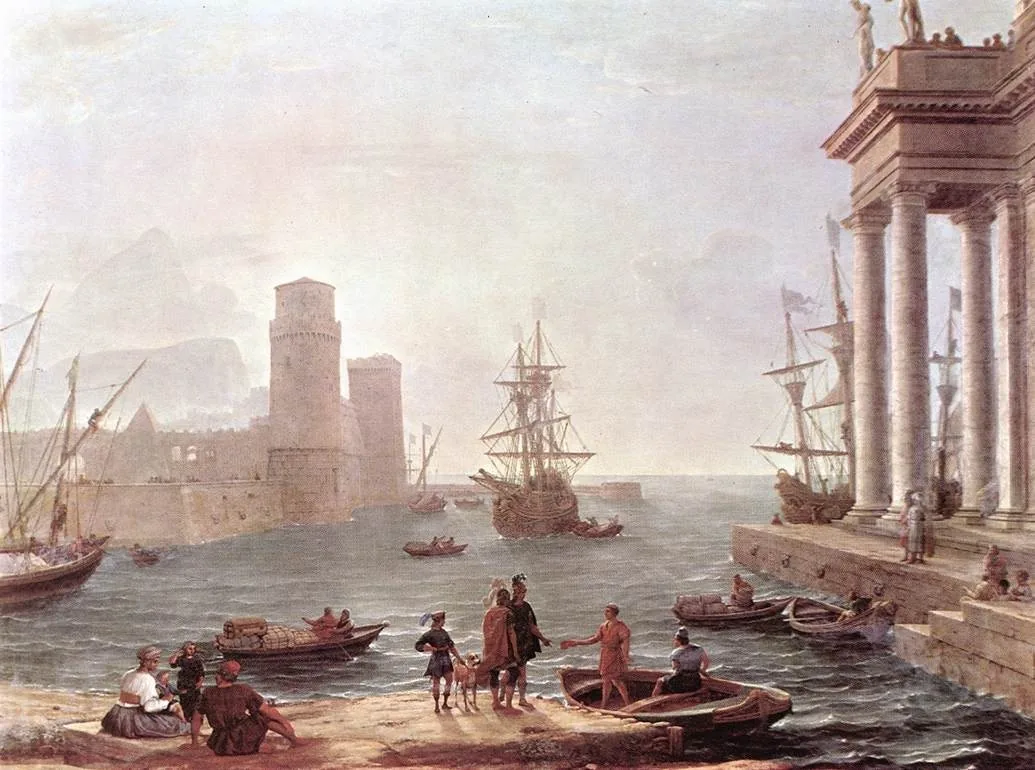
At the opening of Odyssey Thirteen, the Phaeacians finish preparing Odysseus' journey. Their gifts and arrangements make the voyage a shared undertaking, supported by more people than the king alone. Book Eight has already presented their exceptional ships and skill in carrying strangers across the sea. The guest's return depends on that established practice of assistance. A departure that can look like the simple conclusion of a welcome is built from resources, decisions and labour. Following those preparations keeps the helpers visible before the narrative moves to Ithaca, where the traveller's own problems will once again occupy most of our attention.
The hero sleeps while others keep going
On the ship Odysseus falls into a deep sleep. The crew reaches Ithaca, carries him ashore with his bedding and places the gifts safely nearby before returning home. His arrival is therefore accomplished while he cannot direct or even observe the work. This quiet detail complicates the image of a homecoming achieved entirely by a hero's vigilance. Other people must navigate, lift, carry and depart without receiving his immediate recognition. The poem allows their effective care to continue outside his awareness. When he wakes, the tasks awaiting him are real, but they do not make these earlier tasks any less necessary to his presence on the island.
One god's grievance reaches the helpers
Poseidon complains to Zeus that the Phaeacians have brought Odysseus home with rich gifts despite the suffering the sea god intended. Their assistance enters a dispute about divine honour. The poem does not say that the guest has been returned to the wrong geographical destination. The problem concerns whose authority the successful escort appears to diminish. Zeus permits action against the ship, and Poseidon turns it to stone as it nears its own shore. The consequences fall upon a returning vessel rather than undoing Odysseus' landing. Success for the passenger and danger for the carriers now occupy different places within the same completed journey.
A visible ship changes a remembered warning
The watching Phaeacians struggle to understand what has happened. Alcinous recalls his father's prediction about a ship's destruction and a mountain covering the city, a warning he had already mentioned in Book Eight. He tells the people to stop escorting strangers and to sacrifice bulls to Poseidon, hoping to avert the threatened mountain. We should distinguish the ship's narrated transformation from that further danger: the episode moves on while they pray, without presenting the city's burial as an accomplished event. Remembering a prophecy gives the king an explanation, but it also changes the community's practical response to future visitors and to its own vulnerability.
Homecoming leaves another shore behind
The narrative returns to Odysseus on Ithaca, leaving the helpers gathered around their altar. That transition can make the Phaeacian cost easy to forget. Their story asks what remains outside a successful traveller's account of getting home. Hospitality has enabled a return, yet its continuation is now endangered by a god's intervention. This tension deserves attention without converting the poem into a simple rule that helping strangers is always punished. Its force lies in the particular arrangement of shores, ships and responsibilities. The illustrated departure evokes the work of an escort toward home; the text asks us also to remember the journey back, which the passenger no longer accompanies.