Hospitality includes another kind of excellence
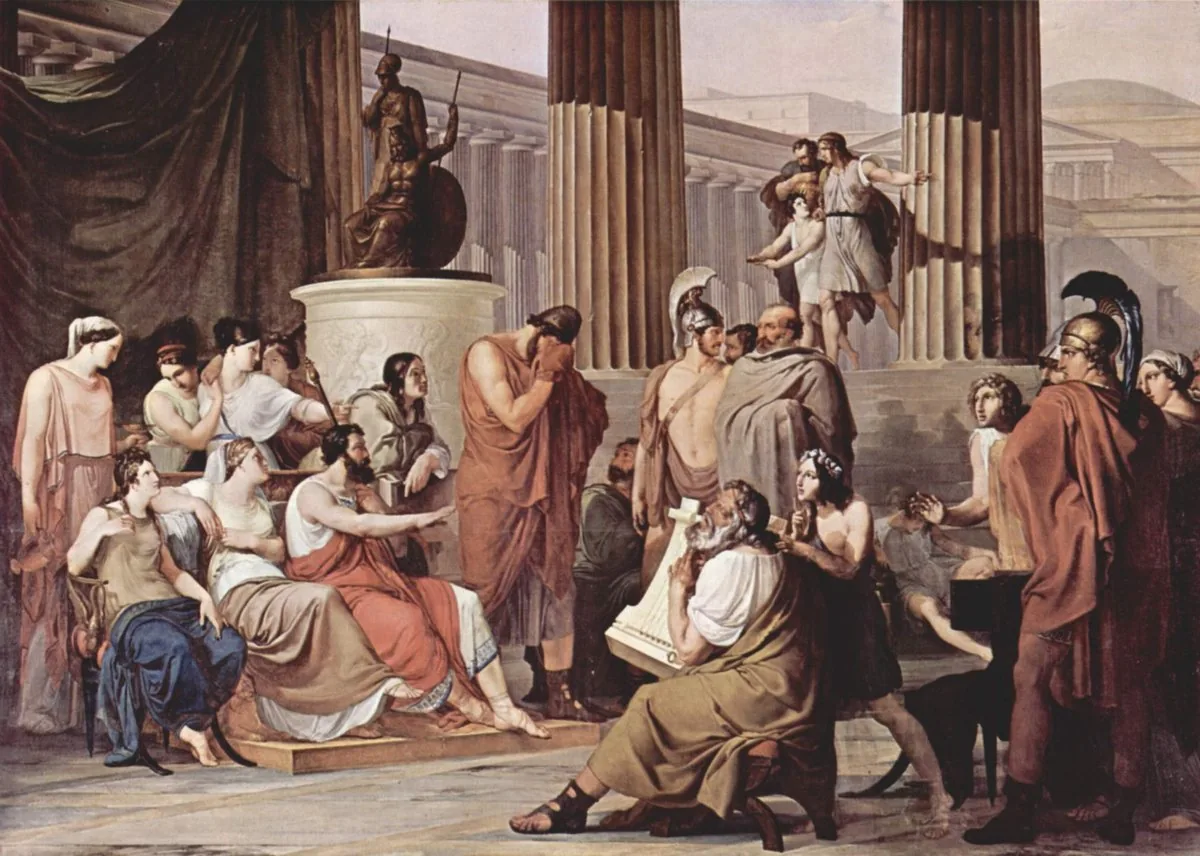
In Odyssey Eight, Alcinous presents the Phaeacians' accomplishments to Odysseus through a day of games, music and dancing. Laodamas and Halius, his sons, perform together because their skill is exceptional. The movement belongs to the reception of a traveller whose own capacities have been tested in other ways. The scene expands what excellence can look like: timing and coordination enter the same public occasion as strength and competition. We can attend to this performance without reducing it to an ornamental pause before the famous stories resume. For the hosts, what their bodies can do together is itself something worth showing and having another person recognize.
An object has a maker before it moves
The brothers use a coloured ball made by Polybus. Naming its maker briefly places craft behind the display. One dancer sends the ball high while the other leaps to receive it before it reaches the ground. The sequence needs an object with suitable properties as well as a body capable of jumping. It also requires each participant to anticipate what the other has done. The poem does not give us a complete set of rules for a recoverable ancient ball game. Its selected details are enough to make a relation visible: a thrown thing can become a shared achievement when another person is ready to catch it.
The circle helps make the rhythm public
After the high throw, the brothers move across the ground, passing the ball between them while the surrounding young men mark their pleasure with rhythmic response. The audience is not simply absent space outside the performers. Its sound makes their coordination part of a gathering. A reader can distinguish the two skilled dancers from the larger circle without assigning all agency to only one side. The display depends on the brothers' abilities, while its public meaning also depends on witnesses willing to watch and answer. Movement therefore travels through hands, feet, the object and the people who make the occasion audible around it.
A guest's acknowledgement changes the exchange
Odysseus praises what he has seen, acknowledging that Alcinous' claim about his people's skill has been fulfilled. The king welcomes the response and moves toward gifts for the visitor. This sequence connects watching with hospitality rather than making spectatorship a purely private experience. The stranger receives a display and gives an attentive judgement in return. Neither the praise nor the presents establish that every difference between hosts and guest has disappeared. They do show an exchange that can proceed through admiration, alongside the day's more difficult moments. Naming the accomplishment allows the dancers' work to become part of what the visitor carries from the encounter.
Another poem places dancing on a shield
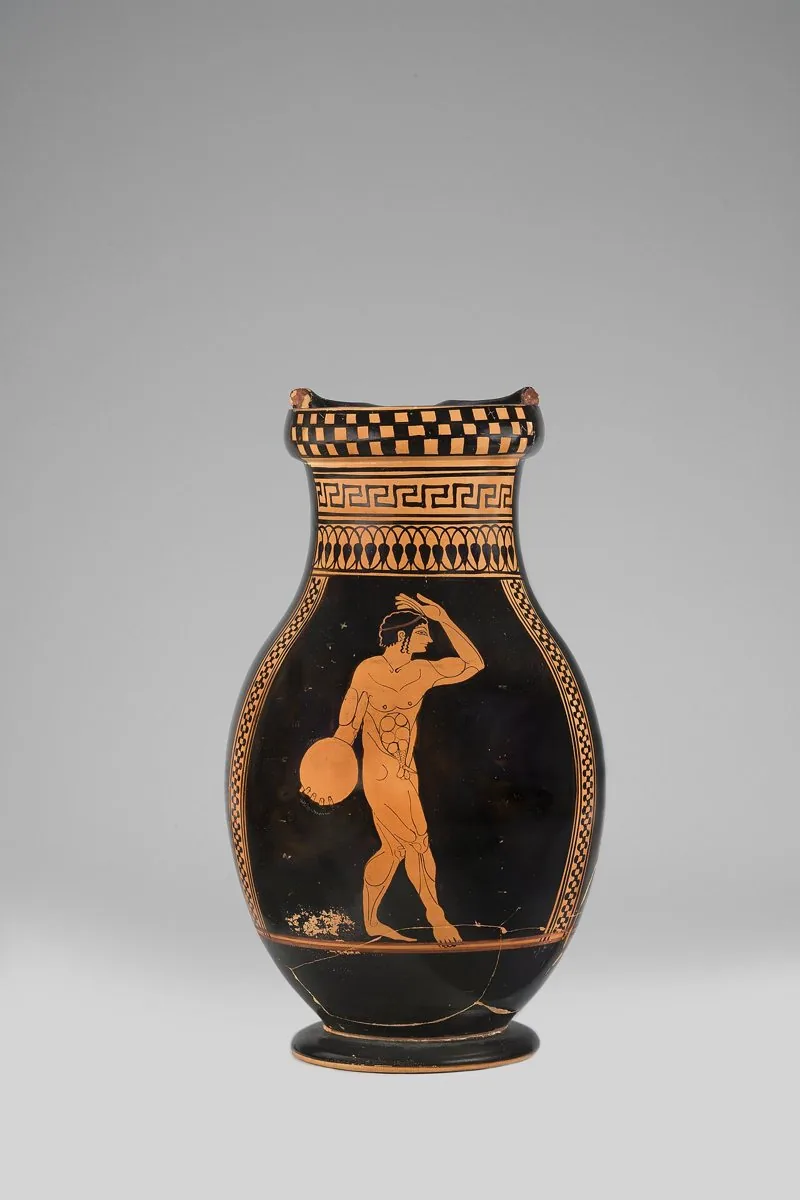
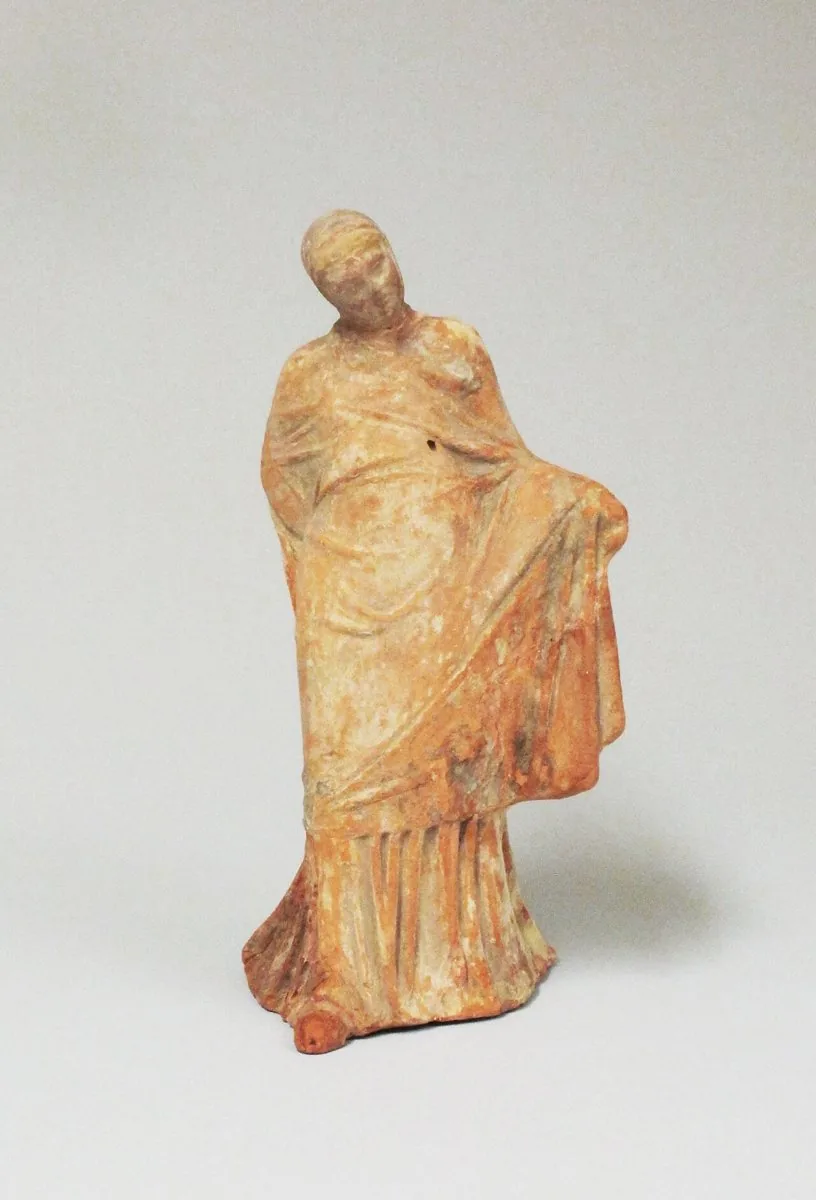
Iliad Eighteen describes dancers on the shield Hephaestus makes for Achilles, moving in circles and lines before an assembled crowd. The comparison is not evidence that the Phaeacian scene follows an identical choreography. It shows two ways epic can give coordinated bodies a place beside war and travel. The ancient dancing image illustrated here is a visual comparison, not a labelled portrait of Laodamas and Halius. The texts restore what a still image cannot complete: preparation, a throw, an answering movement, the circle's response and the guest who says that he has seen the skill the hosts wanted to share.