Making room for a singer
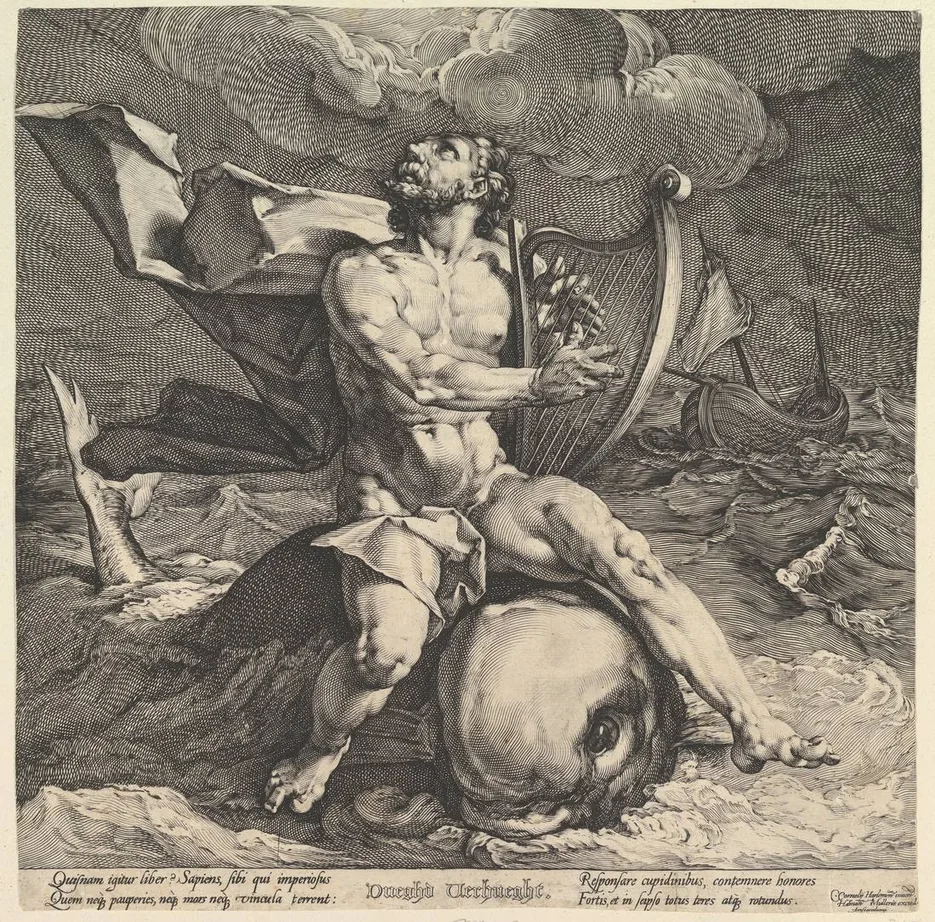
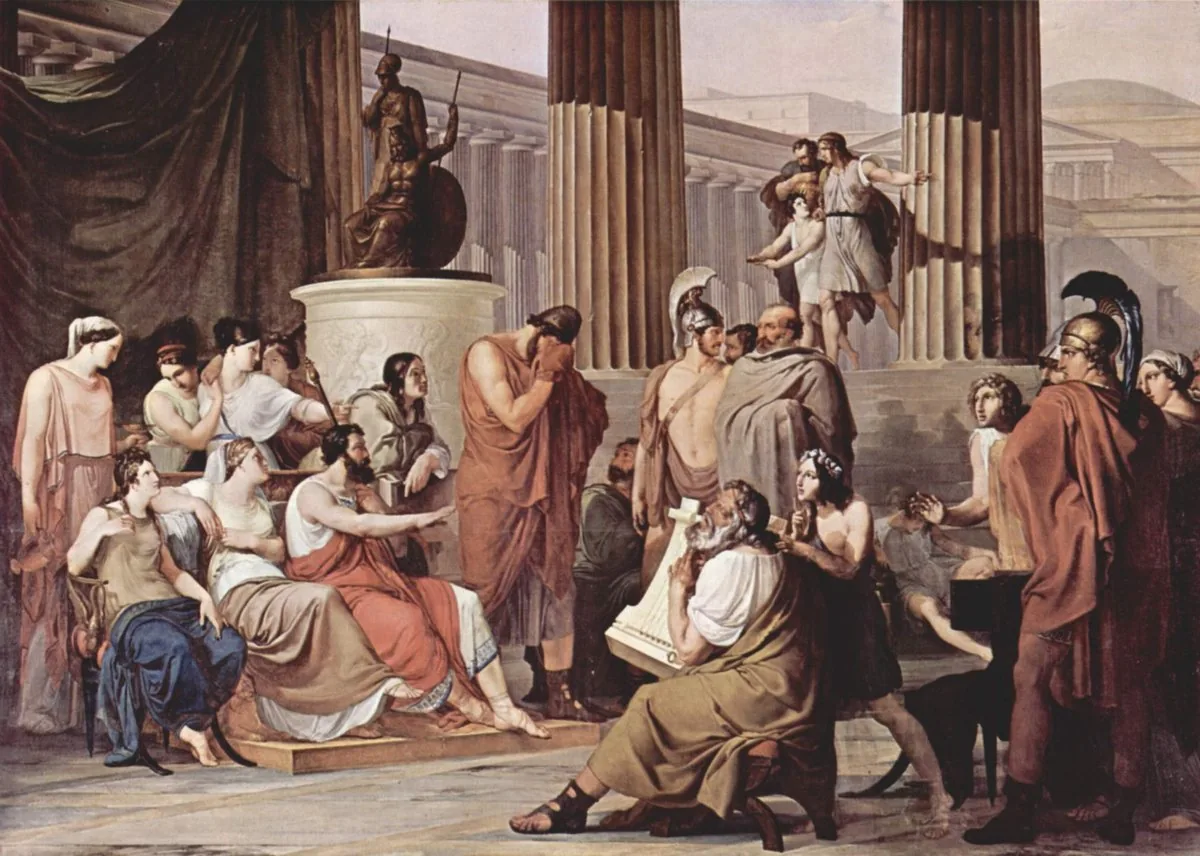
In Book Eight of the Odyssey, the Phaeacian king Alcinous prepares a voyage and a feast for a guest who has not yet given his name. He also summons Demodocus. The Muse has given this singer a beautiful voice while taking away his sight. A herald places his chair against a pillar, hangs the instrument within reach, explains where it is, and sets out food and wine. The performance depends on arrangements involving bodies, objects, and space. These details keep the singer from becoming merely a device for making a hero famous. The poem honours his skill while showing how he participates in the gathering. This is a blind character within a poem; his presence does not establish that Homer was blind, or make blindness a necessary condition of poetic inspiration. Before hearing a war, we meet a person receiving practical care.
A cloak against the sound of fame
The first song concerns a fierce quarrel between Odysseus and Achilles at a feast. It is not the quarrel between Achilles and Agamemnon that opens the Iliad. The poem briefly connects Agamemnon’s pleasure with an oracle, without reconstructing the whole dispute or every argument. Dickinson College’s commentary notes the uncertainty surrounding the song’s place within the wider epic tradition. The listener’s movements are clearer. Odysseus draws his purple cloak over his face. When the singing stops, he wipes away tears and pours a libation; when it resumes, he covers himself again. Other guests ask for more because they enjoy the performance. He must repeatedly hide. What gives one audience entertainment touches a painful place in someone who lived through it. Only the king beside him notices his groaning.
The listener asks for the wooden horse
Athletics and dancing follow. Demodocus sings about Ares, Aphrodite, and the trap made by Hephaestus, delighting Odysseus along with the other listeners. This divine story establishes that the day’s performances carry different moods; it need not become another retelling of the lovers’ encounter here. Back at the evening feast, Odysseus sends the singer a portion of meat. He praises the account of Achaean suffering as though it came from personal experience or a reliable witness, then requests the wooden horse. The choice makes him more than a listener unexpectedly struck by memory: he helps decide what will be heard next. Epeius’s workmanship, Athena’s aid, and the city’s destruction enter the song. We need not assert that he is arranging a secret examination or seeking modern therapy. Respect, curiosity, and an uncontrollable response can remain together in this request.
A victor compared with a captive woman
The horse’s story brings tears again. Now the poem’s narrator compares Odysseus with a woman whose husband has fallen before his city while protecting its people and children. She throws herself around his dying body. Enemies strike her back and shoulders with spears and take her into slavery. The woman is unnamed in the simile; Demodocus has not paused to introduce a captive whose identity the poem establishes. A victorious warrior becomes visible through a defeated person’s body. We can notice how this interrupts triumph without supplying Odysseus with an explicit confession of guilt. The poem does not assign his tears a single explanation. It brings the listener’s suffering near the suffering war produces, while preserving an unsettling difference: celebrated deeds may also deprive others of home, family, and freedom.
Stopping a song can be hospitality
Alcinous notices the guest’s distress again and now explicitly asks Demodocus to stop. The occasion should give pleasure to hosts and guest together; the enjoyment of many should not drown out one person’s pain. He then asks the stranger’s name, homeland, and reason for weeping over Troy. In the following book, Odysseus identifies himself and begins his own extended account. The interruption does not declare the singer’s art worthless. The king recognises that a song can be skilful while still requiring attention to a particular listener’s response. Hospitality includes changing arrangements already under way. We can follow a small sequence across this gathering: someone places the instrument for the singer, and someone pauses the music for the listener. A story needs to be heard, but the person sitting inside its history also needs a chance to answer.