A singer who earns his living
In the first book of Herodotus’ Histories, Arion begins as an accomplished singer and lyre player from Methymna on Lesbos. Connected with Periander, the ruler of Corinth, he travels to Italy and Sicily and earns money before preparing to return. The narrator also credits him, among the people he knows about, with first composing and naming the dithyramb and teaching it at Corinth. That qualification matters: it does not make Arion the inventor of all Greek music. Travel turns performance into portable income, and that income becomes a danger. At Taras he hires a ship of Corinthians because he particularly trusts them. This apparently reasonable trust makes the approaching betrayal painful. Before a dolphin appears, we are already inside a story about human judgment.
The final song does not change the crew
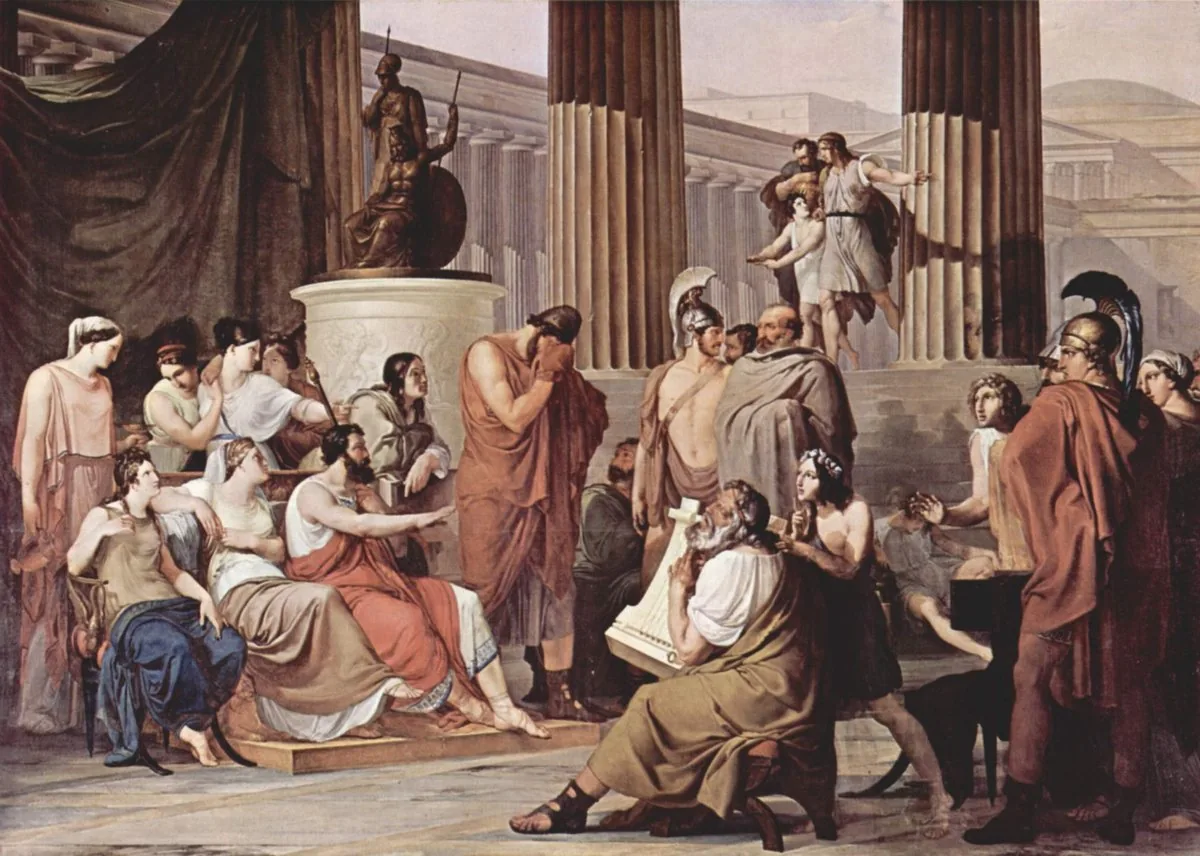
Out at sea, the crew plan to kill the singer and take his money. Arion offers all his possessions for his life, without success. They demand that he kill himself or immediately jump overboard. He secures a final performance instead: dressed in his performing robes, carrying his lyre, he stands at the stern and sings. The sailors want to hear this celebrated musician and move towards the middle of the vessel. Their enjoyment is disturbing because appreciation of art does not stop them harming its maker. When the song ends, Arion jumps into the sea still wearing his robes. Herodotus supplies neither its complete words nor a conversion of the listeners. Leaving those gaps open helps us see his effort to retain his identity in an extreme situation.
An unexpected carrier
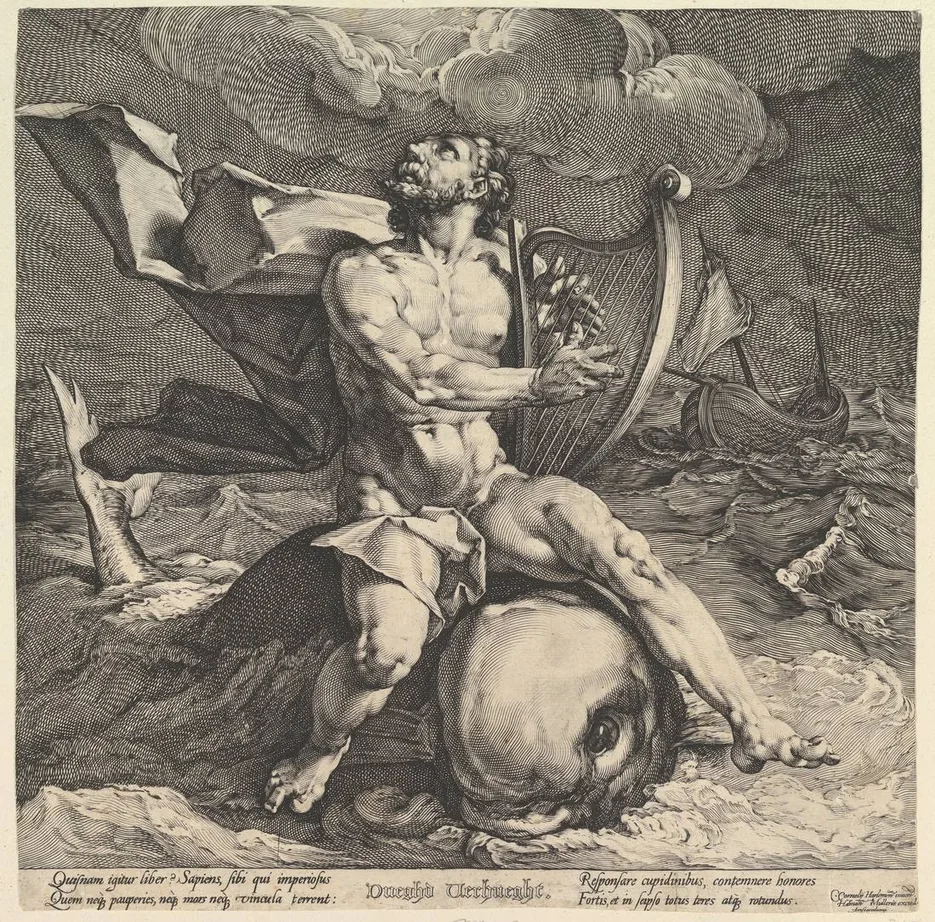
A dolphin carries Arion to Taenarum, taking the narrative beyond ordinary experience. Herodotus repeatedly identifies the marvel as a story agreed upon by Corinthians and Lesbians. In this passage he does not have Poseidon order the rescue or Apollo warn the singer in a dream. We can feel a connection between music and survival without turning it into a spell guaranteed to work. Nor do these sailors turn into dolphins: that belongs to a different, familiar story about Dionysus. The creature carrying Arion remains sharply separate from the men who intended to kill him. Reaching land safely is extraordinary enough. Yet physical rescue does not mean that the encounter and its consequences have finished.
Corinth still requires an answer
Arion reaches Corinth in his performing clothes and reports his experience to Periander. The ruler does not immediately embrace the miracle: disbelieving, he confines the singer and waits to question the sailors when they arrive. Homecoming therefore includes a loss of freedom; Periander should not become an unquestioning protector from the outset. The crew claim that Arion remains safe in Italy and was well when they left Taras. Then the singer confronts them in the same attire he wore when jumping from their ship, and they can no longer deny what has been exposed. Clothing that belonged to a performance now helps make a person recognizable. We hear an assertion and then encounter its living contradiction. Surviving and being believed are different achievements.
A memory kept at the headland
Herodotus closes with a small bronze monument at Taenarum showing a man riding a dolphin. Later, Pausanias records a bronze offering of Arion on a dolphin in Description of Greece 3.25.7 and points readers back to Herodotus. Nearby in his description he mentions a statue of Poseidon and a temple resembling a cave. This brings the sea god into our understanding of the headland, without proving that he commanded this rescue. A dedication shows that a story was publicly remembered; it does not establish a miracle by modern standards of evidence. Looking back through these texts, Arion makes three returns: his body reaches land, the truth reaches other people, and the story stays in a place that can be revisited. The distances between those arrivals reward a slower reading.