A gift demanded under pressure
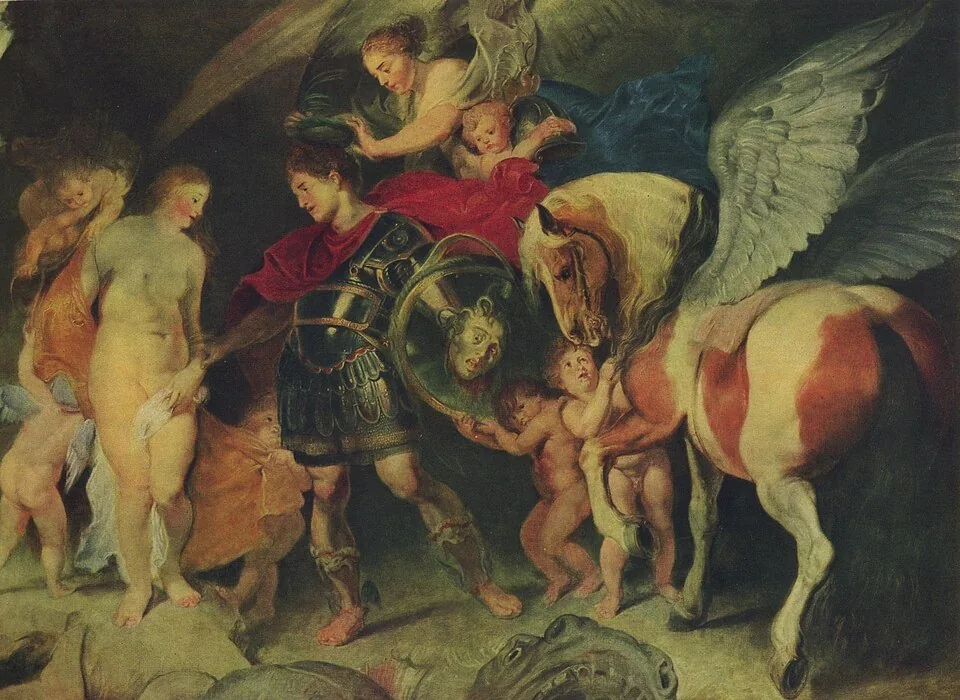
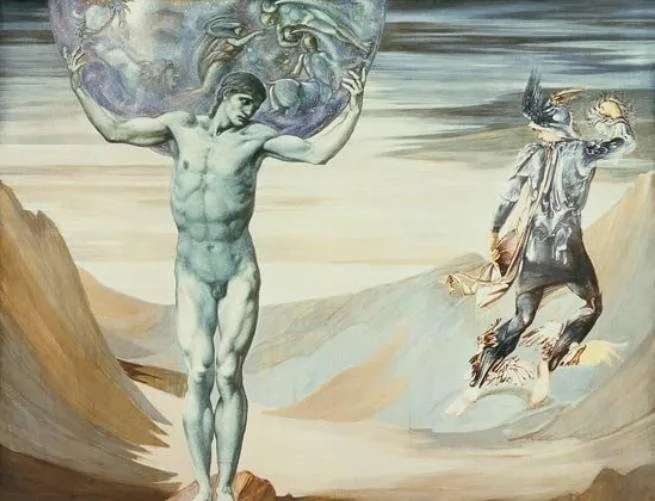
Polydectes, king of Seriphos, wants to pursue Danae, but her grown son Perseus stands in his way. The Bibliotheca records that the king uses a collection of wedding gifts as an opportunity to demand a Gorgon’s head from the young man. The mission thus begins with a royal calculation, rather than a hero seeking monsters at random. Perseus obtains directions to the nymphs from the Graeae, then acquires winged sandals, a bag, and a cap of invisibility; Hermes provides a sharp blade. Each tool has a clear purpose, turning an apparently straightforward feat of courage into an arrangement of information, routes, and ways of looking.
Avoiding her eyes
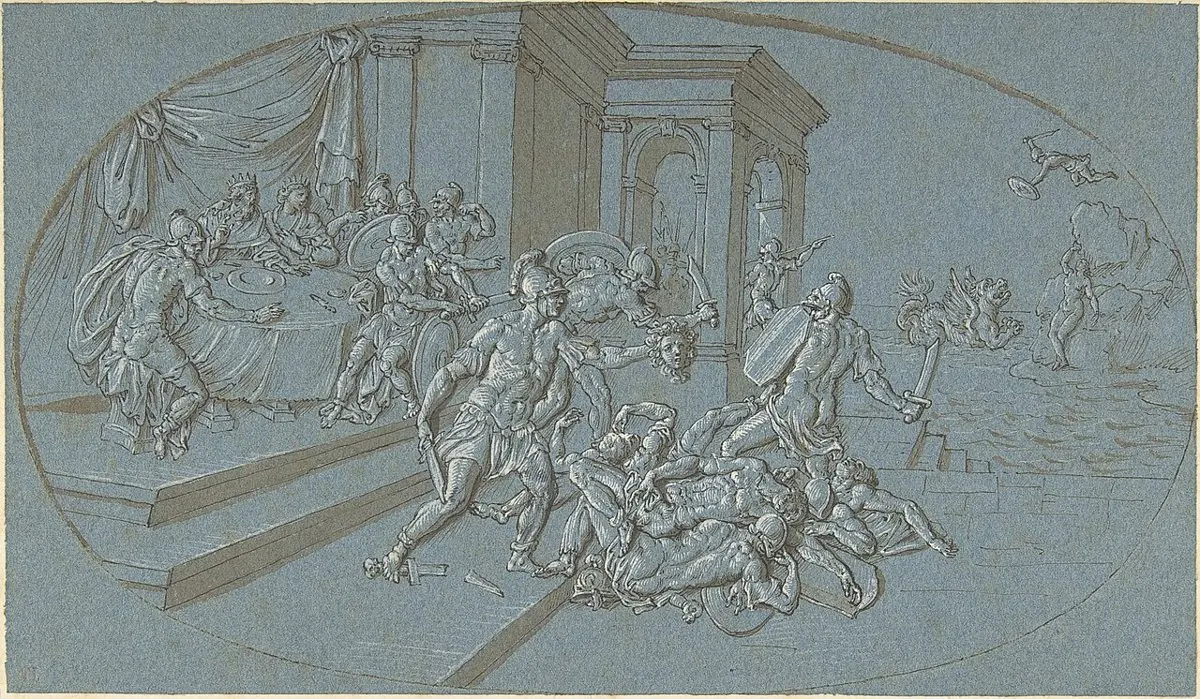
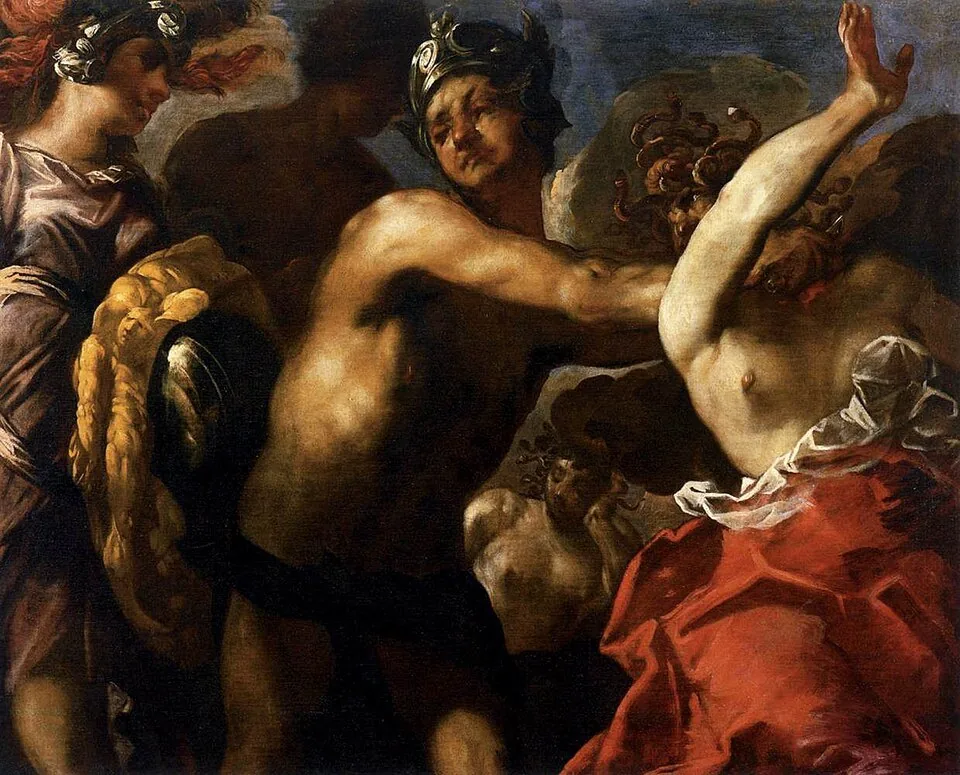
Of the three Gorgons, only Medusa is mortal. They are asleep when Perseus arrives. Athena guides his hand as he watches the reflection in a bronze shield and avoids looking directly at her. The Bibliotheca then has Pegasus and Chrysaor emerge from the severed neck, reminding us that Pegasus is only born at this point and cannot already have carried the hero to accomplish the killing. Even after Perseus escapes, the head retains its power to petrify. The danger does not vanish when the battle ends; the hero carries it with him as he continues to confront the violence of others.
Medusa has more than one origin story
Book IV of Ovid’s Metamorphoses later describes Medusa’s original beauty and Neptune’s violation of her in Minerva’s temple; her snake hair results from divine punishment. This is the Roman poet’s particular account and cannot be retroactively imposed on every earlier Greek story. Reading the two texts together reveals a shift of perspective: one concentrates on the expedition and its equipment, while the other explains how a victim becomes a terrifying figure. Perseus eventually gives Medusa’s head to Athena, providing a narrative origin for the protective emblem on her shield. In later paintings, notice whether an artist emphasizes a sword, a reflection, or Medusa’s face. Those choices alter whose suffering we sympathize with and whom we notice first.