Who bears the disaster?
In the Bibliotheca, Cassiopeia boasts that she is more beautiful than the sea nymphs, angering the Nereids and Poseidon. Floods and a sea monster assail the country, and an oracle demands that her daughter Andromeda be exposed on the shore to avert the disaster. King Cepheus yields to his people’s pressure and chains his daughter to a rock. Andromeda takes no part in the boast, yet must bear its consequences. Depicting the scene only as a beautiful woman awaiting a hero can obscure this distribution of power. Her confinement arises both from the monster’s threat and from decisions made by her parents and city.
A rescue with an agreement
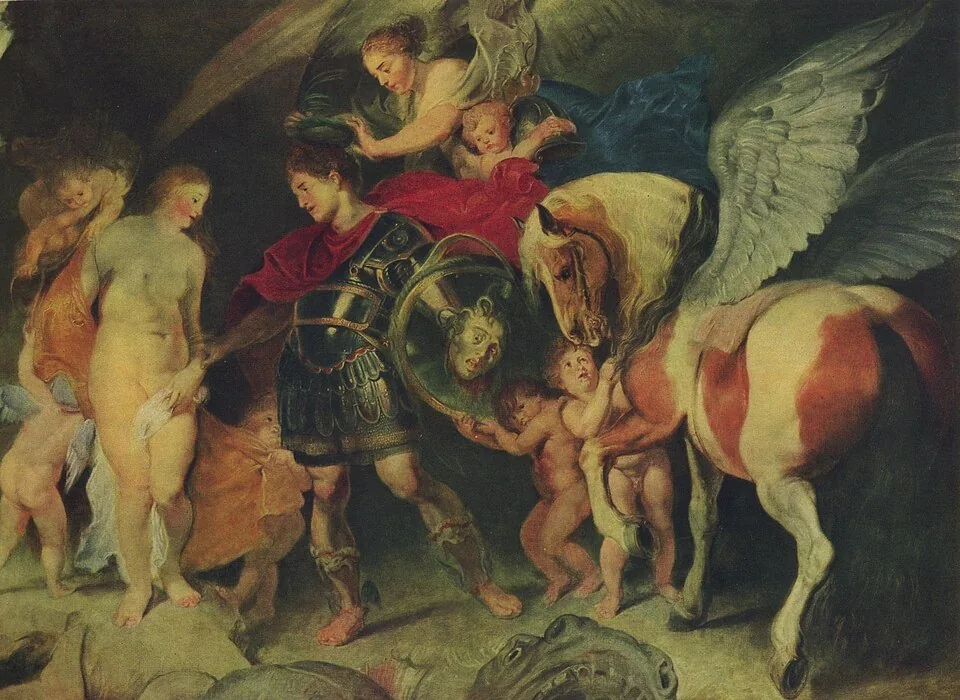
Perseus encounters the girl on the shore while returning from his mission to kill Medusa. He promises to slay the sea monster, but asks the king to give him Andromeda in marriage. Book IV of Ovid’s Metamorphoses makes the negotiation more dramatic, then describes the hero fighting the monster from the air and stabbing it with a blade. Thus not every account of the rescue has him accomplish it by displaying Medusa’s head. After the battle, Ovid also explains the origin of coral: seaweed hardens upon contact with the head. Such details connect the battle’s aftermath with the shore’s properties, while the betrothal immediately brings the foreign hero into the local royal family.
Conflict beyond the rocks
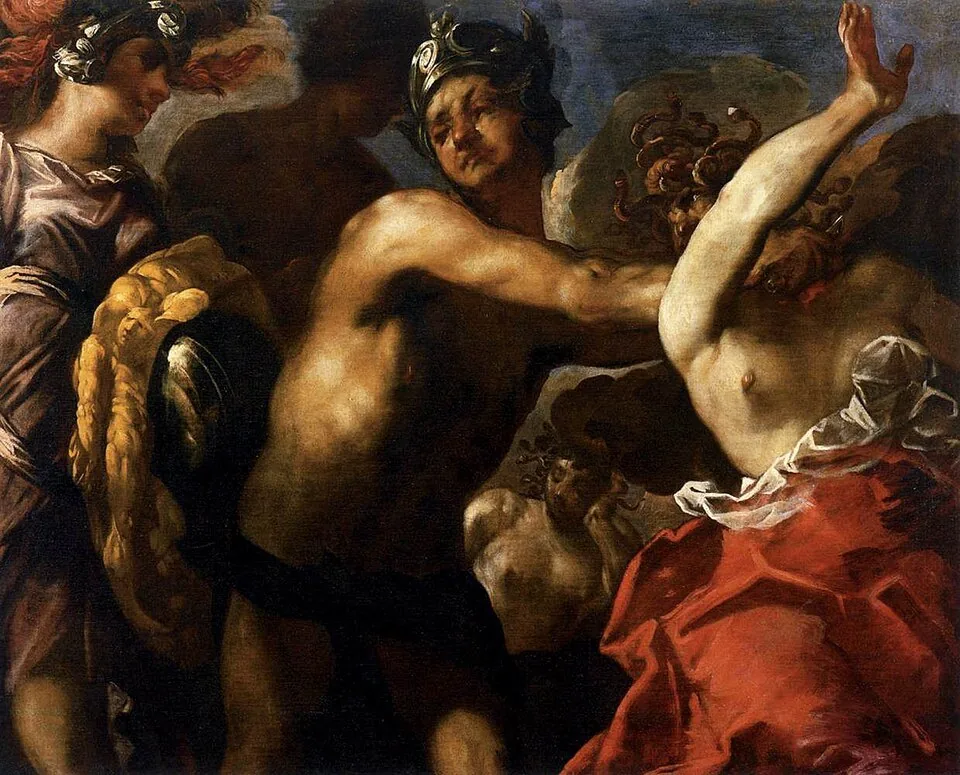
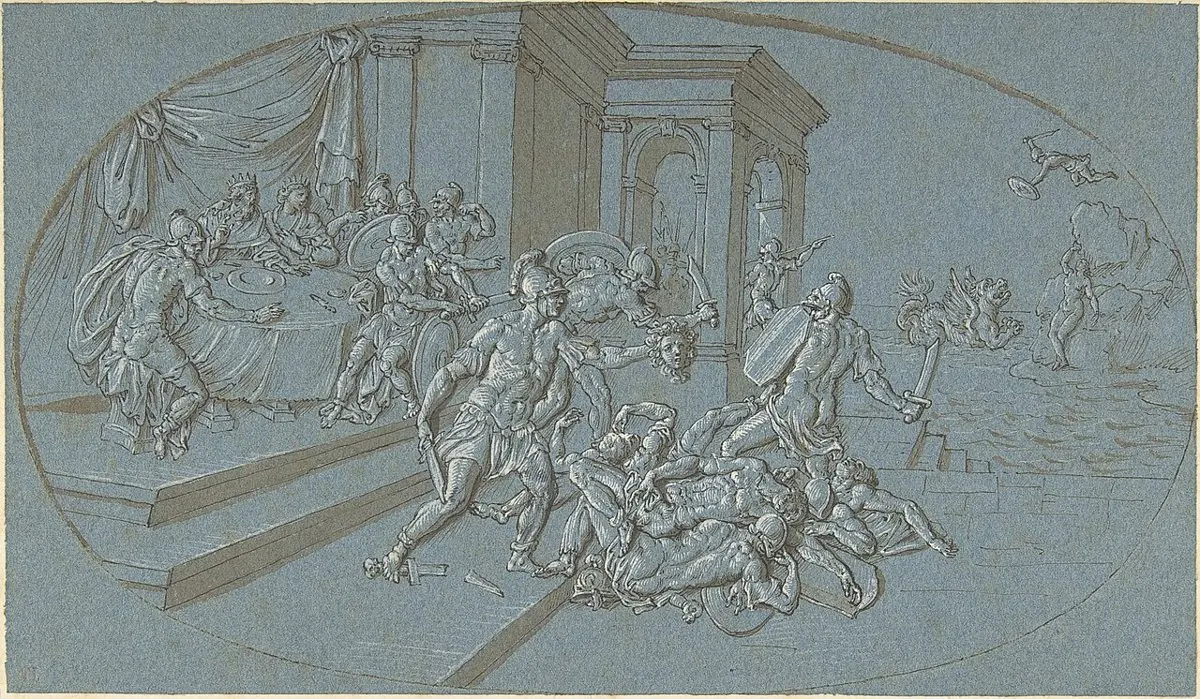
Andromeda has already been promised to Phineus, and her marriage after the rescue provokes new hostility. The Bibliotheca says that Perseus discovers his rival’s plot and petrifies him with the Gorgon’s head; Book V of Ovid expands the conflict into a battle at the wedding feast. Keeping the sea-monster battle and the wedding conflict separate clarifies the roles of different weapons in different circumstances. Later painters often compress the two episodes into one image of victory. That is an artistic rearrangement rather than the sequence of the ancient text. Read again from Andromeda’s perspective, the rescue ends her sacrifice without necessarily giving her room to express her wishes. This silence should be preserved rather than replaced with an invented modern freedom of choice.