The meeting between gods and mortals
Semele was a mortal woman from the royal family of Thebes who fell in love with Zeus and became pregnant. Book 3 of Ovid's "Metamorphoses" uses the name of the Roman god to write about the conflict between Jupiter and Juno surrounding this relationship. An introduction can explain the correspondences with Zeus and Hera, but it should not conceal that the work belongs to Roman literature. The relationship between gods and humans is inherently dangerously unequal: mortals, whose bodies, knowledge, and judgment cannot withstand the full power of gods, may be asked to make choices without understanding the consequences.
Doubt borrows a familiar face
Hera in the story disguises herself as an old woman whom Semele trusts and tricks her into asking the god to appear as he does before his divine wife. Suggestions that appear to help confirm a loved one's identity actually exploit a person's desire for reliable evidence. Zeus's oath in advance limited his scope for refusing the request. The plot links deception, commitment, and physical danger: a word can be promised without knowing its content, and the cost, revealed later, is borne by the weaker party.
Fire and the Second Birth
The god's thunder and radiance killed Semele, and Zeus rescued the unborn, premature child from her body and placed him in his thigh until he could be born. Dionysus thus has the tradition of being born twice. This strange process is not a medical description, but uses mythological language to illustrate the relationship between gods and mortal blood, death and continued growth. The mother is not immune to harm just because her child becomes a god, and her subsequent glory is always linked to the destruction she encounters.
Mother in Memory of Thebes
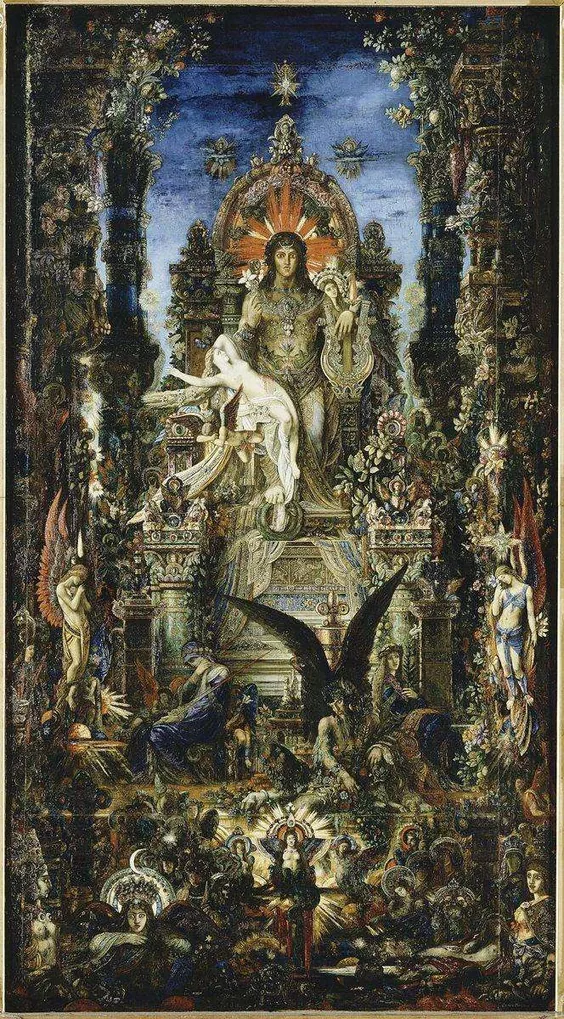
The opening chapter of Euripides' The Bacchae also has Dionysus mention his mother's grave and his disputed parentage, which extends the story to the issue of family reputation and whether the city-state recognizes gods. Moreau and other modern painters reconstructed the moment of encounter with extremely complex sacred images, expressing a brilliance beyond the endurance of mortals. Images cannot replace the specific plots of different texts, but they can help readers think: if the demand for truth lacks an understanding of the difference in power, seeing it with your own eyes may not necessarily mean you are safe.