Even the strongest can hesitate
Book 16 of the Iliad places Zeus before the imminent death of his son Sarpedon. He considers removing his son from the battlefield, but Hera reminds him that other gods also have children fighting there: one exceptional rescue would invite further demands. His hesitation strengthens rather than diminishes the scene's dramatic force, bringing power into particular relationships. Being able to change an event and deciding whether to make an exception for someone loved are different questions. A ruler is not an impartial judge standing outside all relationships. He has preferences and must confront how his decisions change other people's expectations of order.
Care for the dead after life cannot be saved
Zeus ultimately does not spare Sarpedon's life, but arranges for his body to be washed and carried home by Sleep and Death. This shift gives responsibility more than two possible outcomes, success or failure: when life cannot be preserved, dignity and burial still require care. The poem does not thereby declare Zeus always fair or provide a formula for fate that applies to every myth. It invites us to observe a particular choice: after accepting an ending, will the most powerful figure still carry out the remaining duties for those who bear the loss?
Happiness is not an unmixed gift
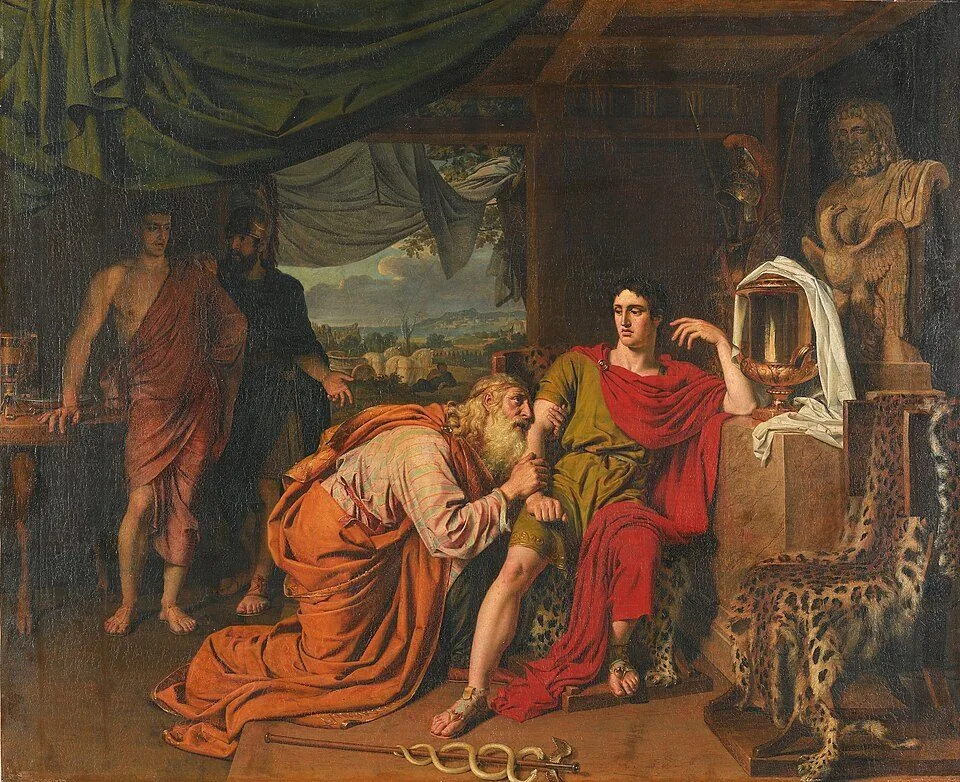
In Book 24, Achilles tells Priam about two jars before Zeus's threshold, holding good and bad gifts. This is a grieving person's metaphor for the human condition, not an oracle from which personal luck can be calculated. The divine king's image explains why power, wealth, or a distinguished family cannot guarantee a life without loss. Reading the passage beside the accounts of divine kingship shows that a ruler's glory and a father's grief do not cancel each other out. Someone with the ability to arrange events can still face a past that cannot be restored.
Read leadership as a question
If you admire Zeus's decisiveness, you can also ask who bears the costs of his actions. Reading myth does not require treating the divine king as an ideal manager, nor does recognizing his desires and preferences require ignoring his role in maintaining order. A more useful comparison distinguishes decisiveness, listening, exceptions, and care after an event. When ancient characters help us consider choices today, they offer questions for discussion: when to act, when to accept a limit, and how to take responsibility for outcomes that cannot be reversed.