A Sculptor Loves His Work
Book 10 of Ovid's "Metamorphoses" writes that Pygmalion did not want to marry the women around him and instead carved an ivory woman. He made his craftsmanship to such an extent that no trace of artificiality could be seen, and he fell in love with the work. The poet spends a lot of words describing his touches, gifts, clothes and imagination, arranging an unresponsive object into intimate life. The material of the statue is ivory, not white marble as is often stated in modern accounts.
The poet emphasizes that the work looks like a living person, but at the same time repeatedly reminds the reader that it is not yet alive. The gifts, bed and titles are arranged by the sculptor alone, which can show his detailed wishes and also show the lack of response in the relationship. The real turning point is not just that the colors become warmer, but that there is a pulse, a gaze and a new subject; the detail of her seeing the sky makes the world no longer exist only in the eyes of the person who made her.
A Prayer to Venus
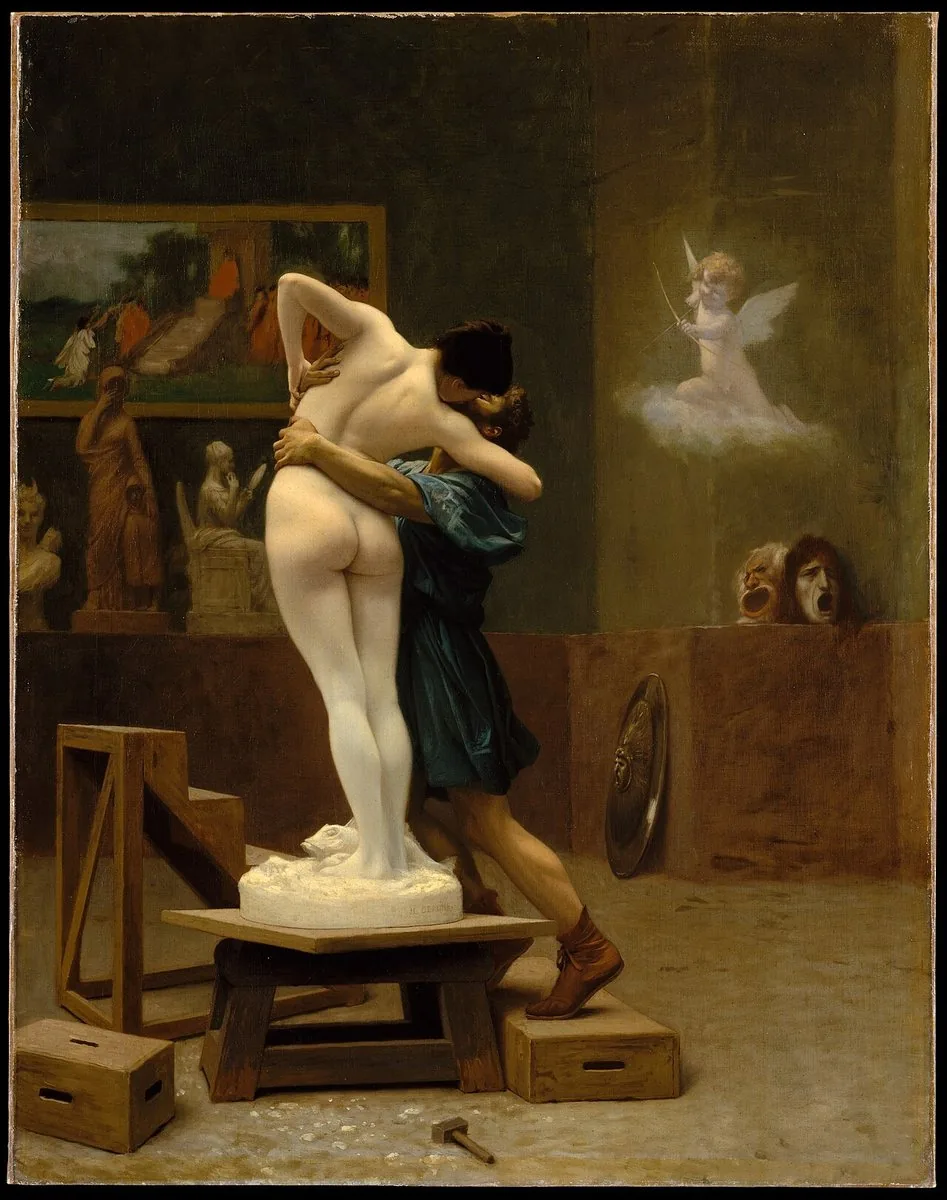
The festival of Venus came, and Pygmalion offered sacrifices, but he did not dare to directly ask the statue to become his wife. He only asked for a partner who looked like an ivory girl. The goddess understood his unspoken wishes. After returning home, he touched the work and found that the originally hard ivory gradually softened, becoming plastic like warm wax in his hands; when he touched it again, he felt her pulse. When the girl opened her eyes, she first saw the sky and the man before her. This series of actions transformed the fantasy into a life that could respond.
The Ancient Text Gives Her No Name
The goddess attended their wedding, and the two later gave birth to Paphos. Ovid did not name the statue Galatea in this passage, whose famous name came from later use; nor was she the sea nymph of the same name. Reading it today, we can see the realization of an artistic wish and another problem at the same time: the language and choices that the created woman has are very limited in the narrative. Later paintings often focus on kisses and changes in body color, which are visually moving, but also tend to make viewers forget that the change from work to person means that she should not always be just the ideal of the creator.