The God and the Youth in Daily Life
The tenth volume of Ovid's "Metamorphoses" tells that Apollo fell in love with the Spartan boy Hyacinthus. Apollo put aside his usual affairs to accompany him hunting, walking through the mountains and forests, and participating in sports. This beginning brings the powerful god into almost ordinary companionship: he is willing to take care of the lover and to spend time with him. The dangers of the story thus do not necessarily begin with war or punishment, but can suddenly arise in light-hearted activities.
Apollo's willingness to accompany him personally made it seem that the distance between gods and humans had been shortened temporarily; after the accident, the difference between immortality and mortality was revealed again. The knowledge of healing cannot change all injuries, and love cannot allow two lives to have the same time. The story does not describe the young man as someone who should be punished after making a mistake, which makes the ending closer to an accidental loss that cannot be recovered.
The Discus Rebounds
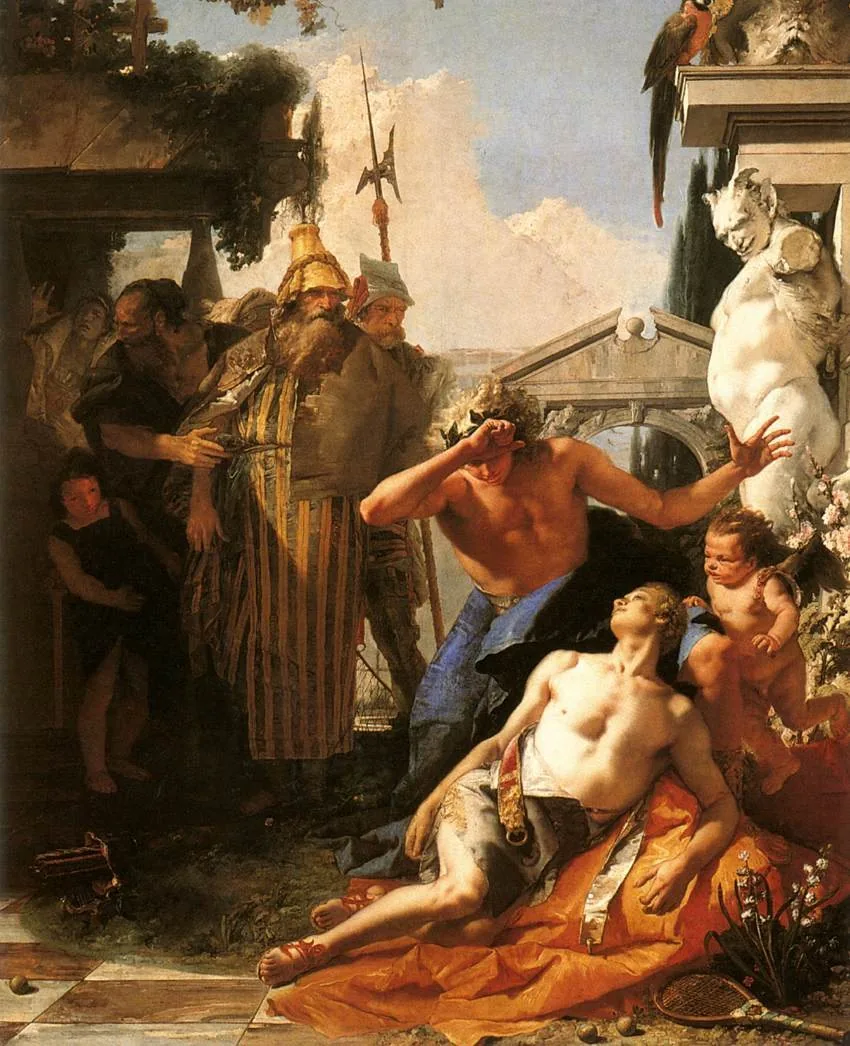
A game between two players. Apollo threw the discus high and far with all his strength. Hyacinthus was anxious to continue his turn. When he stepped forward to pick it up, the discus bounced off the hard ground and hit him on the forehead. Apollo hurriedly held the fallen boy and tried to stop the bleeding and heal him, but he could not save his life. This article follows Ovid's account of the accident; here he does not allow the jealous west wind to redirect the flying disc. Zephyrus's involvement is found in other traditions and cannot be regarded as the truth as this version has been written.
Grief Takes a Returning Form
Apollo admitted that his actions were connected with the boy's death, and hoped to die on his behalf, but his divine immortality made this wish impossible to come true. Flowers grow out of the blood, and the petals are written by poets as leaving signs of mourning. Whether the so-called flower of Hyacinthus in ancient times is equivalent to today's hyacinth cannot be determined based on the modern translation alone. The important change in the story is to transform the ephemeral body into a memorial that can reappear every year: the flower cannot restore life, but it allows mourning to have a visible focus. If tennis equipment appears in later paintings, it is a rewrite of the artist's era.