A counsellor beside the champion
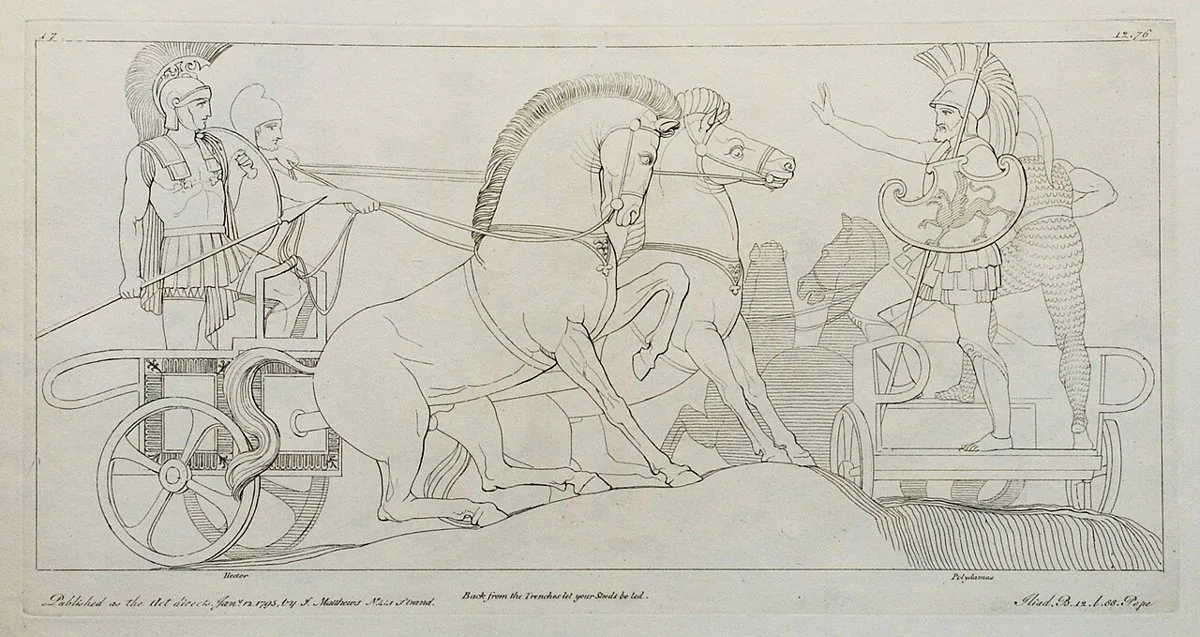
Polydamas is not simply a voice inserted to criticize Hector. In Iliad 12 he helps organize the Trojan attack and notices a practical problem: chariots cannot safely negotiate the Greeks’ defended trench. He proposes leaving the horses with attendants and advancing on foot. Hector accepts this advice, and the troops follow. Beginning here prevents a misleading portrait of two men who always disagree. Their cooperation shows that military judgment can include recognizing limits. A warrior need not deny the goal of the attack to question the method, and a commander can listen without surrendering his place at the head of the army.
The eagle that loses its prey
Later in the same book, an eagle carrying a living snake is wounded by its captive and drops it among the Trojans. Polydamas reads the omen as a warning about return: even if the attackers break through, many may not come home in good order. His concern is not merely whether they can move forward. It is what that advance will cost and whether retreat remains possible. The distinction makes the image more precise than a general prediction of bad luck. The bird has seized something, but possession has not become secure success. Polydamas asks the army to consider the unfinished second half of its desired victory.
Hector chooses another interpretation
Hector rejects that reading and appeals instead to Zeus’s promises and to the duty of defending one’s country. His response links military confidence with public loyalty, making disagreement harder to express. The reader can recognize the emotional power of his position without assuming that it settles the tactical question. A brave intention does not remove the risk described by the counsellor. The poem places competing interpretations before us rather than presenting courage as a substitute for thought. It also shows how a leader’s anger can change the conditions of discussion: advice becomes vulnerable to being heard as disloyalty instead of as help.
A second council after Achilles appears
In Book 18, after Achilles’ appearance terrifies the Trojans, Polydamas urges a return inside the city before morning. The situation has changed, and his recommendation changes with it. The walls can protect the army through the night and provide a more defensible position when Achilles returns armed. Hector refuses, preferring to remain in the field after the day’s successes. The assembly supports him. This is not a simple private misunderstanding between two friends. A collective response helps turn the commander’s confidence into policy. Reading the two councils together reveals how previous success can make a necessary reassessment especially difficult to accept.
Hearing what the poem preserves
The narrator distinguishes Polydamas’ sound counsel from the decision the Trojans applaud. That distinction keeps the rejected alternative alive for readers, even though it cannot save the army within the story. Read Books 12 and 18 alongside the site’s other Hector articles: protecting a city involves more than personal willingness to stand outside its gates. It also involves hearing people who describe what a victory may leave unfinished. The accompanying engraving by Tommaso Piroli after John Flaxman belongs to the later visual tradition of the Iliad; it should not be treated as a transcript of the council. The poem itself supplies the contrasting decisions and their troubling consequences.