A champion chosen before two armies
In Book 7 of the Iliad, Hector challenges an Achaean champion to single combat. The warriors sit to watch, and the choice eventually falls by lot to Ajax, son of Telamon. This is the greater Ajax, not the son of Oileus who shares his name. The distinction matters whenever an ancient image or modern retelling simply says Ajax. The encounter is public from the beginning. Each fighter carries his own courage into the space between the armies, but neither fights outside the expectations of the people watching. Their reputations and the hopes of their companions help create the significance of every exchange.
A contest that does not end itself
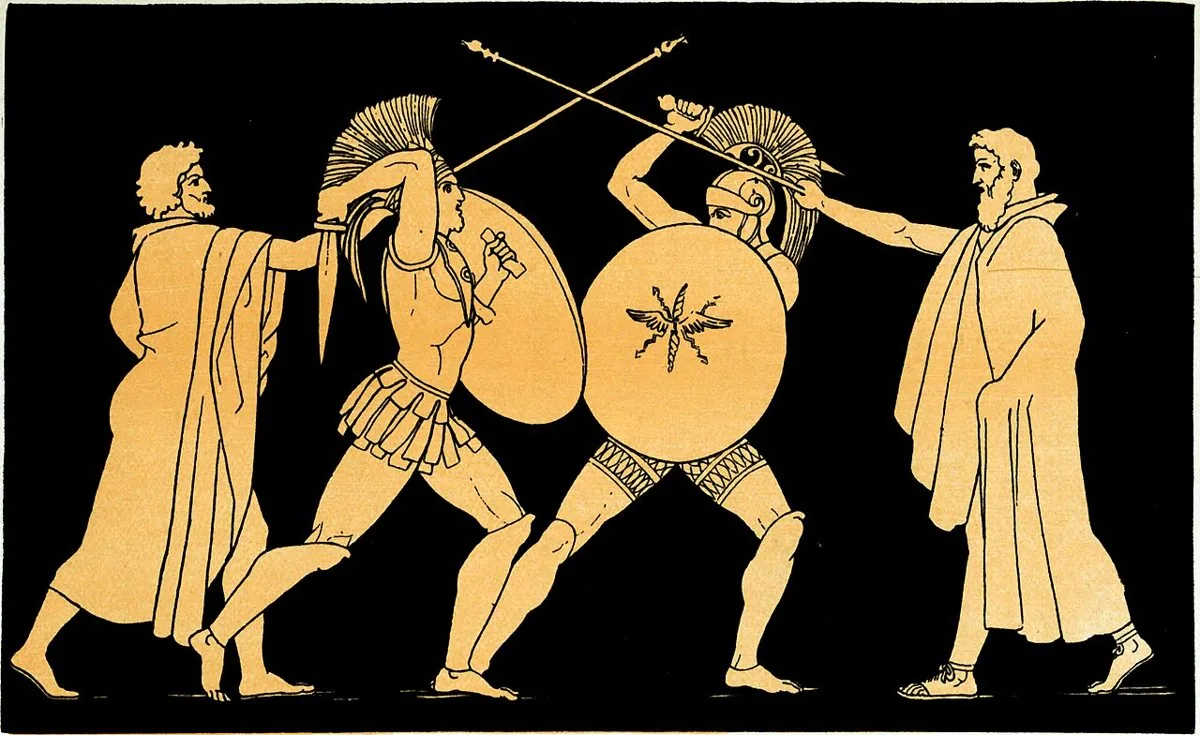
The fighters use spears and then great stones. Ajax brings Hector down, but Apollo raises the Trojan again. They are about to continue with swords when heralds step between them, holding their staffs. The interruption is practical and authoritative: night is approaching, and both men have demonstrated their strength. This is not a scene in which one opponent freely decides that he has never wanted to fight. Other people make a stopping point possible. The poem therefore gives the witnesses more than a decorative role. Their intervention helps prevent the next stage of violence from becoming the only imaginable conclusion.
Agreement must be spoken
Ajax asks that Hector, who issued the challenge, speak first about ending it. Hector acknowledges his opponent's strength and proposes that they cease for the day, while leaving a future contest to the gods. He also recalls the people who will welcome each man back. The armies do not disappear from the conversation when the duel stops. Their relief is one reason to accept the pause. Hearing the challenge, the interruption, and the proposal in sequence shows that an ending has to be negotiated and recognized. Merely growing tired or encountering darkness would not by itself establish what either side should call the result.
Objects carry the new relationship
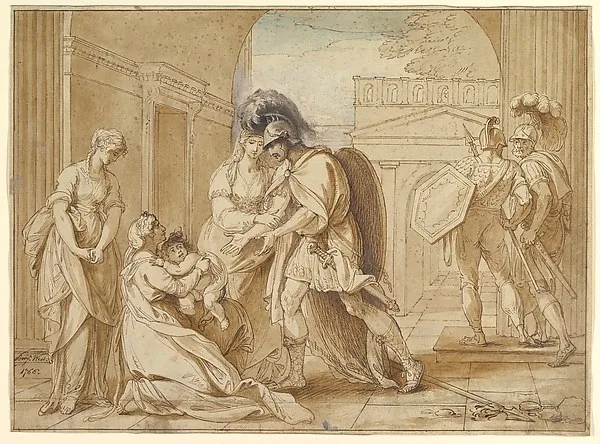
Hector gives Ajax a sword with a silver-studded hilt, sheath, and belt; Ajax gives Hector a purple belt. Hector wants people to remember that they fought fiercely and nevertheless parted on friendly terms. The gifts make this particular agreement visible and portable. They are not a treaty ending the Trojan War, nor do they promise that every later encounter between the armies will be merciful. Each warrior returns to his own side, where relief and honour greet him. The contrast is precise: an enemy can acknowledge another enemy's worth and participate in an agreed pause while the wider conflict remains unresolved.
Another crowd stops another duel
Book 23 provides a useful comparison during the funeral games for Patroclus. Ajax and Diomedes compete in armed combat, but the spectators fear for Ajax and ask that the contest stop. The setting and stakes differ from Book 7, yet again onlookers establish a limit rather than simply wait for a body to fail. Reading the scenes together gives attention to the social work around heroic strength. The gifts after Hector's duel belong to that work: they preserve an accepted conclusion. Homer allows courage to include fighting well, while also showing how a community can help fighters leave a dangerous encounter alive.