The statue appears before its explanation
Book 14 of Ovid’s Metamorphoses places Picus inside several layers of storytelling. Macareus, who has left Circe’s house, tells Aeneas that he saw a marble statue of a young man with a woodpecker on his head. A female attendant explained its history. We do not receive an all-knowing judicial verdict: we hear a memory preserved within a dangerous household. Picus is a young king of the Latin countryside, fond of horses and desired by many nymphs. His chosen wife is the singer Canens. Her song can attract animals and move trees, yet that power will not guarantee that she can find her husband again.
A hunter is separated from his companions
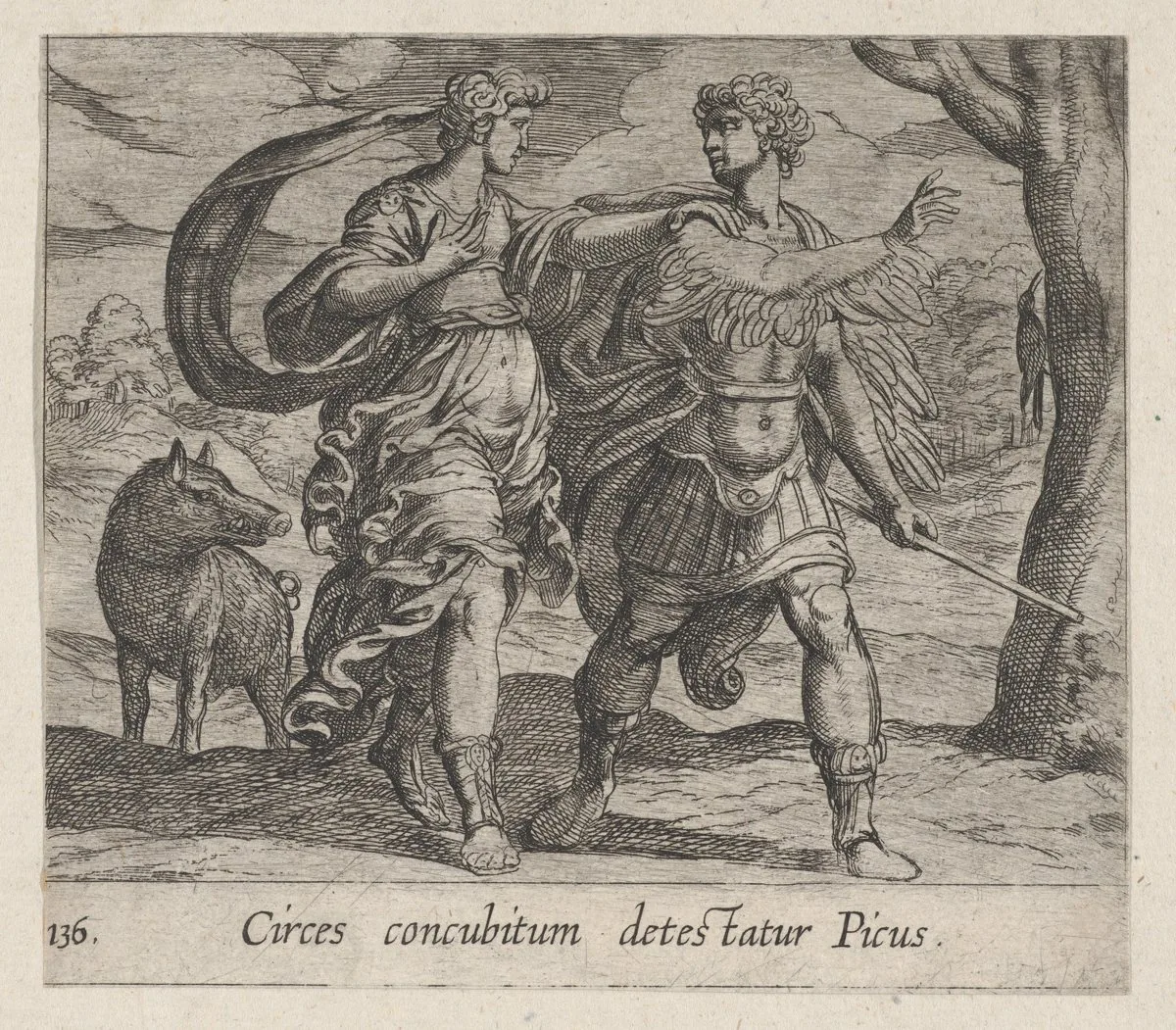
Circe sees Picus while he is hunting and desires him. Because he is on horseback, she cannot immediately approach. She produces a boar that does not really exist, lures him into dense woodland, and covers the route with mist so his companions lose him. A man who holds weapons and leads a hunt can still be made to pursue something another person has arranged for him to see. The illusion is more than a decorative marvel. It removes him from company and witnesses. Being able to follow a target does not mean knowing why it is there, or retaining control of the path back to the people who came with him.
Magic changes a body after a refusal
Circe declares her desire, but Picus insists that he belongs to Canens and cannot betray that bond. She does not stop. Herbs, incantations and her wand change him. He wonders at his sudden speed and discovers wings upon his body; in anger, he strikes branches with a newly hardened beak. Purple and gold from his clothing pass into his plumage. His name survives while his shape is lost. The transformation does not establish consent. Forcing someone into another form and gaining their love are different achievements. His refusal was spoken before the magic began. The spectacular result should not be allowed to erase that earlier speech from our reading.
The people searching also face danger
His attendants cannot find their king. When they meet Circe, they demand his return and threaten her with hunting spears. She makes them lose their human shapes as well. Canens waits at home, but sunset brings no returning husband. She sends people out and then begins searching herself. Six nights and days pass without food or sleep before she collapses, exhausted, beside the Tiber. Her singing still expresses grief, but cannot summon Picus as it gathers birds and beasts. Ovid makes her body gradually dissolve with sorrow, while the place preserves her name. There is no compensating ending in which the couple reunite as birds or their companions successfully undo the spell.
Keep Virgil’s account at its own distance
Book 7 of Virgil’s Aeneid also connects Picus with royal memory and Circe’s transformation. It does not unfold the whole search by Canens that Ovid gives us here. Both poets bring Circe from Greek storytelling into Italy’s remembered past, but direct attention differently. Ovid’s nested account makes a statue signify more than a king’s authority: it points toward a changed body and the people left waiting for him. A pictured wand and a transformation help us recognize the episode. Reading must still follow its voices, remembering refusal, disappearance and searching as experiences that one image cannot present completely at once. Power over shape does not settle every question about the person within it.