A sea god before the appeal
At the end of Metamorphoses 13, Glaucus tells Scylla how he became a sea god. A fisherman, he laid his catch on grass untouched by grazing or harvesting. Contact with it made the fish move again and slide back into the sea. Amazed, he tasted the grass, felt his inward parts stirring, and could no longer remain on land. This transformation precedes his encounter with Circe. Her jealousy does not turn him from fisherman into aquatic deity. He is also distinct from the Lycian warrior who recognizes ancestral guest-friendship with Diomedes and exchanges armor in Iliad 6. Establishing his livelihood helps us follow the renewed significance of herbs when he later seeks help.
Explaining a body does not secure affection
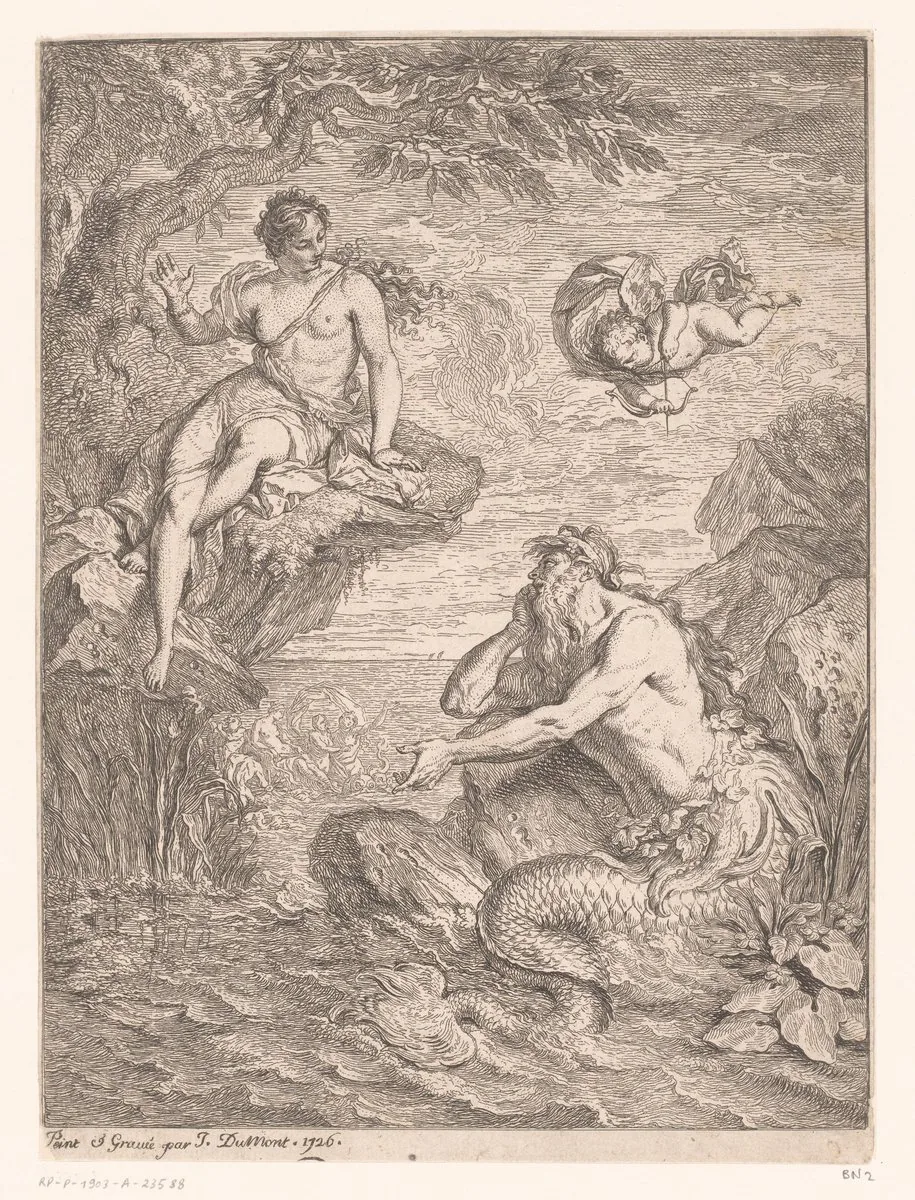
Glaucus approaches while Scylla cools herself in a bay. She flees to a high summit, wondering whether he is a god or monster as she studies his hair, complexion, and fishlike lower body. He explains his new identity, the sea gods’ welcome, purification by Oceanus and Tethys, and the placing of his breast beneath a hundred streams. His account preserves a gap he cannot remember: only after recovering consciousness does he see his fully altered body. Recognition by marine deities cannot guarantee affection from a girl on shore. Scylla leaves while he still has more to say. His explanation has secured no commitment from her, and one person’s desire has not automatically established a relationship. Nor does her fear become a judgement readers must share.
A remedy aimed at someone else’s desire
In Book 14 he visits Circe, daughter of the Sun. He trusts herbs because he has experienced their power himself. Yet his request goes beyond relief for his own suffering: he wants Scylla to feel the same burning love. Herbs move in his speech from the experience of bodily change to a means of altering another person’s desire. Circe instead falls for her visitor. She urges him toward someone willing to respond, offering herself and invoking her divinity, ancestry, and magical skill. Glaucus refuses and declares that his love will never change. Two unanswered pursuits thus meet in one room. Neither gives anyone rights over a third person’s body, a limit the possessor of powerful drugs will soon disregard.
A poisoned bay becomes a bodily catastrophe
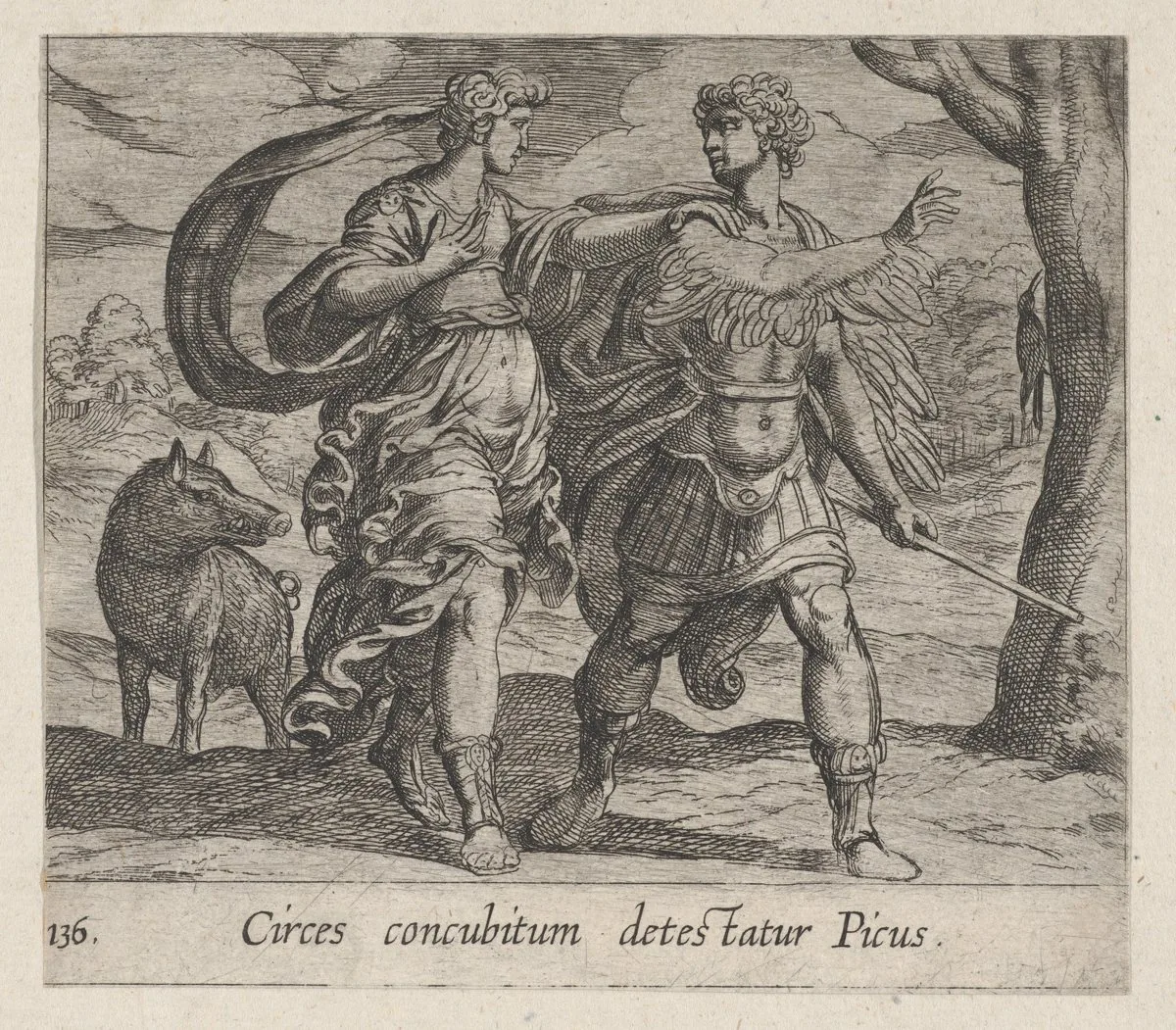
Still loving Glaucus, Circe refuses to harm him and redirects her anger toward the preferred Scylla. She crushes harmful herbs, mixes their juices, and crosses the sea to the curved inlet where Scylla customarily escapes the midday heat. She poisons the water and repeats an incantation twenty-seven times. Circe carries out this secret action herself; Ovid does not make Glaucus unknowingly deliver a supposed love potion. Scylla wades waist-deep and sees barking shapes around her lower body. Thinking the jaws belong elsewhere, she tries to escape. But she carries what she flees: searching for thighs, legs, and feet, she finds dreadful canine mouths. The familiar bathing place has changed, and its danger now travels with her body.
Different texts give the strait different histories
Glaucus weeps and leaves Circe and her harmful magic. The appeal has brought no successful courtship. Scylla remains where disaster occurred, later takes Ulysses’ companions, and becomes a rock before the Trojan ships arrive. This is Ovid’s origin for the sea monster, distinct from Nisus’ daughter who surrenders her father’s purple lock. Odyssey 12 already presents Scylla as a danger in the strait, without this account of fisherman, unreturned love, and poisoned water; the later narrative cannot be inserted into Homer’s text. Domenico Maria Canuti’s drawing Circe and Glaucus concentrates on the encounter of appeal. The poem proceeds to the absent girl’s waterside. Herbs satisfy the enchantress’s anger, while the person whose body changes took no part in that conversation.