Request to prove parentage
At the end of the first volume of Ovid's "Metamorphoses", Phaethon is questioned by his companions and goes to the palace of the sun god to find his father. In the second volume, the father acknowledges him and swears by the River Styx to grant a wish. The son chose to drive the sun's chariot, and the father realized that the oath was too broad. He explained that the route was steep and the solar horses difficult to control, making the journey challenging even for a god, but he could no longer take back his promise. Care should be taken here to refer to him as the sun god; the title of the sun used in Roman poetry and the later tradition of connecting Helios and Apollo should not be directly changed into a genealogy agreed by all Greek versions. The crux of the story is the use of an actual ability as proof of ancestry between father and son.
The chariot's weight changes its distance from the world
After Phaethon stepped into the chariot, the horses drawing the sun's chariot sensed a lighter burden than usual and stopped obeying the reins. When the chariot veers too high or too low, both the stars and the ground are threatened, the rivers dry up, and the earth asks Jupiter for help. The knowledge of the route given by the father does not automatically translate into the physical experience of the son; holding the same reins does not replace the ability to control the horses. Ovid lists many mountains and regions, making the disaster appear global rather than the personal accident of a young man's fall. The sacred act of driving is thus both a sign of distinguished status and a task required of the daily order; the desire to borrow it for a day ignores the long-term relationship between the job and the driver.
Lightning strike ends disaster and ends son’s life
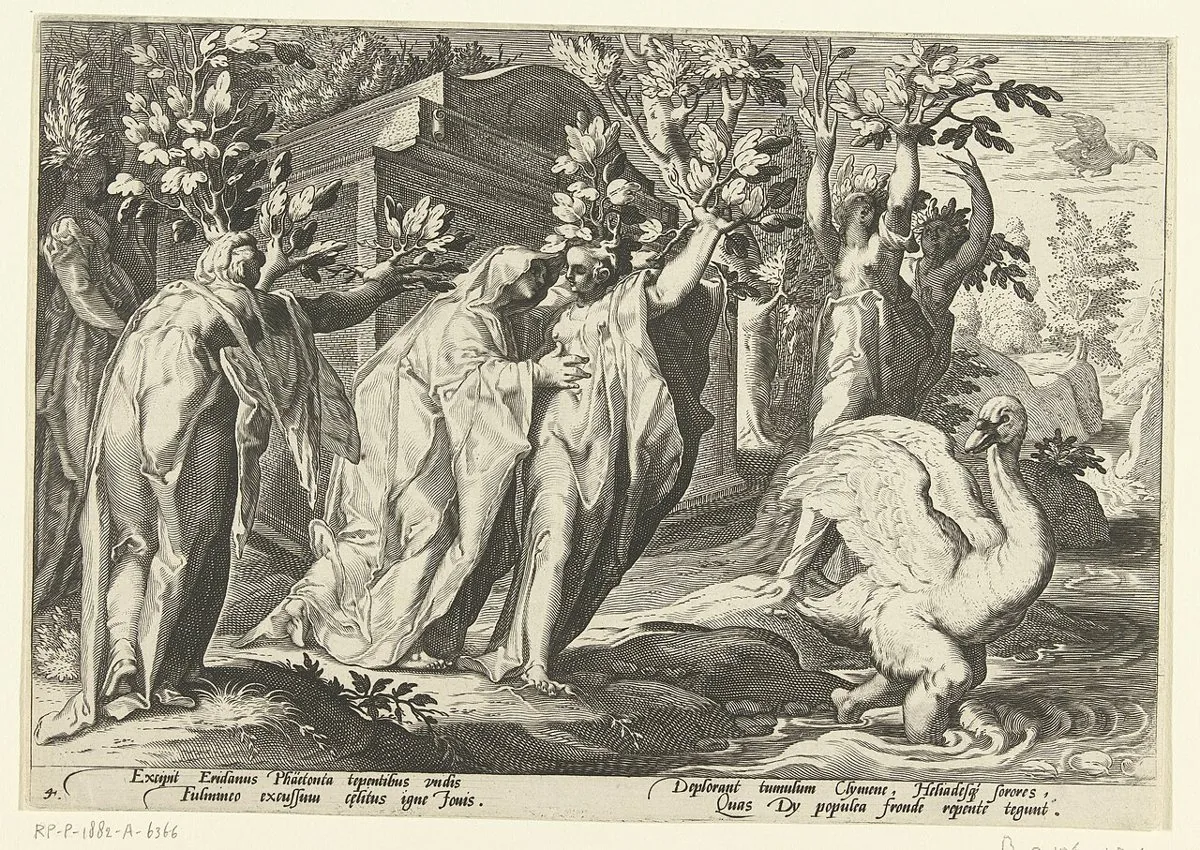
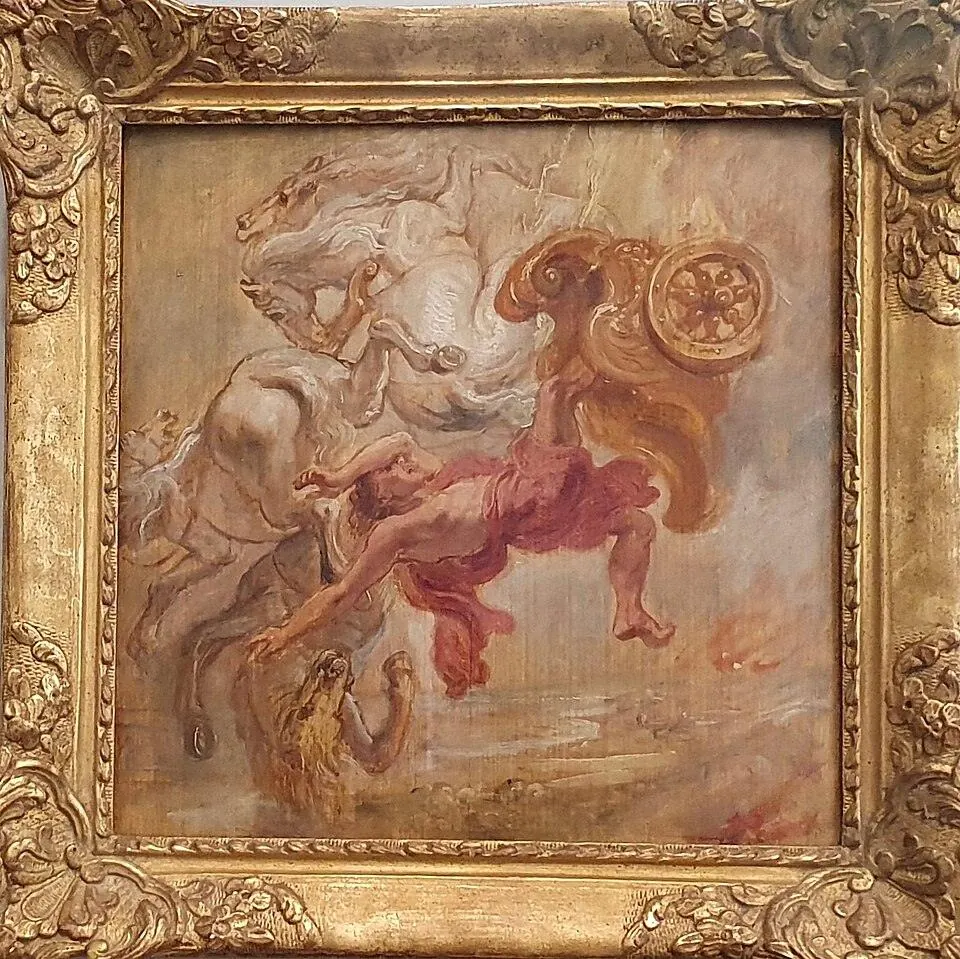
Jupiter struck down the chariot with his thunder, and Phaethon fell into the Eridanos. His sisters mourned and turned into trees, their tears turned into amber, and their mother continued to search for his remains. The poem extends the time after the disaster through these changes, and the return of the sun does not stop the grief of relatives. There is another shorter account in the Fables attributed to Hyginus, and the details should be distinguished according to the specific text. Later painters were good at showing the scattered horses, overturned carriages and falling bodies; but the oaths made in the palace also determined this scene. We can read the story as a reminder of the distance between ability and desire, but we don’t have to reduce the boy to a proud person who deserves to be punished. The request to know who the father is is not inherently evil, the danger comes from the way the relationship is confirmed becomes an unbearable level of authority.