News arrives before her own assurance
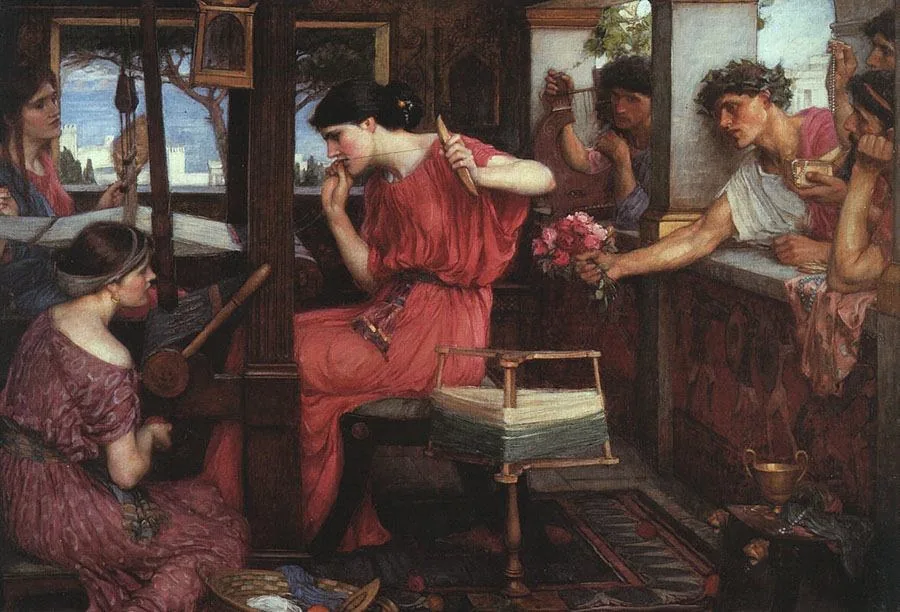
In Odyssey 23, Eurycleia wakes Penelope with joyful news: Odysseus has returned and killed the suitors. The nurse offers the scar she recognized while washing him, even staking her life on the truth. Penelope goes downstairs and sits across the hearth. At moments the man resembles her husband; at others his poor clothes obstruct recognition. Telemachus calls his mother hardhearted. She answers that, if this is Odysseus, they have signs known between them. Readers already know his identity, but that does not make her hesitation loveless. Another person’s certainty cannot perform her judgement for her. News, a bodily scar and the memories of a marriage have not yet become interchangeable kinds of evidence.
A changed appearance leaves the question open
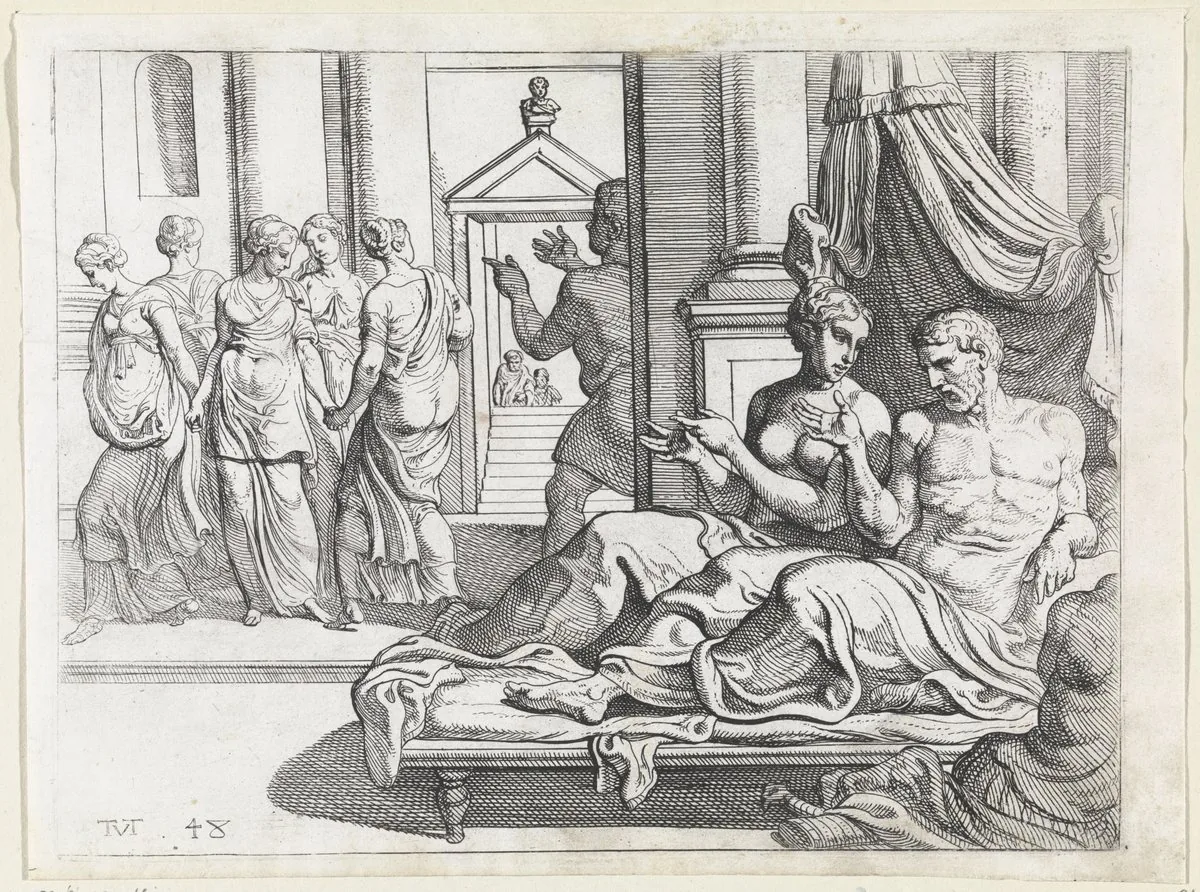
Odysseus bathes and changes clothes, while Athena makes him taller and more handsome. Sitting opposite his wife again, he complains of her iron heart and asks for a separate bed. Penelope then tells Eurycleia to bring his bed outside the chamber he built, and lay blankets on it. The narrator explicitly calls this a test. No servant has actually dismantled furniture or dragged it across the threshold. The decisive movement begins in language: she proposes that a familiar object can be shifted, and waits for his response. Improved appearance has not settled the matter. A question about a room and work now requires something beyond his demand to be believed.
A tree becomes a bedpost inside a room
Angrily, Odysseus asks who has moved his bed. A vigorous olive once grew in the courtyard. He built stone walls, a roof and strong doors around it, then cut away its crown and dressed the rooted trunk into one bedpost. Boring, decoration with gold and silver, and the fitting of dyed leather follow in his account. He does not know whether the bed remains, or whether someone has cut the tree at its roots and carried it elsewhere. This is no magical bed growing complete from a branch. Its resistance to movement comes from roots, building and skilled labour. The speaker identifies himself through the particular work he once did in this home.
The secret has a third keeper
Penelope weeps and embraces him. She explains her fear that someone would arrive with a deceptive story. She also names another person who knew the bed: Actoris, the servant her father gave her at marriage, who guarded the chamber doors. A slogan about only two people in the world knowing the secret erases this detail. Privacy also relies on another person’s care. Claudia Filos, writing at Harvard’s Center for Hellenic Studies, discusses the connection between the language of firmness, the rooted bed and the dependable recognition sign. That is a useful reading of this poem, rather than evidence that every olive-wood object carried an identical ancient religious meaning. Here the name follows Cotterill’s translation; Butler instead renders it as the daughter of Actor.
An embrace restores a home without ending every trial
Odysseus weeps too. The poem compares Penelope’s welcome sight of her husband to shipwrecked swimmers finally seeing land: a seafaring image now describes the relief of the person who stayed home. She speaks of the youth they could not share. Athena lengthens the night; the couple returns to the old bed and exchanges accounts of suffering. Their tenderness does not undo the violence in the house or guarantee an effortless future. This book still mentions an unfinished journey, explored elsewhere on this site. Here, homecoming changes because one person is recognized by another and separation can become a shared account. The bed has not actually moved, but the conversation has travelled beyond claims and rebukes toward remembered life.