Who interprets the dream beside the fire?
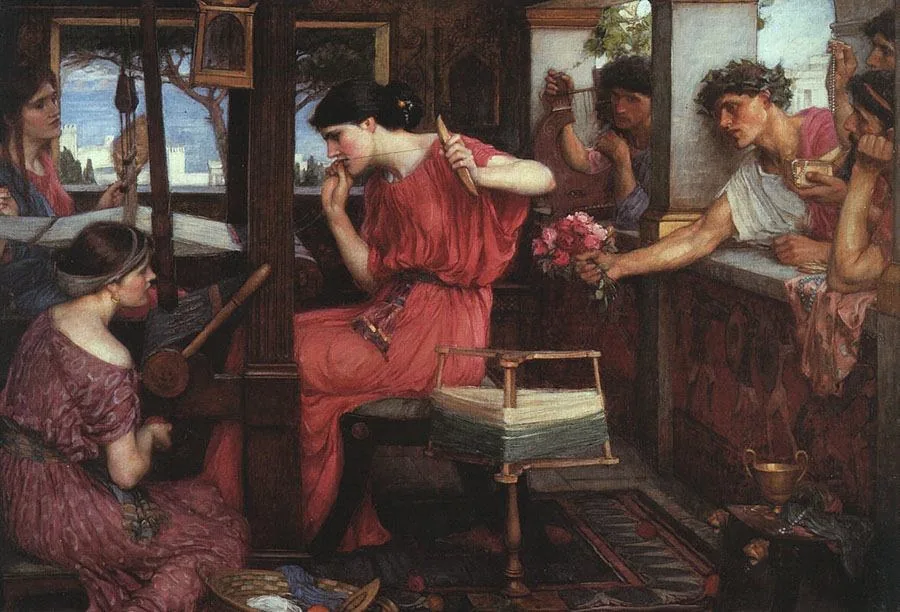
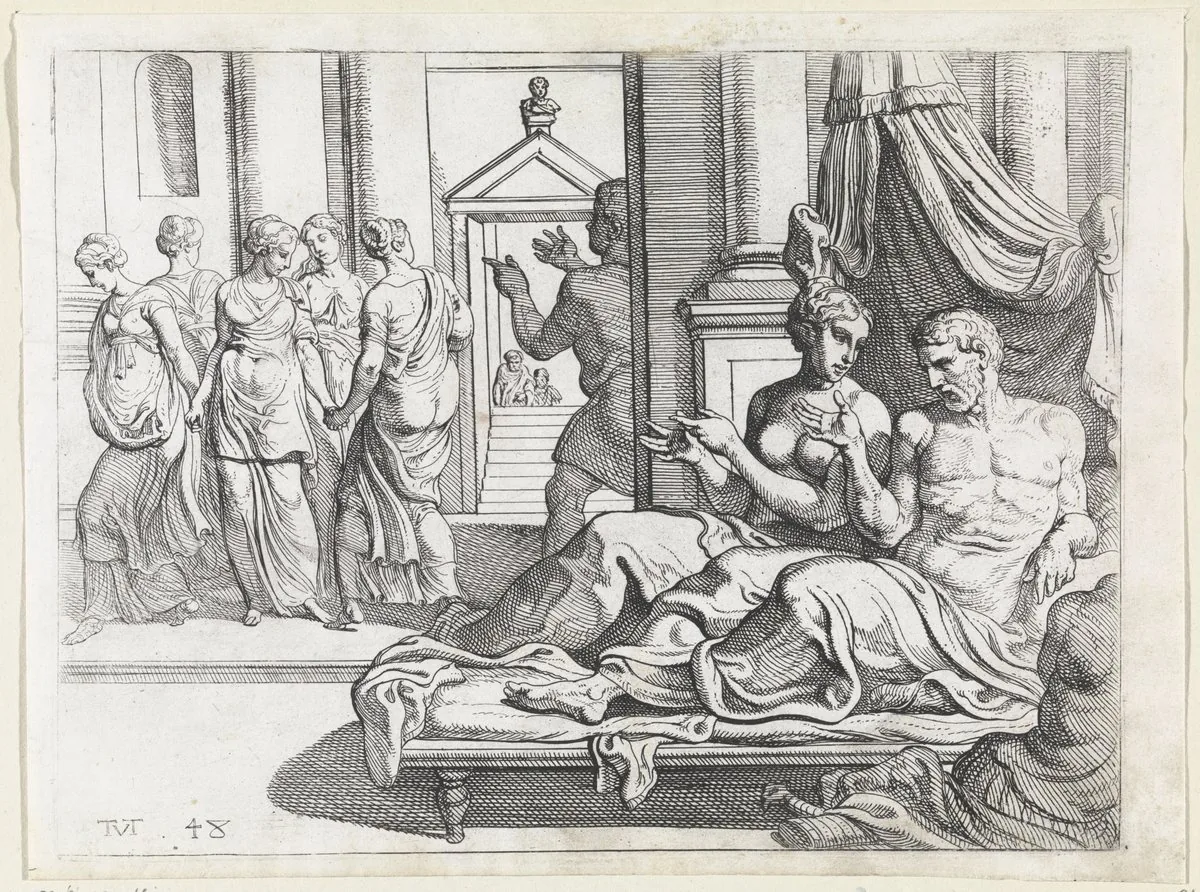
Beside the fire in Odyssey 19, Penelope asks a stranger to interpret a dream. Readers know that he is Odysseus, returned in disguise; she is addressing a traveller who claims to have met her husband. Earlier, Eurycleia recognized his scar, but Athena turned Penelope’s attention elsewhere and the discovery remained unannounced. Now the queen describes grief that follows her through household duties and keeps her awake at night. Should she remain, protecting her son and the household, or accept another marriage? The dream does not erase these practical pressures. It enters a conversation already full of clothing details, reported news and tests of credibility. Who interprets the dream therefore matters alongside what appears inside it. Readers possess an advantage over the person asking for an answer, and that difference makes the quiet exchange unusually tense.
An eagle’s explanation does not erase the tears
Penelope has twenty geese that feed on wheat, and watching them brings her pleasure. In her dream a great eagle descends from the mountain, breaks their necks and leaves them scattered in the hall before flying upward. She weeps, and women gather around her. The eagle returns, perches on a roof-beam and speaks with a human voice: the geese stand for the suitors, and he is her returning husband, bringing death to them. The image seems to supply its own explanation, yet that explanation cannot make her earlier tears disappear. We need neither conclude that she secretly loves the suitors nor remove her distress to produce a tidier ending. Familiar birds, violent hunting and a promise of rescue occupy the same scene. The poem lets these feelings follow one another without handing us a single psychological diagnosis.
An account within a dream, and geese after waking
Odysseus insists that no different interpretation is possible. Her husband has already explained the outcome, he says, and none of the suitors will escape. His answer sounds certain, and readers know who is preparing to act. Penelope nevertheless does not immediately announce that she has recognized him. Notice the layers: the dream contains an explanation, and the stranger adds a second guarantee. The future he endorses is precisely the future he intends to bring about. After waking, she saw her real geese still feeding beside their trough. That ordinary detail separates the dream from the waking household again. The deaths pictured during sleep are not an event already witnessed in the courtyard. A prediction may grow more explicit while a listener still lacks independently verifiable news. Confidence within an account is not automatically evidence outside it.
Two gates and a judgement withheld
Penelope then describes two gates for dreams. Through ivory come deceptive messages that will not be fulfilled; through polished horn come things that reach true fulfilment. She doubts that her own dream passed through horn, although she admits that its fulfilment would delight her and her son. Her caution is not an inability to feel hope. She declines to turn a desired result immediately into an assured future. These gates are first a poetic image spoken by a character at this particular moment, rather than instructions for a universal ancient Greek system of dream analysis. Nor need we assign her dream to a gate whose use the narrator has not confirmed. Her uncertainty asks readers to pause: even an account that offers a beautifully clear explanation may leave its hearer asking whether it can actually enter tomorrow.
Tomorrow still needs arranging
Next she announces the coming contest of the bow and twelve axes, whose winner she will follow away from the house. The contest’s actions belong to another part of the story; here, linger over her thought that even after leaving she would remember this home in dreams. Dreaming holds a possible future and a place she does not easily surrender. Dickinson College’s commentary notes continuing scholarly disagreement over whether she already recognizes her husband here. We need not force that question closed. The stranger urges her not to delay the contest; she ends the conversation, goes upstairs and weeps until Athena brings sleep. Homer does not announce that all her doubts have been solved. This night beside the fire turns waiting into more than passing time: someone keeps asking questions and arranging the next day while retaining her own judgement.