A warning grounded in experience
In Book 11 of Ovid’s Metamorphoses, Ceyx prepares to consult Apollo’s oracle at Claros because the route to Delphi is unsafe. His wife Alcyone fears the voyage. Her warning comes from things she has seen: broken planks on the shore and empty tombs bearing sailors’ names. Being Aeolus’ daughter gives her knowledge of winds, not a guarantee that they will obey once released. She asks him to stay, or at least to let her share the danger. Ceyx loves her and refuses to expose her to it, but still leaves himself. Neither affection nor a promise to return can settle this difference. The farewell already places them in unequal situations: he chooses a journey, while she must wait for its outcome.
When the ship can no longer answer
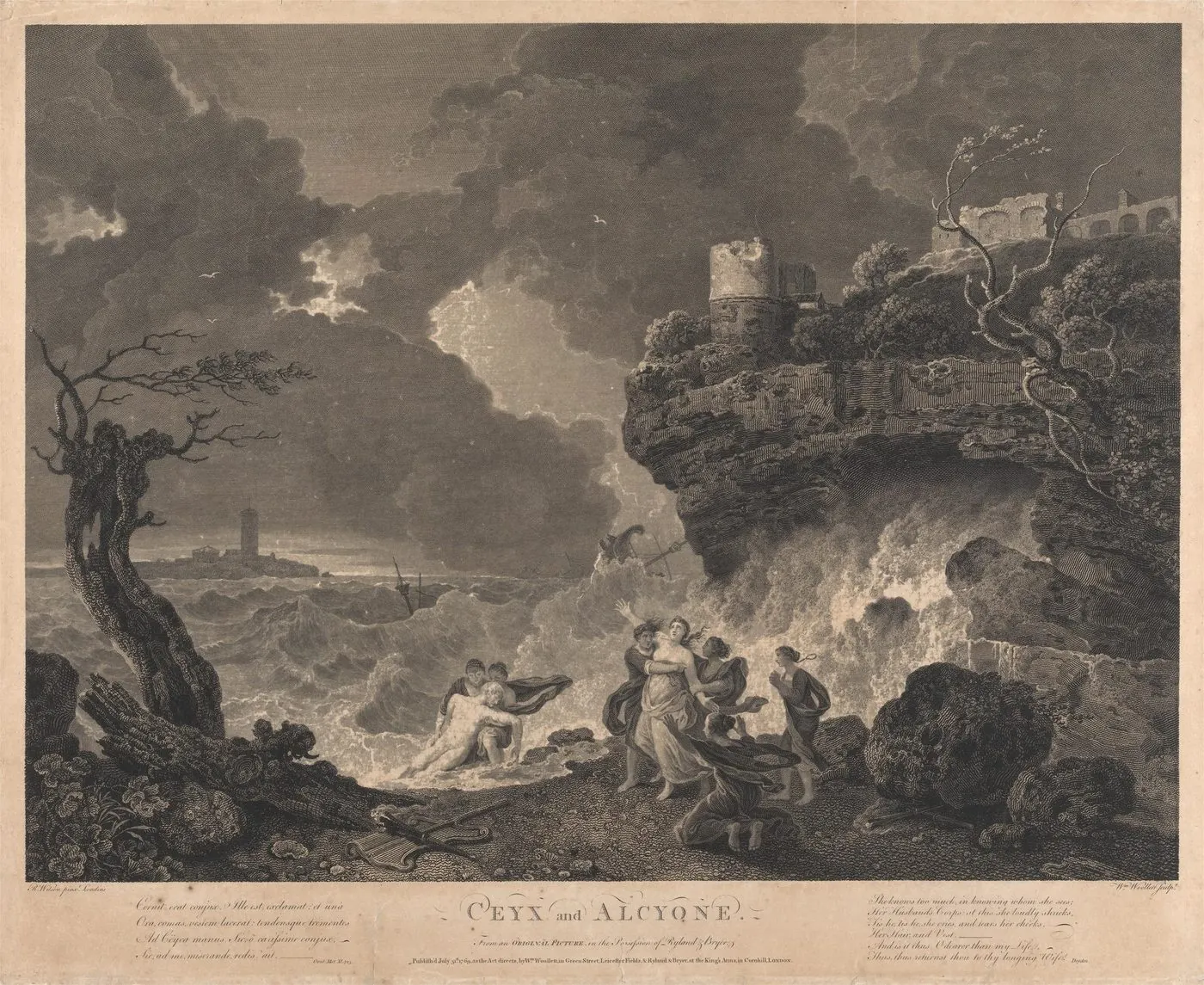
The storm dismantles both the vessel and its ordinary organization. Sailors try to secure the ship, shorten sail, and pump out water; the noise makes commands useless. Their work matters even though it fails. Ovid does not need to turn the crew into villains or blame one mistaken maneuver. Ceyx clings to wreckage with the hand that once held a sceptre, an image that removes the protection of royal office. He calls Alcyone’s name and longs for home, while also taking comfort that she is absent from the danger. Before drowning, he wishes his body might reach her for burial. At home she cannot know any of this. The narrative makes the distance between an event and its news painfully wide.
A truthful message in an invented body
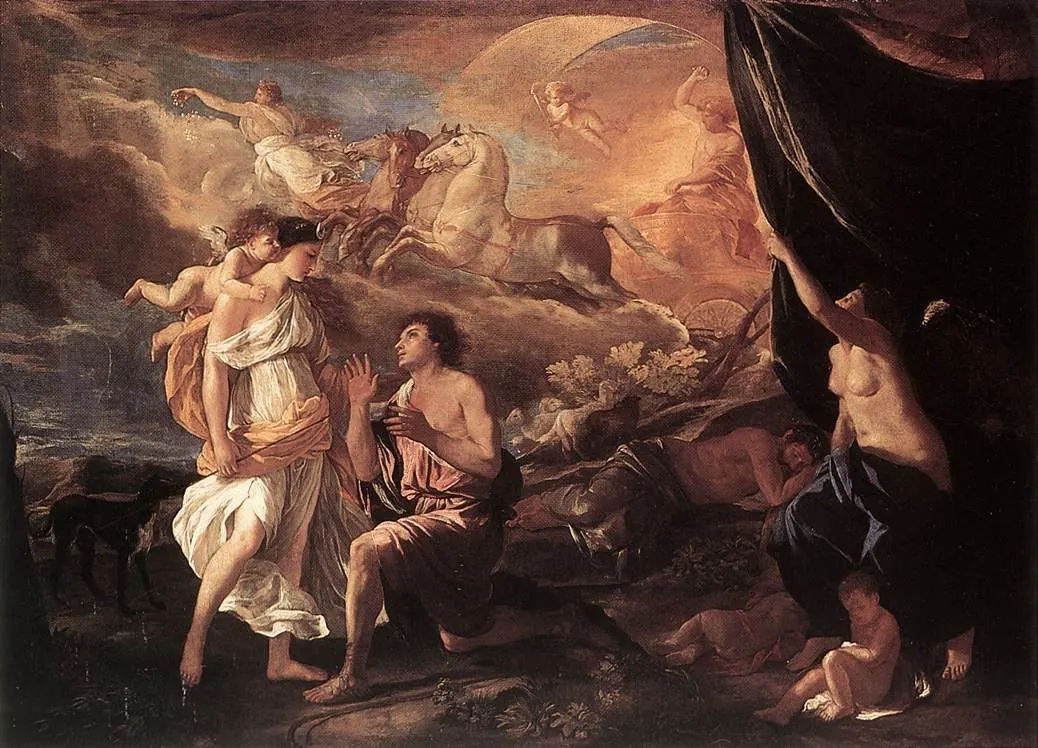
Alcyone prepares clothes for her husband’s return and keeps praying to Juno, the Roman counterpart of Hera. The goddess will no longer receive requests for someone already dead and sends Iris to Sleep’s dwelling. Sleep chooses Morpheus, who can imitate human appearance, speech, and habitual movement. The dream appears beside Alcyone’s bed as the drowned Ceyx, with wet hair and the gestures she knows. Its report of the wreck is true, but the figure delivering it is a representation. Ovid has shown readers how it was made; Alcyone experiences it as her husband’s presence. That difference makes the scene unsettling. Intimacy supplies the details that persuade her, while the apparent body remains impossible to hold when she reaches out towards it.
Recognition reaches the shore
Morning brings her back to the place where they parted. A body approaches on the water, but she does not immediately identify it. Before she knows whose it is, she pities the stranger’s wife. Compassion therefore precedes personal recognition. As the waves carry the body nearer, uncertainty becomes the knowledge she dreaded. She moves onto a breakwater and, springing out, unexpectedly flies on newly formed wings. Her altered voice mourns; her wings embrace the body, and her hard beak offers kisses. The movement continues the desire to reach him rather than erasing it. Through divine pity, both become birds. The poem preserves their attachment in a changed form of life, without pretending that the waiting wife successfully prevented the shipwreck through prayer.
Seven quiet days, and another tradition
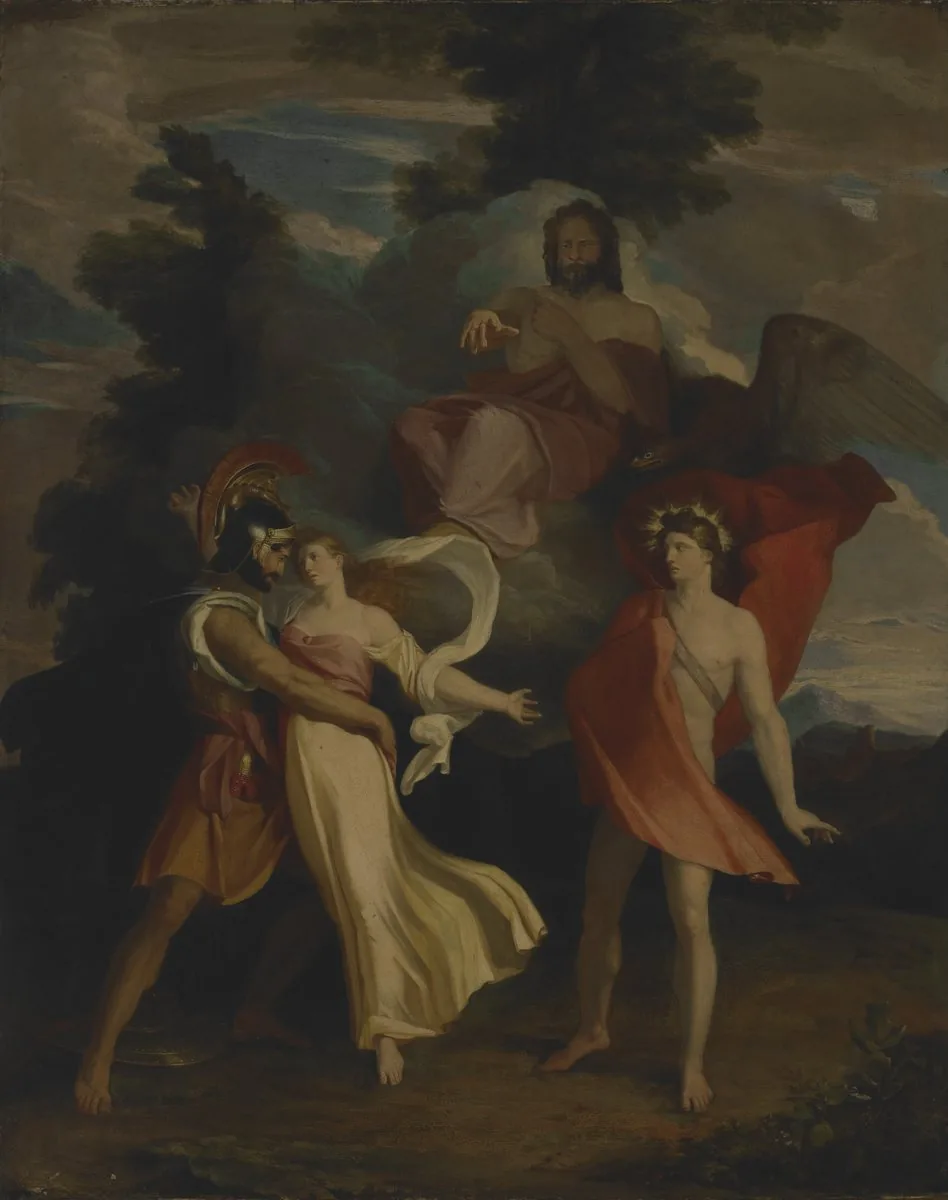
Ovid closes with Alcyone brooding on a floating nest during seven calm winter days, while Aeolus restrains the winds for his descendants. These are the poem’s halcyon days, not a scientific rule about weather or modern kingfishers. Another ancient telling changes the meaning sharply. In Library 1.7.4, the couple’s proud comparison of each other to Zeus and Hera brings transformation by Zeus; the wife becomes an alcyon and the husband a ceyx. That brief punitive account should not be silently inserted as the cause of Ovid’s compassionate ending. Keeping the traditions distinct allows this longer story its own difficult sequence: apprehension, disaster, delayed knowledge, and a reunion that requires different bodies. Calm arrives at the end, but the sea has not become harmless.