A Gift Made by the Gods
Works and Days places Pandora after Prometheus steals fire. Zeus ordered Hephaestus to shape the female body from clay, and then the gods Athena, Aphrodite, Hermes and other gods gave it clothing, charm, language and different abilities. Hermes gave her to Epimetheus. Prometheus once warned his younger brother not to accept gifts from Zeus, but his younger brother didn't listen and didn't understand the cost until something happened. The meaning of gift from the gods in the name therefore has a double meaning.
The character of Epimetheus is often overshadowed by the image of Pandora, but the story is equally concerned with his acceptance and hindsight. The gift is attractive when it arrives, but the danger is not yet apparent; the older brother's warning cannot automatically translate into the younger brother's judgment. Put him back into the picture, and the responsibility falls not just on the person opening the container, but also on the giver, the receiver, and the unequal information between them.
The Great Jar Opens
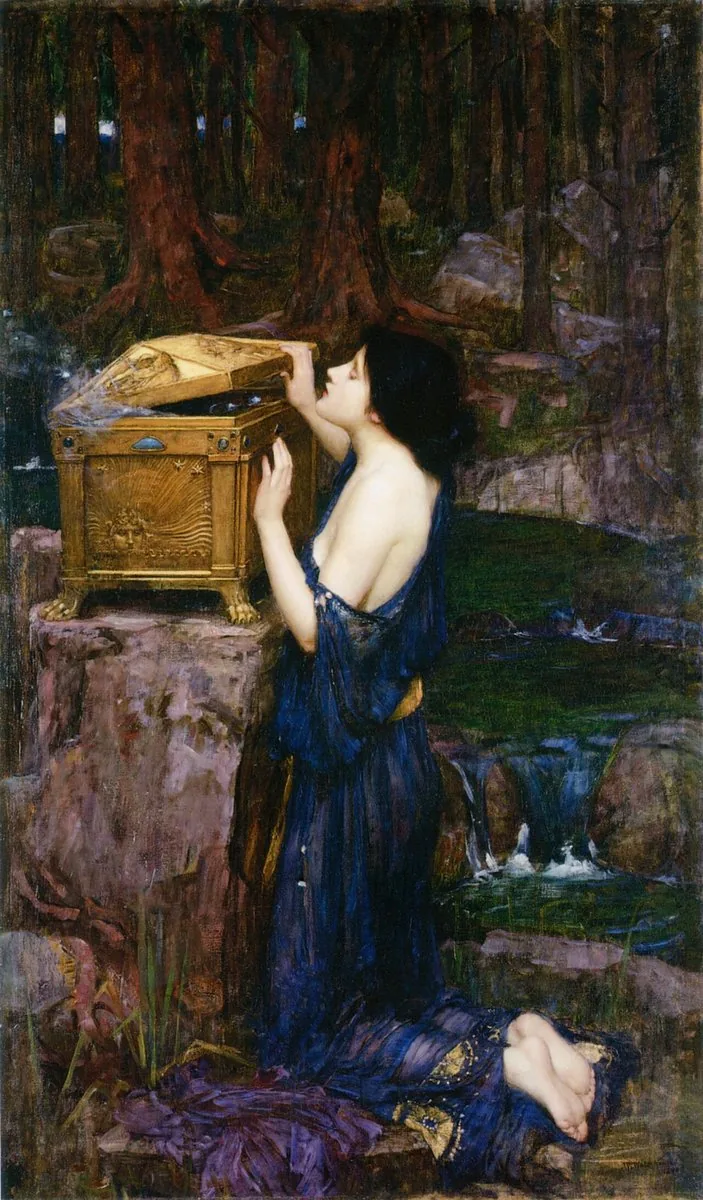
Pandora opened the container, and labor and disease entered the world. The utensil used by Hesiod was a pithos, a large jar, not the delicate small box commonly seen in later paintings. The poem does not describe the pattern of the box, the literal content of the prohibition, or the shape of all disasters, and the retelling does not need to supplement the original text with these imaginations. Diseases of all kinds now arrive silently day and night; only hope remains under the lip of the jar, as the lid is promptly closed again.
Two Readings of Hope Remaining
Whether staying inside preserves human comfort or deprives people of full access to hope has been open to different explanations. The text does not eliminate this doubt for all readers. It also describes the emergence of women as the gods’ punishment of men, presenting the ancient poet's distinct gender stance; when reading it today, one can understand this stance without taking it as fact or a code of conduct. What makes the story really readable is the relationship between gifts and harm, knowledge and hindsight. It's not just an admonishment not to be curious.