What the armies have agreed to attempt
In Iliad 3, the armies step back to allow Paris and Menelaus to fight a duel intended to settle their conflict over Helen and possessions. The agreement is supported by public oaths and sacrifice, not merely by a private handshake between two rivals. The troops’ relief matters: the possibility of ending the struggle belongs to many people who will otherwise continue fighting. The duel does not produce a simple shared conclusion, since Aphrodite removes Paris from danger. Nevertheless, the sworn arrangement remains the background against which the next book’s arrow must be understood. The shooting violates an attempted settlement rather than beginning from an absence of rules.
A familiar face makes a dangerous proposal
In Book 4, Athena approaches Pandarus in the appearance of Laodocus, a son of Antenor. She urges him to shoot Menelaus and promises the honour and gratitude he might win, especially from Paris. The disguise gives the proposal a human social setting. Pandarus does not receive the same view of divine deliberation that the reader has been given. His decision is shaped by an attractive story about reward and recognition. This is one reason not to summarize Athena only as an abstract emblem of wisdom. The epic also shows her directing another person towards an action that renews a destructive conflict.
The preparation slows the moment down
The poem describes the bow, its craftsmanship, the arrow, and the companions who shield Pandarus as he prepares to shoot. These details make the breaking of the truce a sequence of supported actions, not a weightless instant. Pandarus also promises an offering to Apollo if he returns home. A religious appeal therefore accompanies an act that breaks a sworn arrangement. The presence of prayer does not make the deed harmless or settle its justice. By slowing the preparation, the narrative gives the reader time to see how skill, expectation, assistance, and devotion can be assembled around a disastrous choice.
A wound instead of the intended death
Athena does not allow the arrow to kill Menelaus. It passes through protective layers and wounds him, frightening Agamemnon before the injury is assessed and Machaon is summoned. The goddess who encouraged the shot also limits its immediate bodily result. That double role should remain visible; turning her into either an uncomplicated rescuer or an absent observer would distort the episode. Menelaus’ survival does not restore the agreement. The shot has already changed the situation between the armies, and Agamemnon interprets it as a betrayal of their oaths. Political damage and physical damage are connected without being identical.
Why a small action can reopen a war
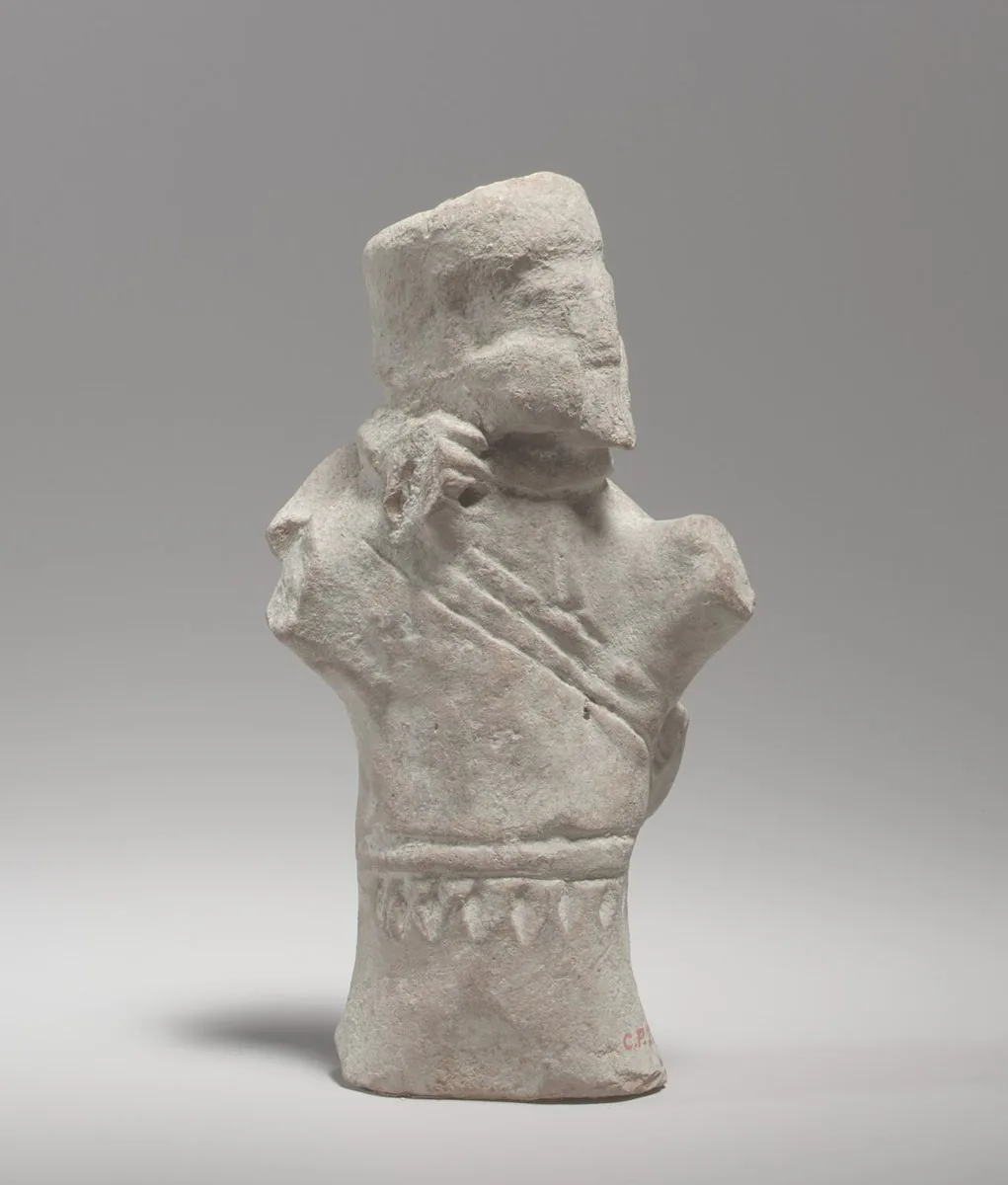
Read Books 3 and 4 together to follow the distance between making an agreement and maintaining it. Public ritual creates a framework, but it cannot prevent every manipulation of an individual’s desire for distinction. The story does not offer a modern legal verdict that removes all questions of divine and human responsibility. It preserves the discomfort of their interaction. The accompanying Cypriot terracotta archer, probably from a chariot group, introduces ancient archery rather than inventing a portrait of Pandarus. Alongside the site’s other Trojan stories, this scene asks how quickly the hopes of an entire gathering can be redirected through one person’s hand.