Different actions in the same war
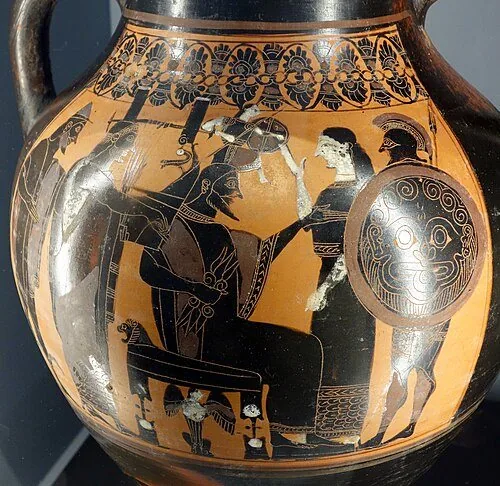
In Book 5 of the Iliad, Athena helps Diomedes recognize divine figures and participates in an attack on Ares. The war god can be wounded, cry out in pain, and leave the battlefield; divine strength does not make him permanently victorious. The two display different ways of fighting: one organizes action and offers guidance, while the other enters the conflict directly. These are their appearances within a particular poem and its opposing sides, however, rather than a personality chart collectively completed by the ancient Greeks. We should first examine the situations in which they act before discussing their differences.
Wisdom is not inherently free of violence
Athena's strategies help heroes win, but they can also make killing more effective. Calling her wise does not establish that every choice she makes is gentle. On the shield Hephaestus makes for Achilles, Athena and Ares even appear together in a scene of war. The poem does not always assign them mutually incompatible principles. Battle requires planning while also involving force, fear, and chance. A closer reading examines goals, methods, and consequences instead of using the name of a clever deity to excuse an action in advance.
The war god can also be asked for restraint
Hymn 8, To Ares, included in the Homeric Hymns, asks the war god for courage but also for help restraining inner fury, avoiding conflict, and living within peaceful order. This hymn and the Iliad should not be treated as comments written by one author at the same moment, yet the hymn shows that the war god's image can accommodate different appeals. People want strength against fear while also fearing that strength will become aggression that cannot stop. Courage therefore does not only mean advancing: resisting an impulse or accepting another person's advice may also require bravery.
Choose a purpose for courage
When we bring the two gods alongside everyday choices, the most useful question is not who wins a battle, but how an action gains direction. In a conflict, you might gather information first or immediately protect someone under threat; both choices must be examined through their consequences. Liking Athena does not mean you are never impulsive, and admiring Ares's strength does not oblige you to be combative. The comparison can open further reading: notice when heroes need advice and when they should stop, then distinguish whether you admire boldness, control, or responsibility.