Hear the mountain before meeting the god
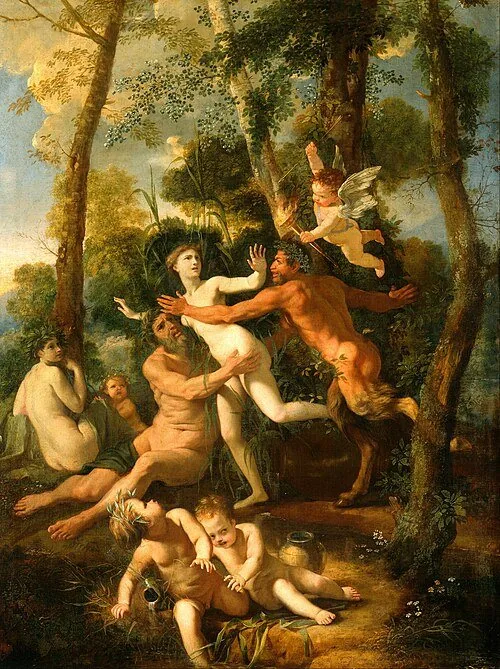
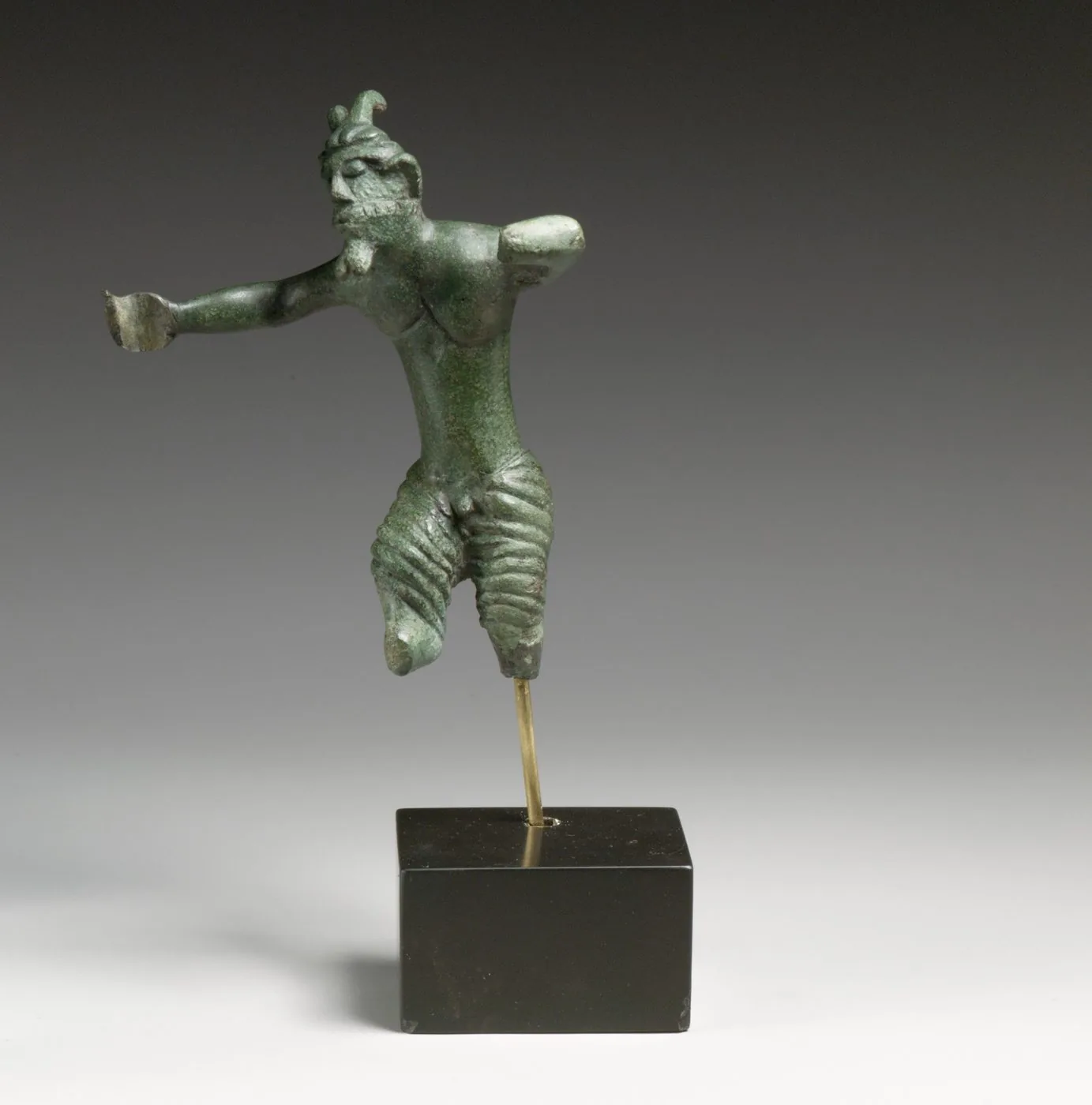
Homeric Hymn 19 asks the Muse to sing of Pan, the goat-footed, two-horned son of Hermes who loves lively noise. Rather than beginning in a palace or city, the poem follows him through wooded clearings, streams, high rocks and snowy summits. Flocks can be seen from these heights, and he also hunts wild animals on the slopes. Herding and hunting sit together, reminding us not to turn this wilderness into harmless decoration. Pan’s body joins human and animal features; the places he crosses likewise bring different lives together. Reading this opening, notice how the poem moves our attention: close beside flowing water, then up towards a summit. Getting to know a god can begin with the places through which he walks.
Evening music belongs to a gathering
Returning from hunting at evening, Pan plays sweetly on reed pipes. The poem compares his music with a bird singing among spring leaves, then brings clear-voiced nymphs beside a spring. They sing and dance while the mountain’s echo answers; Pan moves beside their groups or into their midst. Music here involves footsteps, terrain, breath and response, rather than leaving only a solitary performer. The dancers sing about Olympus and particularly choose Hermes, carrying the hymn from the present mountain gathering into the story of Pan’s birth. Notice that this poem does not explain the invention of the pipes or insert Syrinx’s experience from another work into the dance. The instrument already exists. The hymn is interested in how it is heard.
The nurse flees; the father receives his child
The nymphs’ song takes us to Arcadia, with its many springs and flocks. Hermes tends sheep there for a mortal and desires the long-haired daughter of Dryops; after their marriage she gives birth to Pan. This hymn supplies no further name for the mother and needs no Penelope borrowed from another genealogy. The newborn already has goat’s feet, horns and a beard, and is noisy and laughing. It is the nurse in the text who flees in fright at his strange appearance, leaving him behind; she should not quietly become his mother. Hermes joyfully takes his son in his arms, wraps him in warm mountain hare skins and brings him to the gods. He does not change the child’s shape. That same body is received, making the passage tender without erasing the preceding fear.
Olympus has room for a mountain body
Hermes sets his son beside Zeus and shows him to the other immortals. They are all delighted, especially Dionysus. The hymn links Pan’s name with the Greek word for all, explaining that he gladdened every divine heart. This is wordplay explaining a name within the poem, rather than an etymology established by modern linguistics. Nor does it announce him here as an embodiment of the entire universe. A life introduced among woods, rocks and flocks now enters Olympus without first losing its horns or goat’s feet. We can read that arrangement as an image of welcome. It remains the arrangement of a particular work, however, rather than a birth record that every ancient tradition about Pan must share.
A pleasing sound still has its hour
Theocritus’ first Idyll offers another angle. Its opening compares a herdsman’s piping with the whisper of a pine beside springs, and places Pan foremost in musical skill. Yet when his companion asks for piping at noon, the goatherd refuses: he fears disturbing Pan, resting after the hunt and quick to anger. This is not the next chapter of the hymn’s birth story. Another poet uses the god in a different conversation. Read together, evening delight and midday caution can coexist. Mountain music involves knowing when to stop as well as making a sound. Welcome among the gods does not leave Pan’s time available for people to claim at will. We retain a god with voice, movement, relationships and limits, rather than only a symbol carrying pipes.