Avengers also become perpetrators
In The Libation Bearers, Orestes returns to his hometown to avenge the murder of his father, Agamemnon. He received orders from Apollo and also reestablished kinship ties with his sister Electra at the tomb. However, to fulfill his duty to his father, he must kill his mother, Clytemnestra. The story doesn't let the order take away from the horror of the action: one can believe one is enforcing justice while simultaneously becoming a murderer in another kinship. The language of revenge is therefore insufficient to resolve the conflict.
Who speaks for the dead mother?
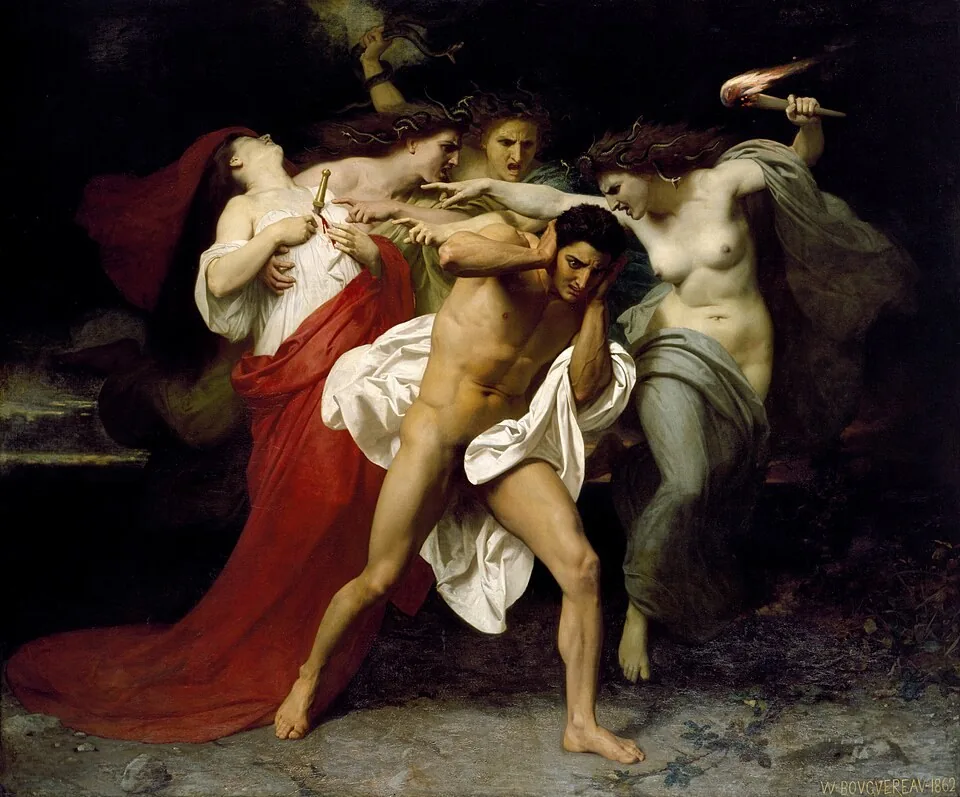
The Furies pursue Orestes because killing blood relatives violates the order they uphold. The Eumenides pits them against Apollo over their differing understandings of marriage, kinship, and responsibility. These goddesses are not just monsters to be destroyed, they represent the demands of victims who have been ignored in a new round of vengeance. The audience can feel their terror, and must understand why their claims are powerful; without this layer of conflict, the story is just an adventure of a hero escaping from his pursuers.
Athens submits the dispute to a court
Athena set up a trial in Athens, allowing both sides to present their cases and the jurors to vote for a decision. When the votes are equal, Orestes is freed. The establishment of the court here belongs to the mythical origin narrative of the city-state and cannot be directly regarded as a complete historical record of the actual judicial system. The key to the work is that revenge begins to be constrained by public procedures: no longer can individuals justify the next killing on the basis of bloodshed alone, but disputes must be subject to the judgment of others in a common venue.
Peace needs to accommodate old forces
The Furies were initially unwilling to accept the verdict, but Athena eventually persuaded them to stay by offering honors and a place in the city. The ending does not simply declare the old power to be worthless, but gives new arrangements to fear, memory, and the duty to protect the community. Later paintings often focus on the terrifying scenes of them chasing Orestes, but the drama also goes as far as negotiation and settlement. By reading these two parts together, we can understand that peace is not merely the pursuers ending their chase, but also about how a society recognizes the demands of victims and prevents the endless continuation of violence.