The prophecy continues beyond Ithaca’s door
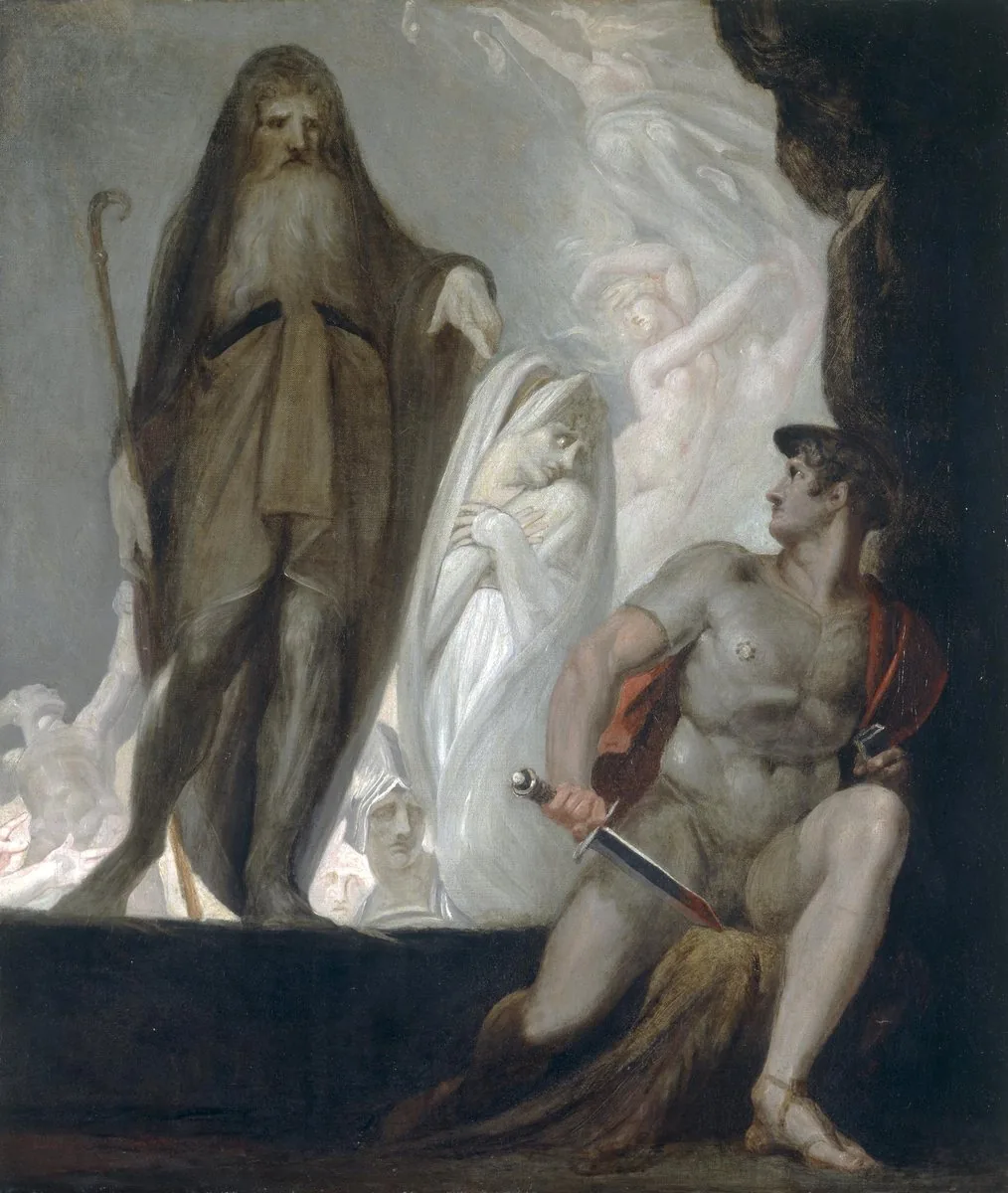
In Odyssey 11, the dead Tiresias approaches carrying a golden staff and recognizes Odysseus. The hero sheathes his sword, allowing the prophet to drink blood before describing the return. Poseidon’s anger, the Sun’s livestock and the suitors at home enter the account, but it does not end with reclaiming the hall. After killing the suitors, Odysseus must depart carrying a well-made oar. The instruction places a new distance between victory and settling down. Obstacles at sea may be crossed and opponents at home defeated, yet an unfinished relationship with a god does not automatically disappear. Rather than retracing the entire catalogue of the dead, follow this ordinary object into the future: something that once helped a ship advance will require its bearer to leave the coast. Henry Fuseli’s later painting at Museum Wales instead pictures the consultation among the dead; the museum identifies the figure between the two men as his mother Anticleia. It does not depict the later inland journey.
Where familiar expertise is no longer recognized
The prophet gives the destination no name that we can simply enter on a map. Its people know neither the sea nor food mixed with salt. They do not recognize ships or the oars that act as their wings. The journey therefore leads away from shared nautical knowledge, rather than toward a faster vessel. A sailor sees wood with an unmistakable purpose; someone whose everyday work centers on land and grain may see another implement. We can read this as a boundary of experience, without treating the strangers as backward spectators. Odysseus’s identity has taken shape through seafaring and travel. Now he must accept that something apparently obvious to him will not receive the same explanation everywhere. Another person’s judgment will tell him when to stop.
A mistaken name becomes the signal
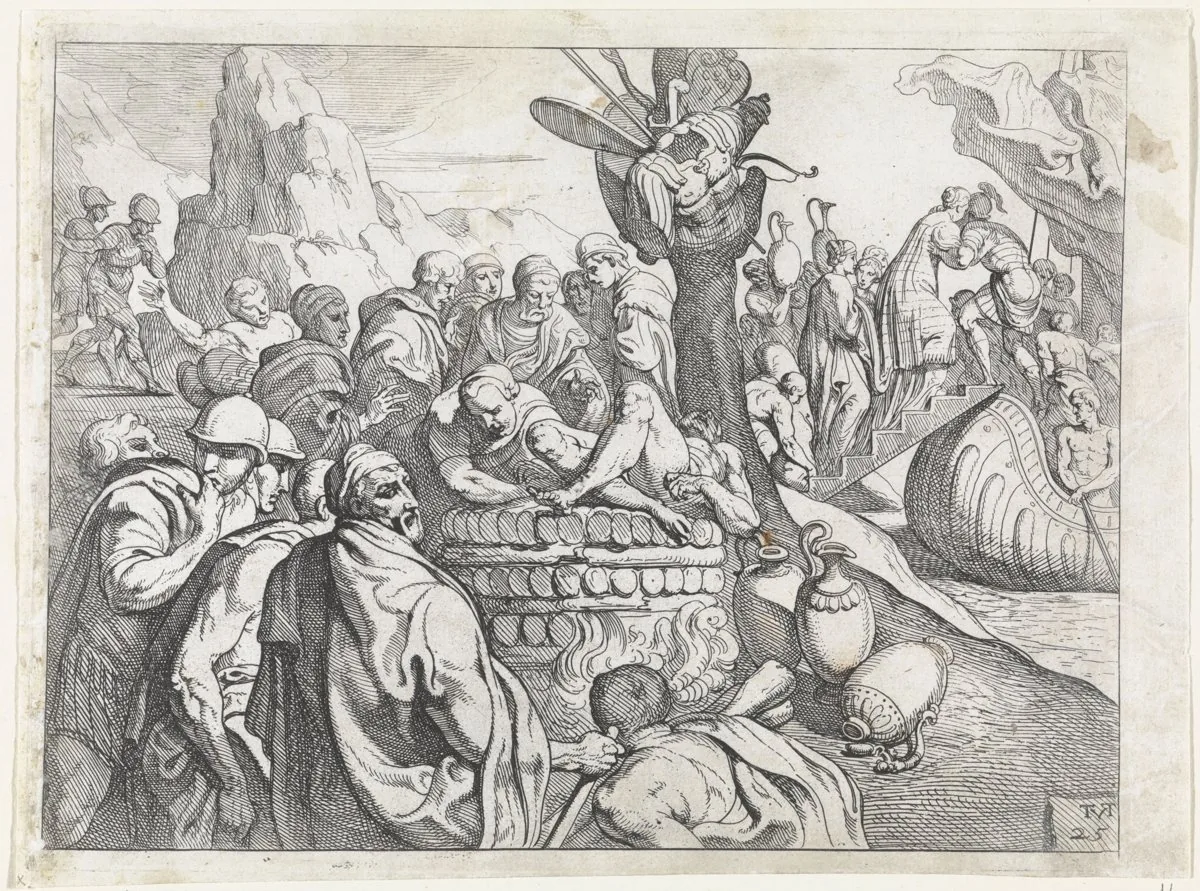
Tiresias supplies a precise sign: another traveler will call the object on Odysseus’s shoulder a winnowing tool. The name brings an instrument of sea travel into the imaginative world of preparing grain. At that point he must plant the oar in the earth and sacrifice a ram, a bull and a breeding boar to Poseidon. Then he should return home and offer sacrifices to the heavenly gods in order. His task is neither to make the stranger acknowledge his military achievements nor to conquer another land. The sea god will receive offerings where the sea is unknown. Odysseus must hear somebody else’s description, recognize the sign and perform the required actions. An instrument of movement becomes a marker of stopping. Continuing onward is no longer the only relevant skill.
Penelope asks to hear the future now
In Book 23, the secret of the marriage bed has already reunited the couple when Odysseus says their trials are not completely over. He mentions the prophet’s lengthy task, then proposes sleeping. Penelope wants to hear immediately: if she must learn eventually, knowing now is no worse. The oar, the passing stranger and the offerings enter their conversation at home. Odysseus admits that neither of them will enjoy this prospect. She answers by finding hope in the promised better old age, which may bring release from suffering. This is not a record of cheerful agreement to another separation. Notice instead her insistence on participating in their future. The returning traveler owes more than an account of the past; unfinished obligations will also affect their shared life.
A task remains, rather than a completed itinerary
The Odyssey does not enact the inland journey or its final offerings before us, nor provide a complete travel diary. The statements about old age and death remain prophecy. Dickinson College’s Thomas Van Nortwick reads the planted oar as a settlement with Poseidon and the sea, and symbolically as putting away the part of Odysseus that needs to wander. This scholarly interpretation opens a question rather than supplying an unwritten inner monologue. Back in the couple’s room, incompletion becomes especially clear: shared life has resumed, yet the future still requires explanation. Carrying an oar beyond the world of ships invites us to reconsider homecoming. It may involve more than recovering familiar possessions: understanding why they appear unfamiliar in another person’s world, and knowing when to set them down.