A death outside the battlefield
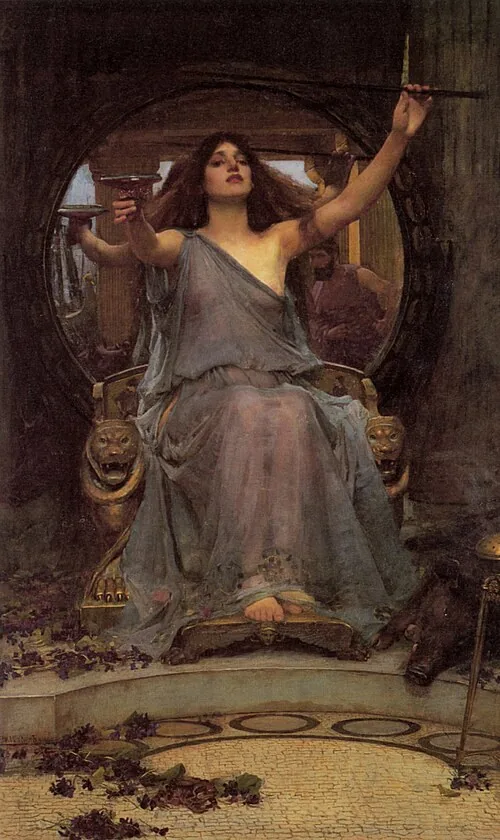
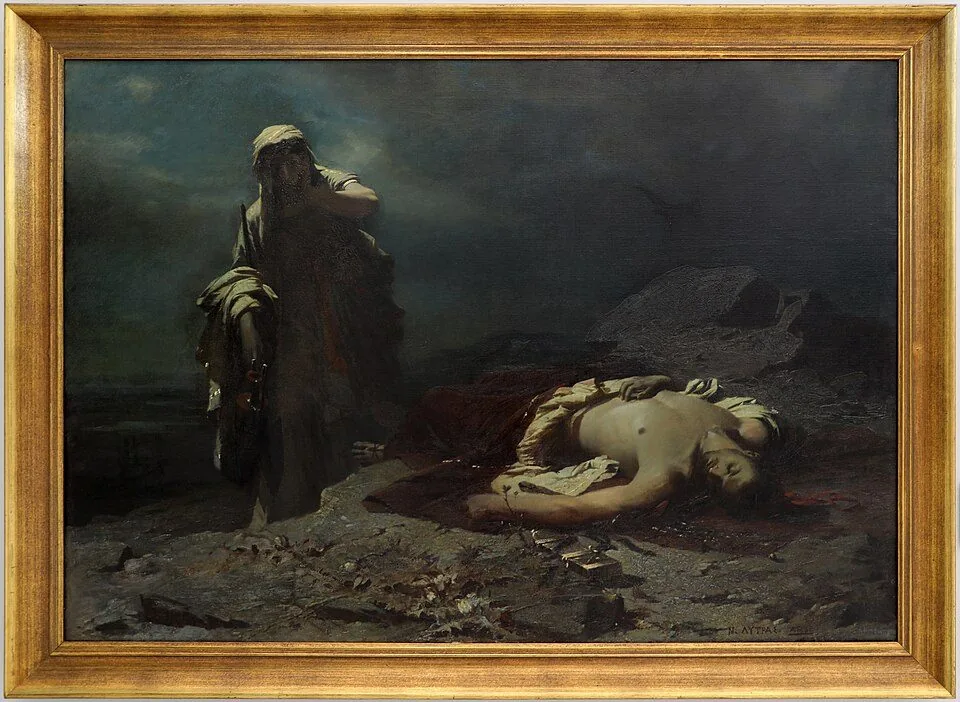
Near the end of Book 10 of the Odyssey, the preparations to leave Circe's island are interrupted by an easily overlooked death. Elpenor, a young member of the crew, has been sleeping on the roof after drinking. Roused by the bustle, he forgets the proper way down and falls. There is no duel, divine contest, or grand last speech. His death belongs to the ordinary vulnerability of a tired human body. The expedition nevertheless departs for the land of the dead, leaving his body without its funeral. That unfinished act of care follows the living farther than they expect.
The first voice among the dead
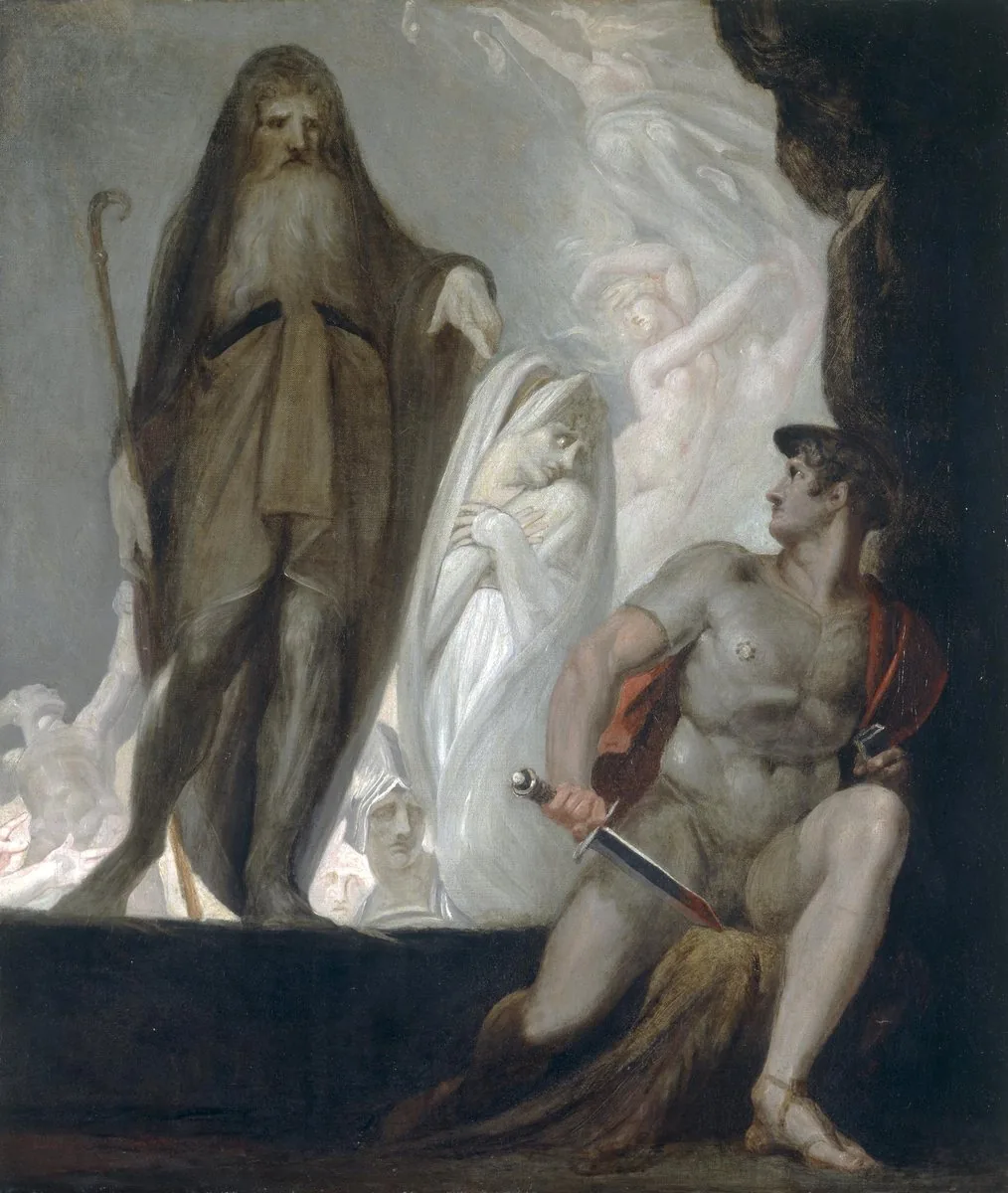
In Book 11, Odysseus seeks the prophet Tiresias, but the first shade to approach is Elpenor. The ordering changes what a journey for exceptional knowledge can mean. Before the captain learns the conditions of his return, he encounters a responsibility from the immediate past. He weeps and asks how his companion arrived so quickly. Elpenor explains the accident and appeals through the people Odysseus has left at home: wife, father, and son. The request is personal, yet it reaches the captain through relationships he already values. A crewman without a celebrated heroic career becomes someone who must be heard.
A grave that tells a life
Elpenor asks for cremation with his armour, a mound beside the sea, and the oar he used in life planted above it. His requested memorial is not a trophy taken from an enemy. It is an implement of shared labour, linking him to the ship and to the companions who rowed beside him. He wants future people to know of the unfortunate man buried there. The poem does not turn that wish into a detailed biography, but it does give his ordinary equipment lasting significance. Remembering him means more than acknowledging that someone died: it means leaving a recognizable sign of the life he actually lived.
A promise carried back
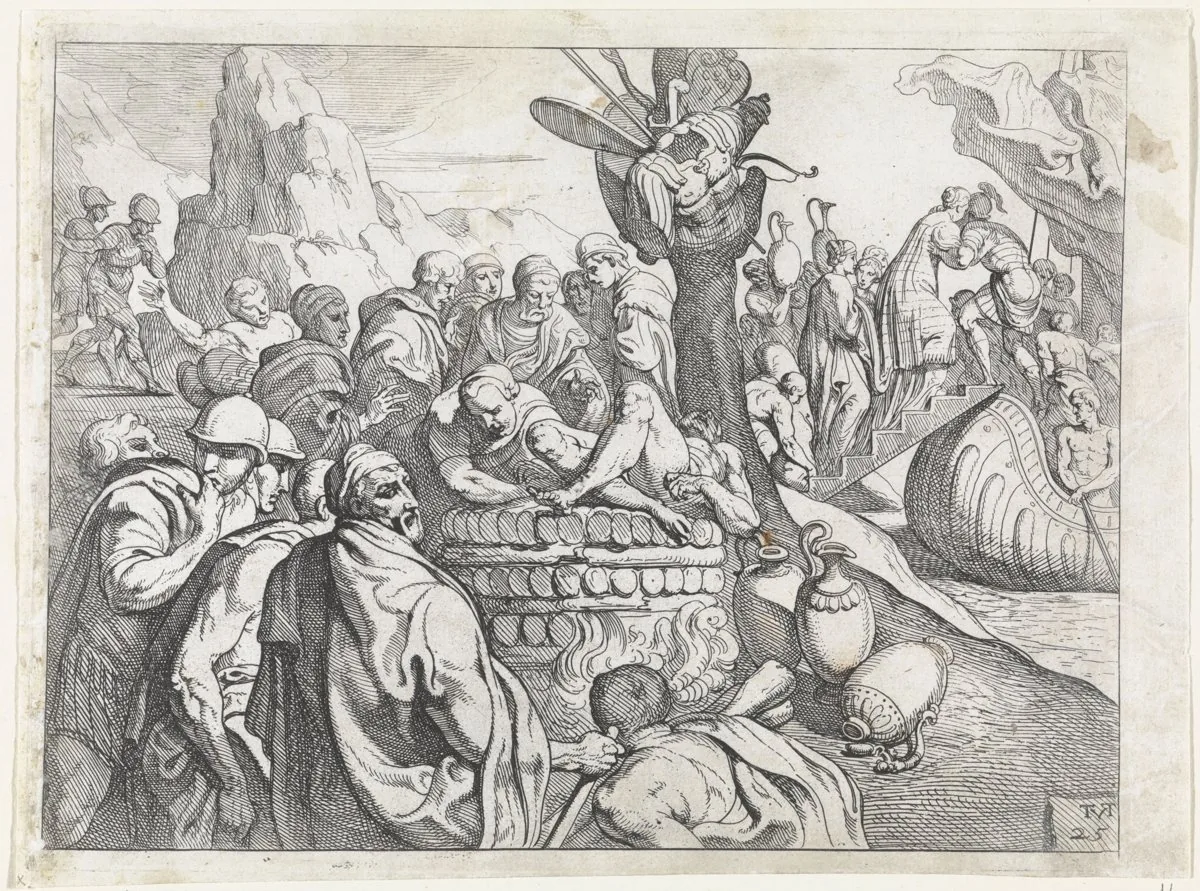
Odysseus promises to do what Elpenor asks. At the opening of Book 12, after the return from the dead, the survivors fetch the body from Circe's house. They gather wood, lament their companion, perform the burning, raise the mound, set a stone, and plant his rowing oar above it. The narrative records completion rather than leaving the funeral as a good intention. Circe then approaches with provisions and further guidance. The voyage resumes only after this practical work of mourning. Reading the three books together keeps the accident, the request, and the fulfilled promise connected instead of isolating the haunting encounter as a decorative ghost story.
Two oars, two different tasks
The oar on Elpenor's grave should not be confused with the one Tiresias tells Odysseus to carry inland on a later journey. Elpenor's belongs to a dead companion and marks a coastal burial; the prophetic oar concerns Odysseus' future obligations to Poseidon. Their shared object invites comparison, not identification. One gives an ordinary sailor a visible place in memory; the other points beyond the hero's return. Elpenor's episode offers a quiet measure of leadership: extraordinary travel does not cancel a duty to a person left behind. In this case, moving forward requires going back and completing what was neglected.