A speaker arrives beside Chiron’s pupil
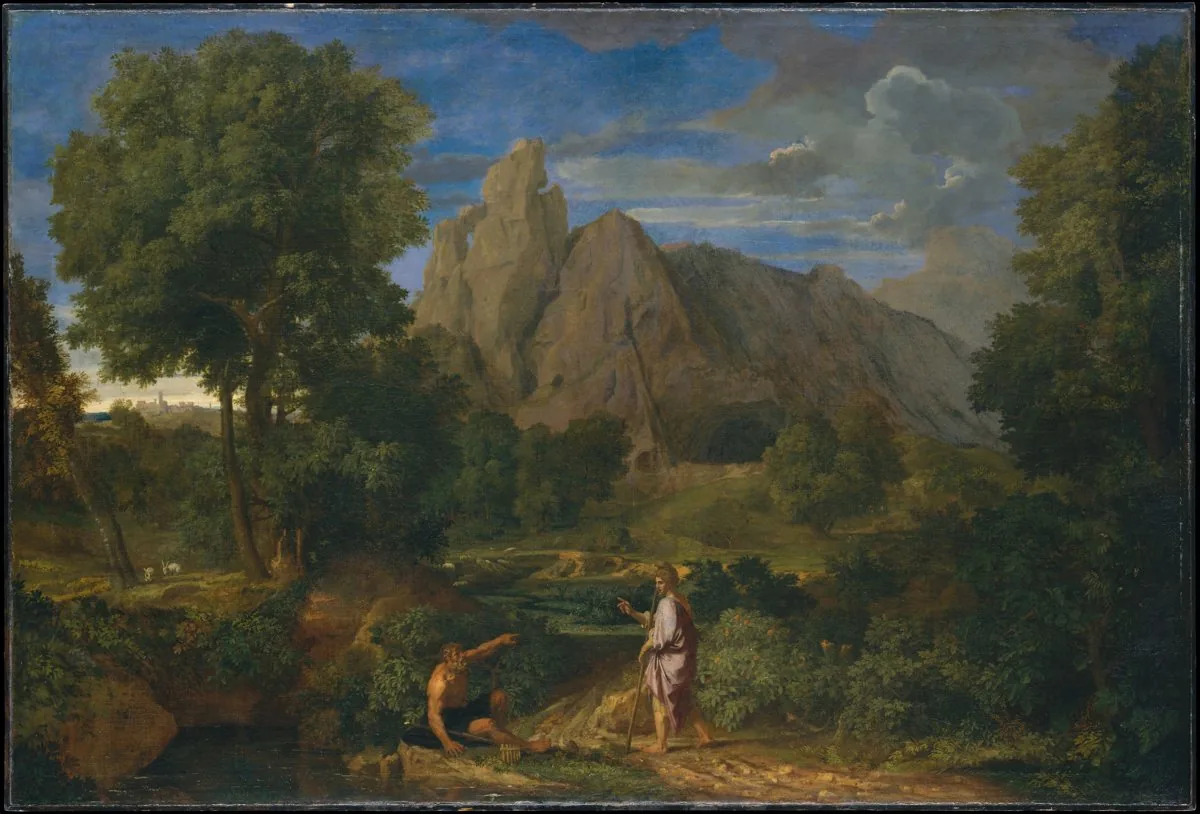
In Book 2 of Ovid’s Metamorphoses, Chiron is raising Asclepius, the child of Apollo and Coronis. Ocyrhoe appears: she is Chiron’s daughter, named for the swift stream beside which she was born. The poem gives her more than instruction in her father’s skills; she can perceive things hidden within fate. She does not arrive to displace him as the child’s carer. Facing a future healer, she says what other people do not yet know. A scene of family and teaching opens into distant time. Being able to see far, however, does not mean that the speaker controls what happens next or can choose which consequences follow her words.
She foresees help and its limits together
Ocyrhoe predicts that the child will restore health to many people and even return the dead to life. She also sees that such power will cross a boundary held by the gods, bringing Zeus’ thunderbolt, followed by a renewed divine destiny. This is a classical poem’s account of a healing deity, not a real explanation of illness, death or treatment. Her prophecy offers neither unmixed good news nor only disaster. Help and its cost occupy the same future. An ability can be welcomed and yet punished for exceeding an imposed limit. Speaking accurately about that contradiction does not give her a means of resolving it, or protect her from the authority whose limits she describes.
Immortality can become a burden for her father
Turning to Chiron, she predicts that her deathless father will suffer a poisoned wound, endure such pain that he asks to surrender immortality, and finally have his thread cut by the Fates. The wound is not happening in the present classroom: a daughter is speaking of what is to come. Prophecy, later events and the scene before us should not be compressed into one day. Affection enters knowledge here. She knows more than a famous centaur’s coming legend; she anticipates her own father’s suffering. Knowing does not maintain a safe distance from sorrow. Instead, tears arrive before the event that will cause them, bringing the future into a present relationship.
Words blur as the body changes
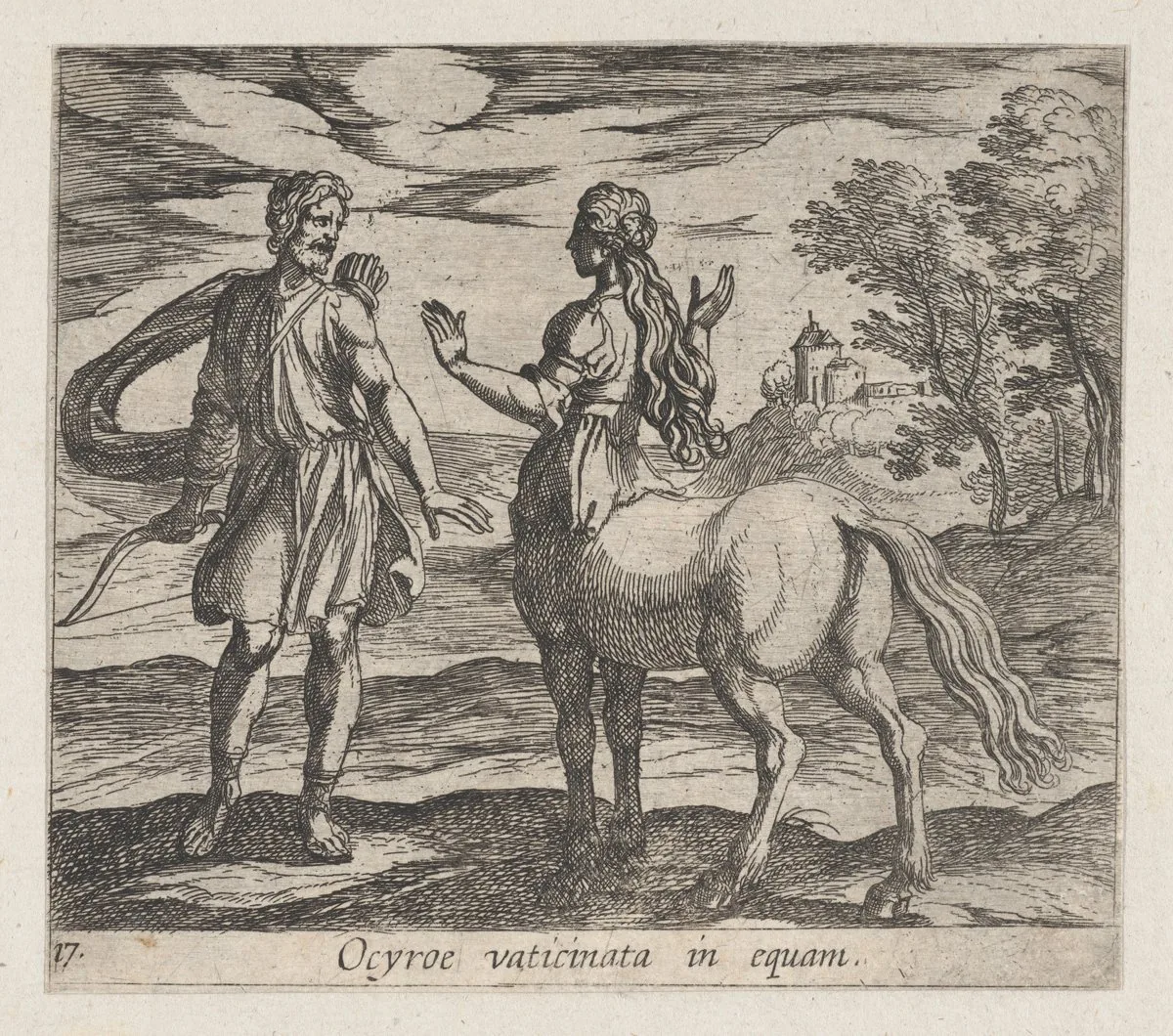
Ocyrhoe wants to continue, but fate prevents her. Lamenting that her skill has drawn divine anger, she feels grass becoming the food she needs and realizes that she is becoming a mare. Why, she asks, can she not keep a human part as her father does? Words grow confused and finally become a neigh. Fingers join into hooves, face and neck lengthen, and hair becomes mane and tail. The narration does not merely announce a completed marvel and move on. A speaker notices herself losing the means to express it. Prophecy once enabled her to reveal hidden things; now even describing her own condition is becoming impossible as the language available to her changes.
The appeal does not bring her voice back
Chiron asks Apollo for help, but the poem says that Apollo cannot oppose Zeus, and even if he could, he is far away. That should not be rewritten as Apollo personally inflicting the punishment. The Metropolitan Museum preserves Antonio Tempesta’s 1606 etching Ocyrhoe Changed into a Horse, showing the episode’s later life as an artistic subject. An image puts human figure, horse and Chiron into one space; the text makes losing speech unfold through time. Foreseeing a future is knowledge. Altering fate, obtaining assistance and keeping a place from which to speak require another kind of power that this narrative does not grant to her. Those capacities should remain distinct when we remember her gift.