Before the baby, an unwanted pursuit
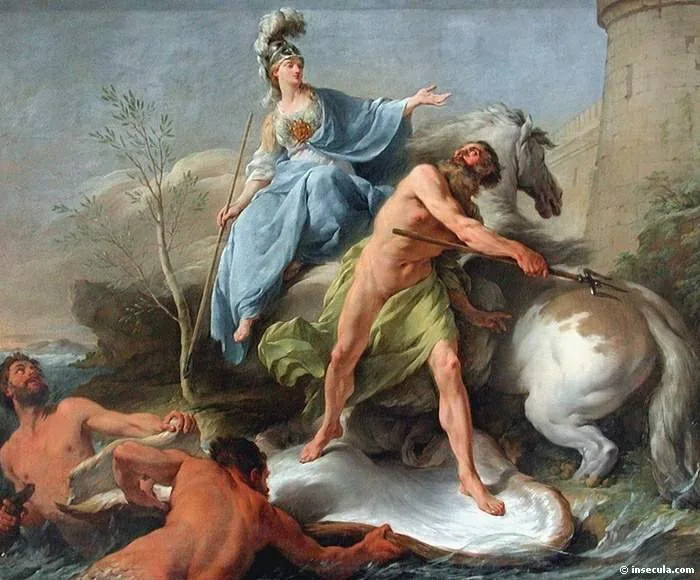
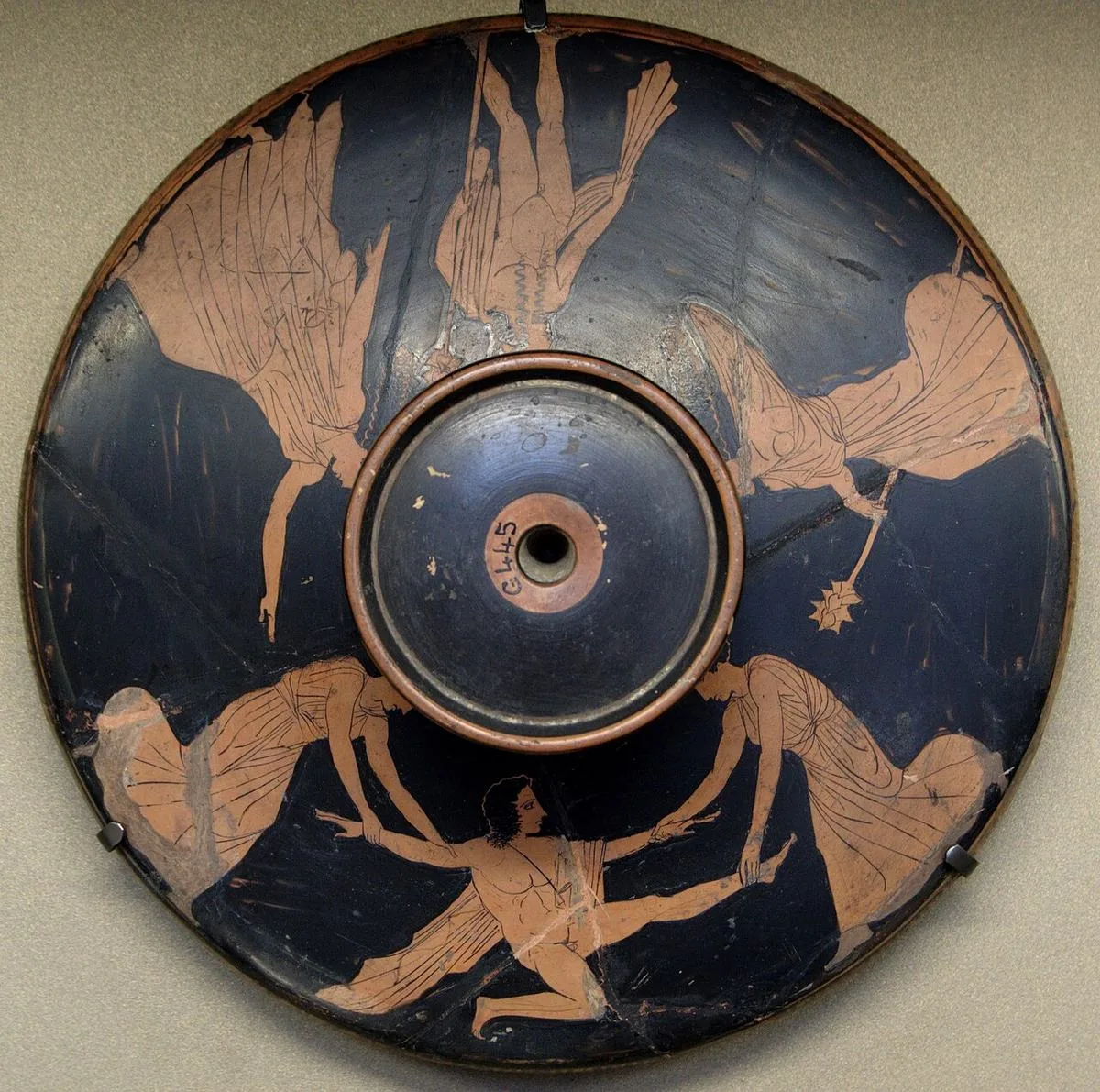
In Library 3.14.6, Athena visits Hephaestus to obtain weapons, but the craftsman god pursues her and attempts to force intimacy. She resists. His semen falls on her leg; she wipes it off with wool and throws it onto the ground, from which Erichthonius is born. The text also preserves other accounts of his parentage, so this narrative is not a genealogy shared by every tradition. Nor is it a story of mutual courtship: Athena’s refusal is an explicit action. She subsequently raises the child, making the relationship of nurture different from the circumstances of generation. Keeping these distinctions clear prevents the word mother from silently turning an unwanted assault into a marriage or romance.
Care is entrusted, sight is restricted
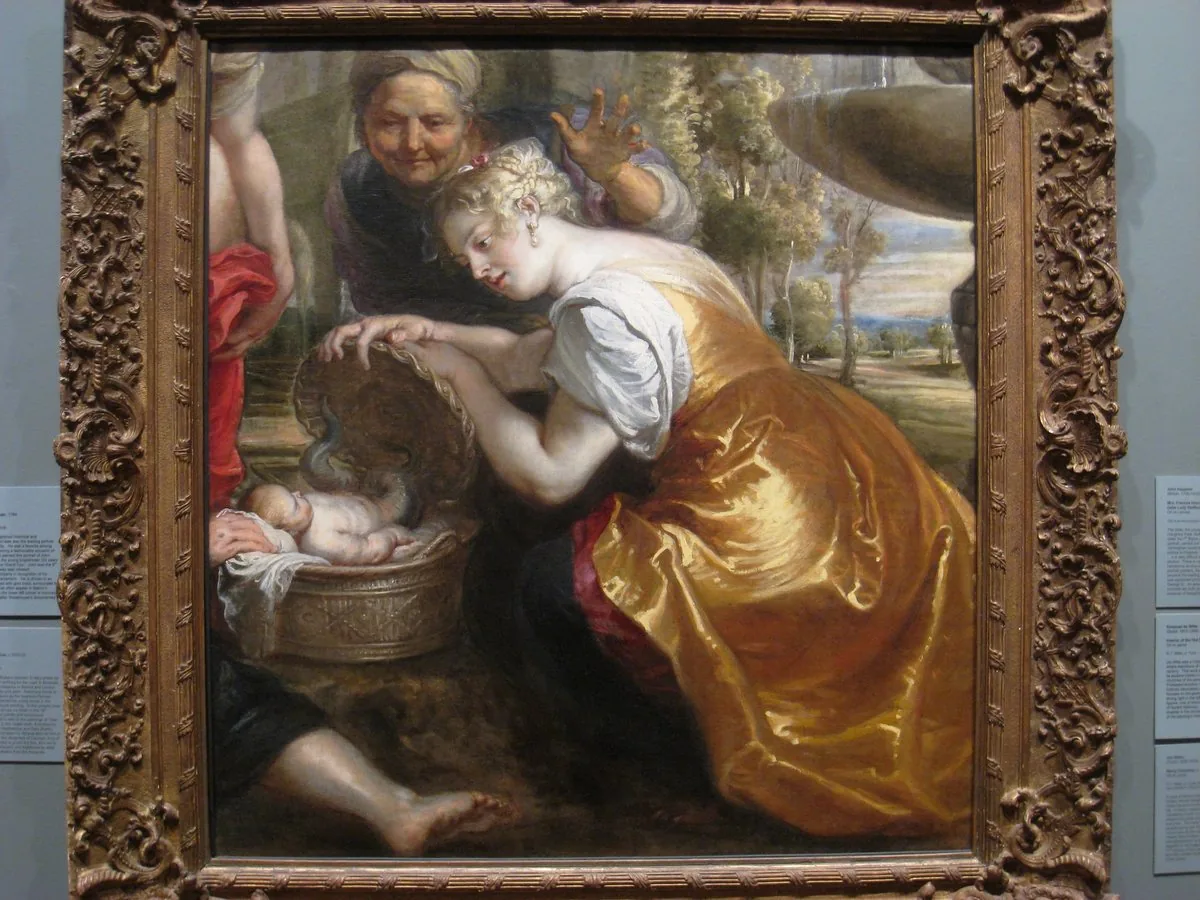
The Library says Athena raises the infant secretly from the other gods, intending to make him immortal. She places him in a chest and entrusts it to Pandrosus, daughter of Cecrops, forbidding her to open it. Modern pictures and retellings often call it a basket; Ovid does describe a container woven from twigs, but every ancient account need not use identical materials. The commission creates two different obligations: guarding a life dependent on care, and refraining from discovering exactly what has been entrusted. The container conceals the infant while limiting the guardian’s information. Athena can organize his care, yet this passage does not have her explain the full reason for the prohibition to its recipient.
Who actually opens the lid?
In the Library, Pandrosus’ sisters open the container and see a serpent coiled around the baby. Two endings follow: they are killed by the serpent, or driven mad through Athena’s anger and leap from the Acropolis. At 1.18.2, Pausanias describes the charge as entrusted to three sisters, distinguishing the obedient Pandrosus from Herse and Aglaurus, who disobey. Ovid’s Metamorphoses 2 instead makes both Herse and Pandrosus keep the prohibition: Aglauros alone unties the fastening. We cannot place all three names on one undifferentiated list of offenders. These differences change who acts and who remains outside the action; they are more than minor variations in spelling.
The serpent and the child have changing relations
Ovid presents the episode through a crow telling another bird how a serpent and an infant were disclosed together. The storyteller says that reporting the discovery to Minerva cost her the goddess’s favor. Opening the container therefore enters an argument about whether one should report what one has seen, rather than supplying a simple maxim against curiosity. In the Library, a snake coils beside the child. When Pausanias later describes the Athena Parthenos statue, however, he understands the serpent near her shield and spear as Erichthonius. Text and image can arrange child, guardian, and serpentine identity differently. Seeing a snake does not automatically prove that a particular infant must have a serpent’s lower body.
A secret enters the memory of a city
The Library continues with Athena herself raising Erichthonius in her precinct. As an adult he expels Amphictyon, becomes king of Athens, and is credited with establishing the goddess’s wooden image and the Panathenaic festival. These are mythical accounts of the city’s past, not direct evidence for the historical dates of its institutions. Pausanias places the sisters’ story among sanctuaries through which a visitor can walk, connecting secrecy to local memory. We can take the closed basket beyond the instruction not to look: who sets the boundary of knowledge, who must care without full information, and whose life continues after tragedy? Such questions let Athena appear as both protector and commander, while allowing the city’s beginnings to retain their unresolved losses.