Who Will Protect This City?
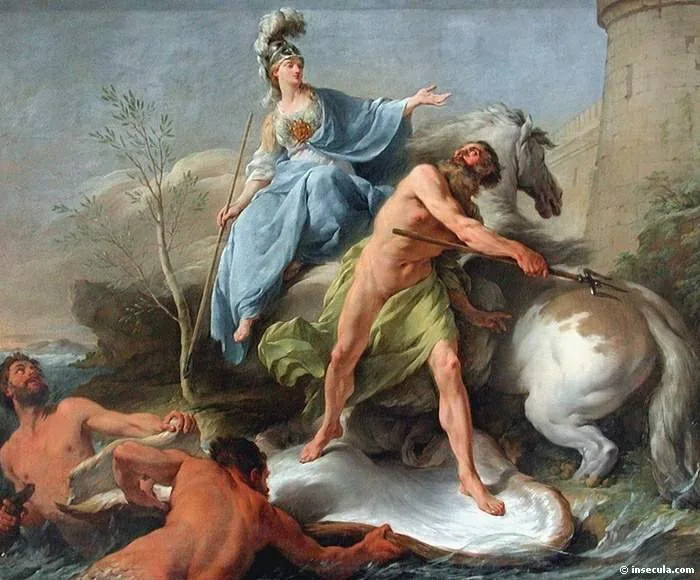
Pseudo-Apollodorus' "Library" places the struggle in the era when Cecrops ruled Athens. Poseidon first came to the Acropolis and struck the ground with his trident, revealing salt water; Athena then let the olive trees grow and invited the king of the city to witness her deeds. Both gifts show the power of the gods and are connected to the sea, the land and the lives of the residents. Rather than having a ready-made name and then waiting for interpretation, the story allows names and place ownership to be formed together in a dispute.
Urban stories also make the witness key. Cecrops not only watches as the two gods exert their power, but his memory plays a role in the decision. Local communities can thus tell who first left what mark here. A salt spring or a tree is both a gift and a testimony; they transform invisible sacred disputes into urban memories that residents can point to again and again.
Different Versions of the Judgment
"The Library" says that Zeus sent twelve gods to judge, and Cecrops testified for Athena, so she got the city. Poseidon was angry and flooded Attica. There are no male or female residents voting in this account, nor do both parties have to create a horse. Ovid also has Poseidon show the image of a horse in the fabric passage of Arachne. A recapitulation that crams salt springs, horses, and plebiscites into one contest would obscure the evidence and judgment of the ancient author's real choices.
Local Memory in Divine Gifts
Athena’s tree makes abstract guardianship something identifiable in the city. Readers can further think about why a place pins its identity on a plant: the tree grows slowly, bears fruit year after year, and also connects people's time to the land. Poseidon's waters remind Athens of its maritime connections and uneasiness. This story does not deny Poseidon's dignity; the object of contention is primacy of a particular place. It allowed relationships between gods to become a way of understanding a city.