Seeing without being able to change events
Cassandra is the daughter of Priam and has prophetic powers in ancient tradition. Aeschylus's "Agamemnon" makes her a prisoner of war being brought back to Greece, and standing before the palace, she sees past blood debts and the murders about to occur. There is a linguistic and cognitive distance between her and her audience: what she knows is getting clearer and clearer, but the people around her have trouble organizing the scattered screams into credible news. Precognition did not give her the same ability to act, but made her bear the coming fear earlier.
Apollo and the Lost Credibility
Cassandra's account in Agamemnon links prophetic powers to Apollo, and also talks about her losing the power to persuade others after breaking her promise to the god. Later narratives often summarize the relationship as courtship, rejection, and curse. Different expressions should not be flattened, but they all make the asymmetry between gods and humans particularly obvious: abilities can be given, and the social effectiveness of abilities can be taken away. So the question isn't whether her predictions were accurate, but why she couldn't gain enough trust to protect herself.
Another declaration of victory after defeat
Cassandra in Euripides' "The Trojan Women" holds a torch and talks about her fate of being taken away in unusual wedding language. She knows that this relationship will bring destruction to Agamemnon's family, and so describes the capture in disturbing terms as the beginning of revenge. The audience should not mistake such rejoicing for simple happiness: her words contain trauma, foreknowledge, and reversal all at once. She did not flee the war, but fought for a voice to explain her fate in an extremely limited situation.
Between hearing and believing
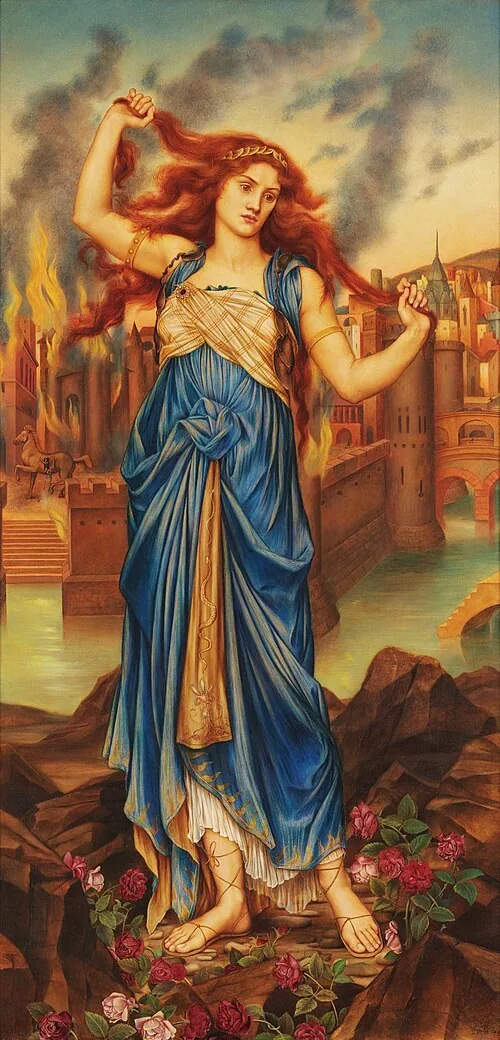
Later art often depicts Cassandra in firelight, disheveled hair, and tense postures. This visual tradition tends to reduce her to an appearance of madness, but reading the tragedy reveals that her knowledge has clear content and logic. We don't have to translate ancient characters directly into modern diagnoses or allegories to understand the difficult questions the story poses: How would a true message be received if it came from someone who lacked status? Disasters may not be caused by no one foretelling them, but may also be caused by someone who has forewarned them but no one is willing to take the responsibility of responding.