A difficult story inside a song
Myrrha's story appears in Book 10 within the song of Orpheus. The singer interrupts his own movement through love stories to warn about the material ahead. That framing matters: this is not an uncomplicated celebration of romance. Myrrha experiences desire for her father Cinyras, and the narrative treats that desire as a source of conflict and catastrophe. A restrained retelling can identify the incestuous relationship without reproducing the episode's sexual details. It can also distinguish the singer's judgments from the task of attending to a distressed character. The poem asks for a response to difficult material before it offers any comforting transformation.
Concealment does not create informed agreement
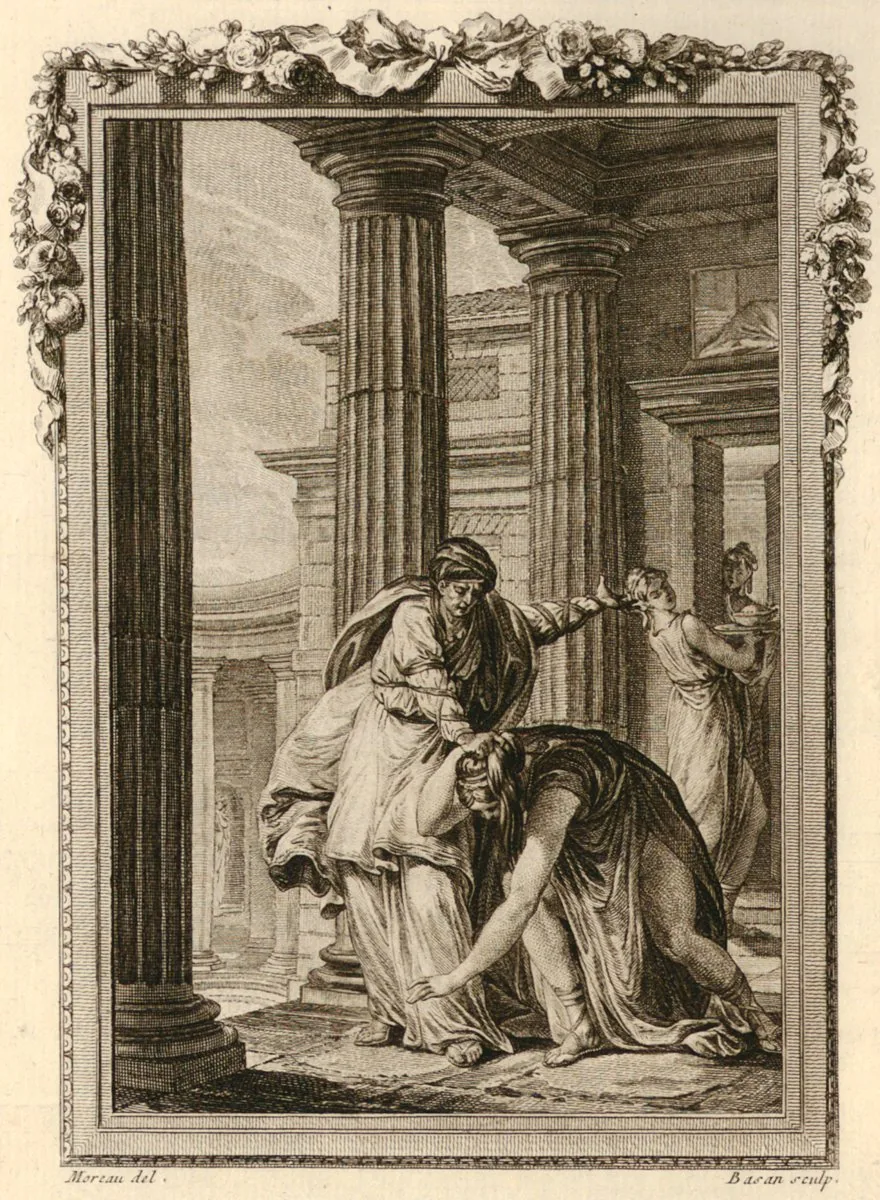
A nurse intervenes in Myrrha's despair and helps arrange encounters in darkness without telling Cinyras who the visitor is. When he discovers the identity, the arrangement collapses and Myrrha flees. Whatever the nurse hopes to accomplish, withholding that knowledge does not make the relationship an agreement between people who understand the same circumstances. The episode turns concealment into a practical action with consequences, not just an atmospheric detail. It also leaves responsibility distributed among several actions rather than allowing one abstract word, love, to explain everything. Desire, attempted help, deception, discovery, and flight remain different stages that should not be compressed into a harmless courtship.
A request between life and death
After wandering, the pregnant Myrrha asks the gods to place her outside both the living and the dead, so that she will offend neither. The prayer is desperate rather than a botanical wish offered in calm anticipation. Her feet take root, wood encloses her body, and the transformation gradually removes the familiar means of human movement and speech. Becoming a tree answers the request in the poem's terms, but it does not undo what has happened. A changed form can interrupt pursuit while also narrowing what a person can do next. The narrative holds refuge and loss together instead of treating every escape from danger as a complete restoration of freedom.
The child still needs assistance
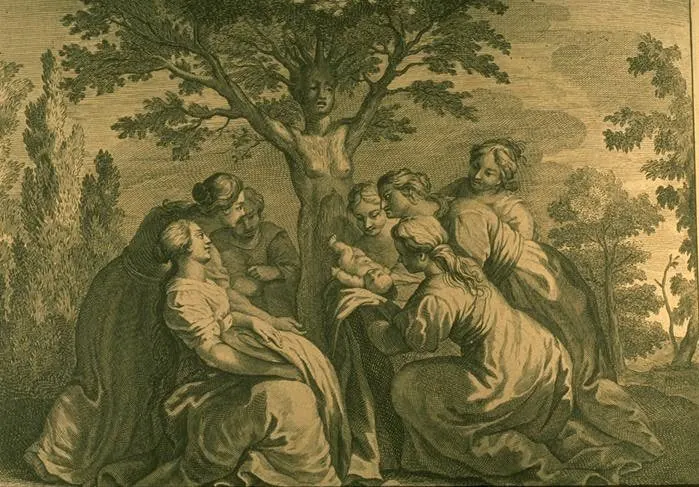
The pregnancy continues within the changed body. Ovid makes the tree show signs of labour, and Lucina, the childbirth goddess, comes to help. The bark opens and Adonis is born; nymphs receive the infant. These details shift attention from judgment alone toward the practical work of bringing a vulnerable child into the world. The mother no longer speaks in an ordinary human voice, yet another life still requires care. The child is not responsible for the circumstances of conception. The arrival of attendants and divine assistance gives that distinction a narrative form, keeping the infant's needs visible without declaring that the birth has made the preceding suffering disappear.
Resin preserves a trace rather than an explanation
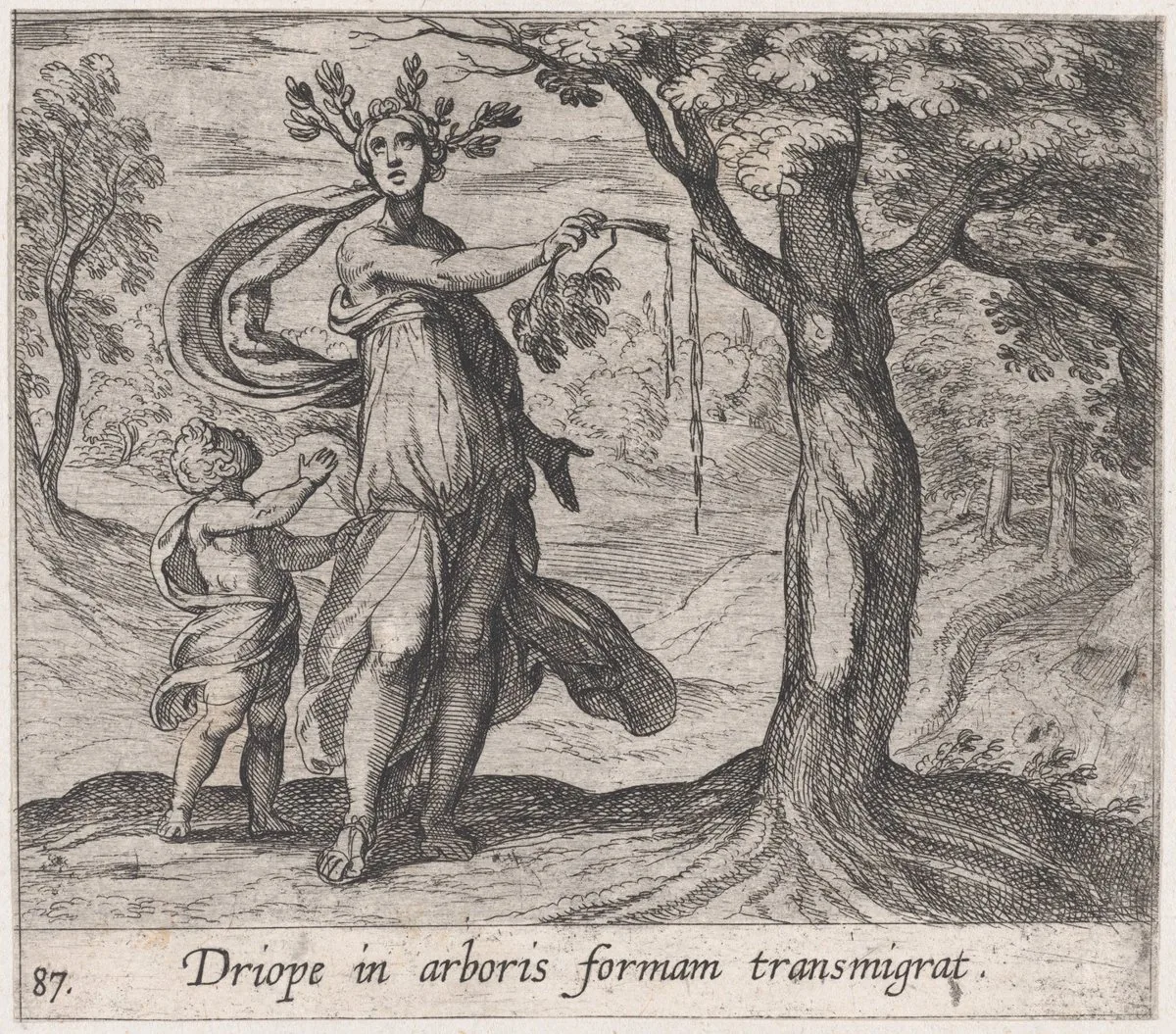
The tree's drops become associated with myrrh and with continuing tears. This is an account of a substance within myth, not a scientific description of how plants originate. Book 9's Dryope offers a useful comparison: another mother becomes a tree, and concern for a child continues as her human abilities diminish. Their circumstances and responsibilities differ, so one story cannot supply the other's missing resolution. Read together, they show how a transformed plant can retain relationships rather than become mere scenery. Myrrha's tree remains connected with a troubled past, a prayer, a birth, and care performed by others after speech has ceased.