A sister tells the story
In Book 9 of Ovid’s Metamorphoses, Iole tells Alcmena what happened to her sister Dryope. They share a father but have different mothers. This is no detached report of a distant wonder: Iole witnessed the change and still weeps while describing it. Dryope brings her son Amphissus, not yet a year old, to a lakeside where she intends to offer flowers to the nymphs. She is married to Andraemon; the poem also recalls Apollo’s earlier assault upon her. These relationships do not give her advance knowledge of danger. The opening presents a mother carrying her child on an outing that begins without hostile intent.
Knowledge arrives after the flower bleeds
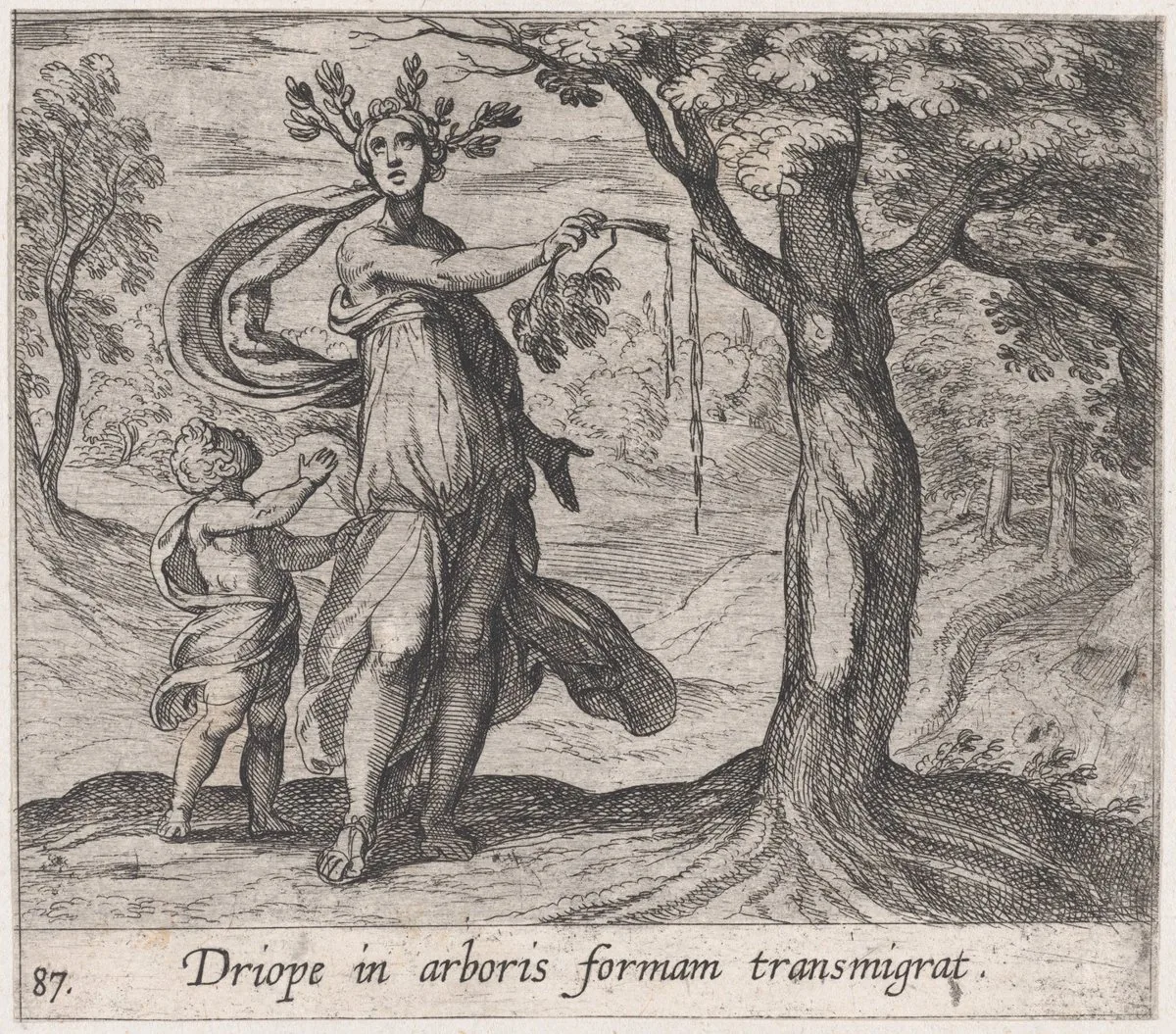
Dryope picks purple blossoms to entertain the baby. Iole reaches for a branch too, then sees blood dripping from the flowers and the branches trembling. Local people later explain that the plant conceals Lotis, who escaped Priapus by taking this form. Ovid calls it a lotus tree; the name should not automatically turn it into the familiar aquatic lotus of a modern illustration. Iole explicitly says her sister did not know another life was hidden there. Dryope tries to leave after discovering the harm, but her feet have rooted. The poem separates consequences from knowledge. An injury has occurred, yet that fact alone does not establish a deliberate offence against a deity.
A changing body changes ordinary care
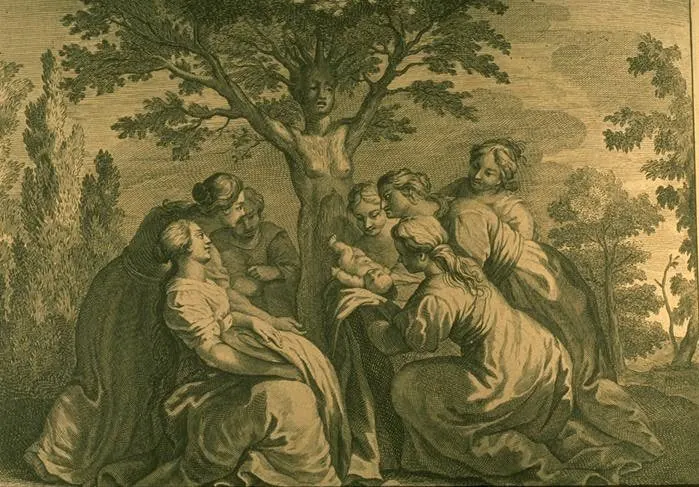
Bark climbs over Dryope’s legs and waist; her hair becomes leaves. Amphissus still seeks milk, but his mother’s breast is hardening beneath his touch. Iole embraces her sister and even wishes to enter the same bark, without stopping its growth. Husband and father arrive and kiss wood that still holds bodily warmth. Their love does not become a key that reverses the transformation. Instead, the poem follows familiar forms of closeness becoming impossible. Arms cannot freely lift the baby, the body cannot bend to return a kiss, and milk can no longer nourish him. Affection remains, while the movements through which it usually acts are being taken away.
Her final requests keep the tree in the family
Dryope asks them to find a nurse for the child and bring him often to play beneath her shade. Once he can speak, he should learn that his mother is inside this trunk. He should also treat plants carefully, because divine life may be concealed in them. She asks her family to protect her branches from pruning tools and browsing sheep. A mother is not simply being replaced with scenery. She is arranging relationships that might survive her changed body, while acknowledging that the baby needs another person’s care. Finally she asks them to lift him to her lips. Others must now help complete a kiss she cannot bend down to give.
A different ending deserves its own space
Antoninus Liberalis preserves another tradition in his thirty-second tale: the tree nymphs take Dryope into their company, leaving a poplar and a spring, and her son establishes a sanctuary. That account does not reproduce Ovid’s sequence of an unwitting flower picking and a mother’s gradual enclosure. Joining the two cannot prove that Ovid’s Dryope was eventually released and returned home. One narrative concerns becoming a nymph and local worship; the other makes relatives confront an unstoppable bodily change. Reading them together is valuable because the difference remains visible. Ovid’s still-warm branches remind us that losing a person’s familiar movements does not make responsibility for caring for her disappear.