Listen to the mother before remembering the hero
In Book 9 of Ovid’s Metamorphoses, Alcmena tells the pregnant Iole about the suffering surrounding Heracles’ birth. She remembers seven days and nights of labour, and the people who tried to help her. Before the hero can perform any famous deed, another person’s observation determines whether his story can continue at all. Our subject is not strength displayed in a cradle, but a mother’s memory of assistance. Entering through her voice prevents us from treating her merely as background before the arrival of an important man. Someone whose experience is often compressed into an origin story has time here to tell it herself.
A posture outside prolongs the suffering inside
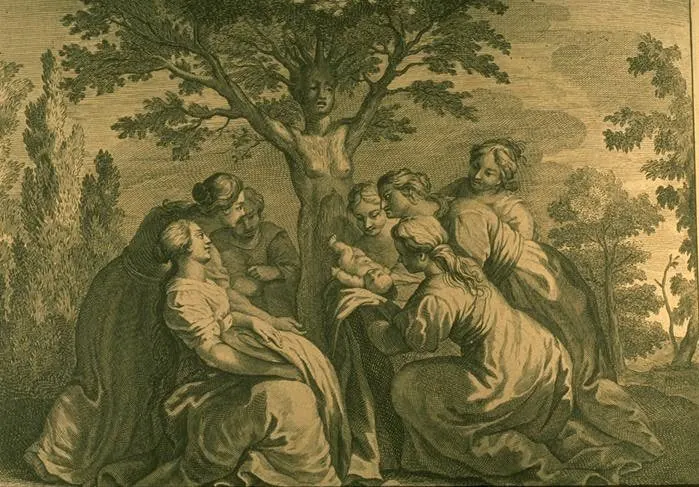
Lucina, the birth goddess, takes Hera’s side. Sitting near the doorway, she crosses her legs, locks her fingers and chants to prevent delivery. Ovid connects an unchanging posture outside with pain that cannot end within. Galanthis, Alcmena’s attendant, notices the goddess’s position and infers that it is obstructing the birth. The scene is not an explanation of real childbirth practices, and its magic is no substitute for medical knowledge. It makes an unobtrusive act of attention decisive. Seeing what is happening comes before possessing the power to alter everything. A person without divine authority can nevertheless notice the particular action on which that authority currently depends.
An announcement helps make its own news true
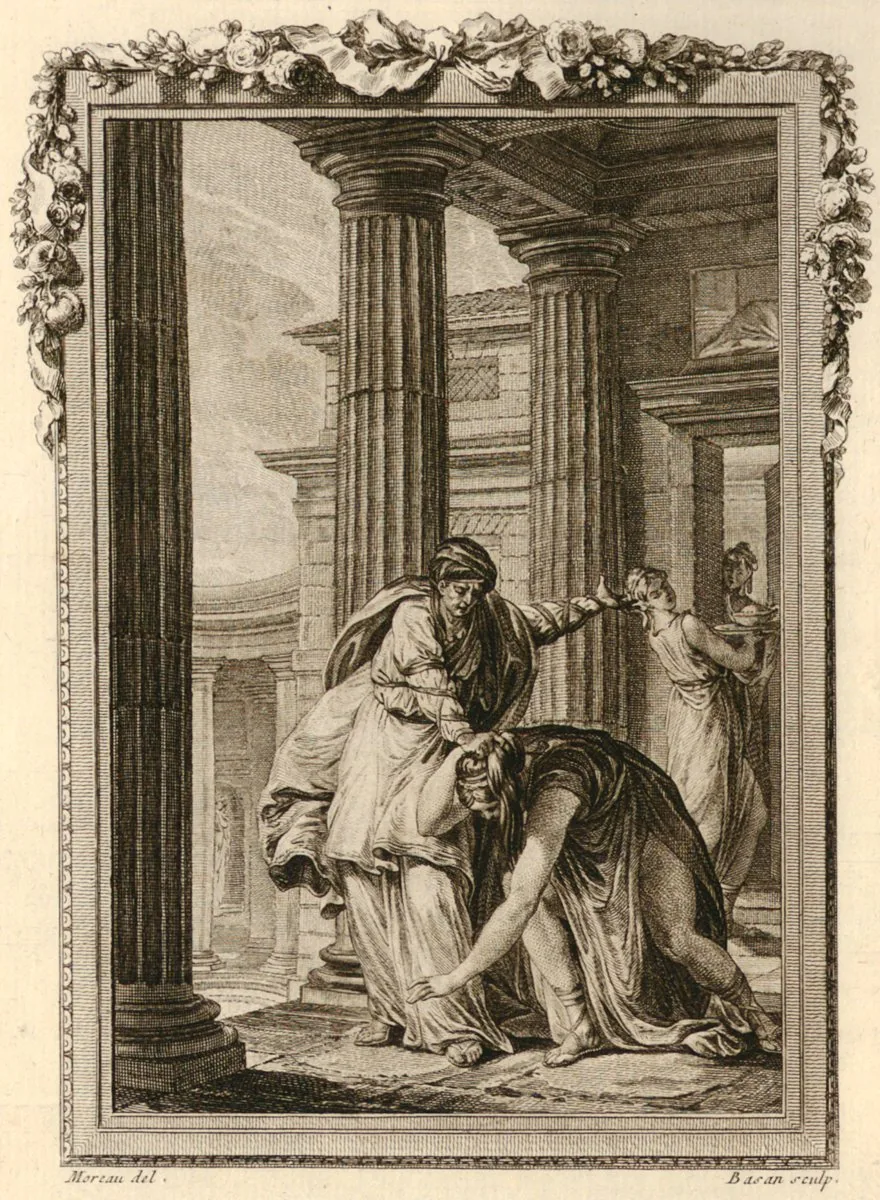
Galanthis loudly announces that Alcmena has safely delivered her child. Surprised, Lucina stands up, releases her interlocked hands and uncrosses her legs. The obstruction breaks, and only then is the baby born. The announcement was not factual when spoken, but it changes the listener’s actions so that its promised result occurs. This is neither a simple reward for honesty nor a universal claim that deception helps. Within a particular unequal situation, Galanthis finds a way to make the powerful person temporarily stop what she is doing. The child survives without the attendant suddenly becoming physically stronger than the goddess. The difference lies in a response that the goddess has not anticipated.
Successful help does not protect the helper
Galanthis laughs. The deceived goddess becomes angry and changes her into a four-footed animal, conventionally identified as a weasel. Ovid connects her verbal trick with an ancient animal story about giving birth through the mouth. That belongs to the myth’s explanation, not to actual zoology. The transformation retains her former agility while taking away her human body. Alcmena says that she still lives beside her. That final sentence prevents the punished helper from vanishing completely behind the hero’s successful birth. The assistance worked, but its cost has not thereby become fair. Remembering the event means holding the rescued life and the helper’s loss in view together.
Another author places gratitude within ritual
Antoninus Liberalis’ twenty-ninth tale calls her Galinthias and makes her Alcmena’s former companion; the Fates also obstruct delivery. It likewise describes a message that makes divine hands release, followed by transformation into a weasel. It continues with Hecate receiving her as an attendant, the grown Heracles honouring her and Theban rites preserving her memory. These are not necessarily the next events after Ovid’s ending: identity and subsequent gratitude are arranged differently. Reading both accounts leaves a shared question. When we remember a hero’s achievements, can we also preserve a name and a place for someone who once made his life possible?